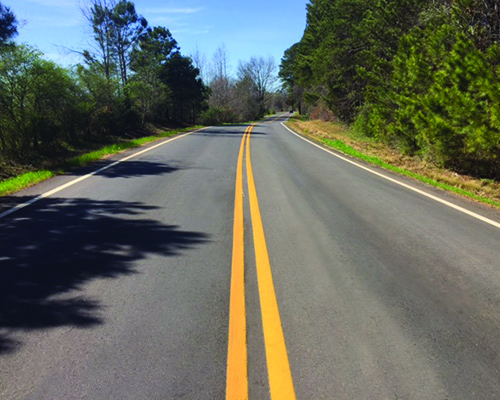
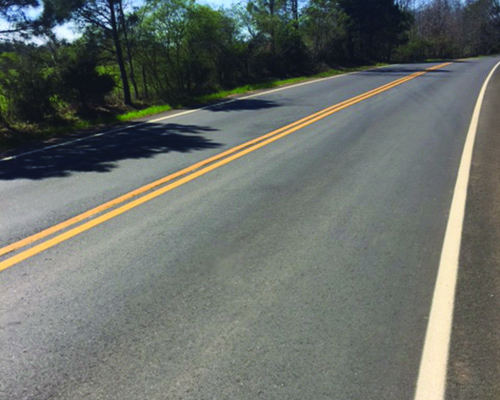
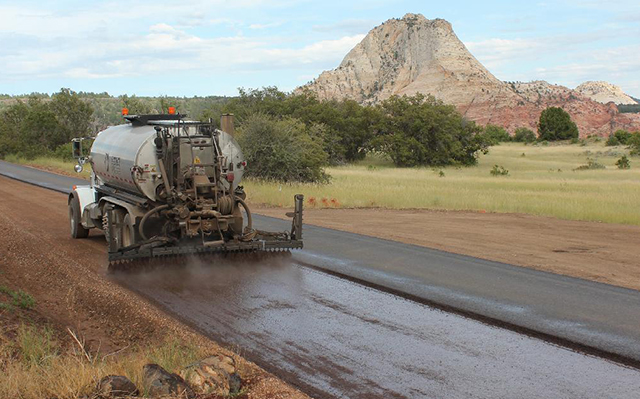
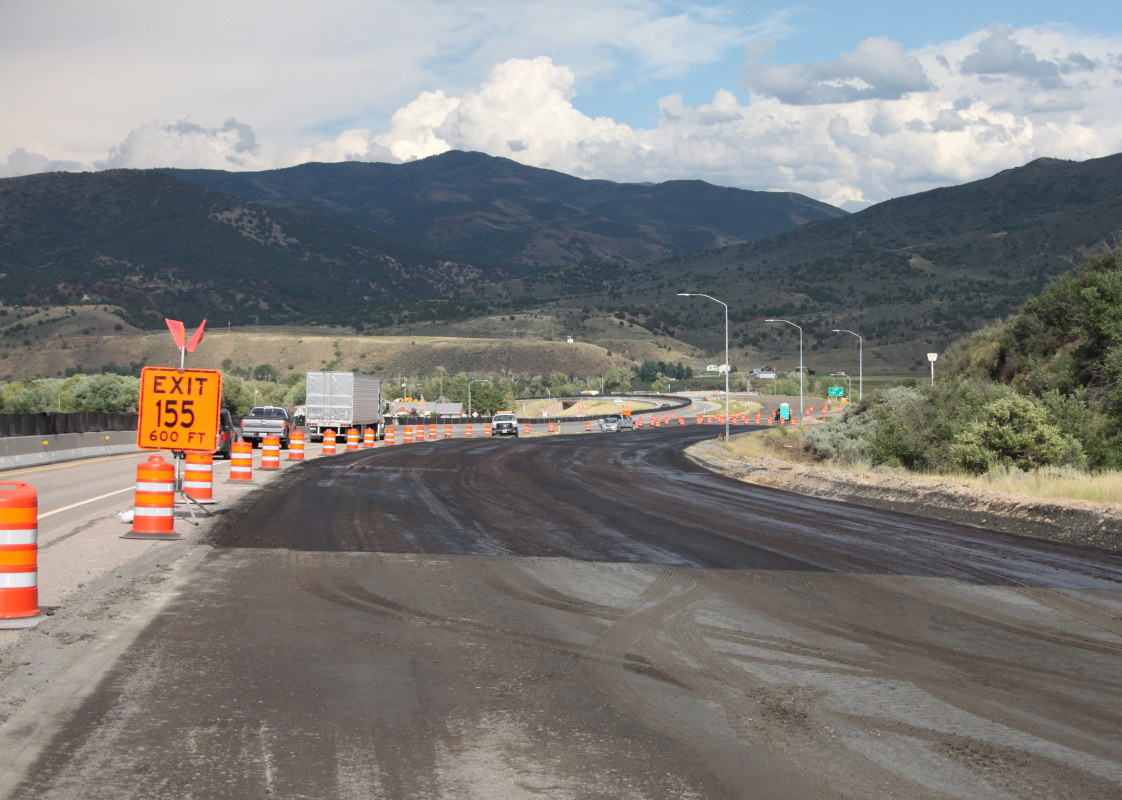
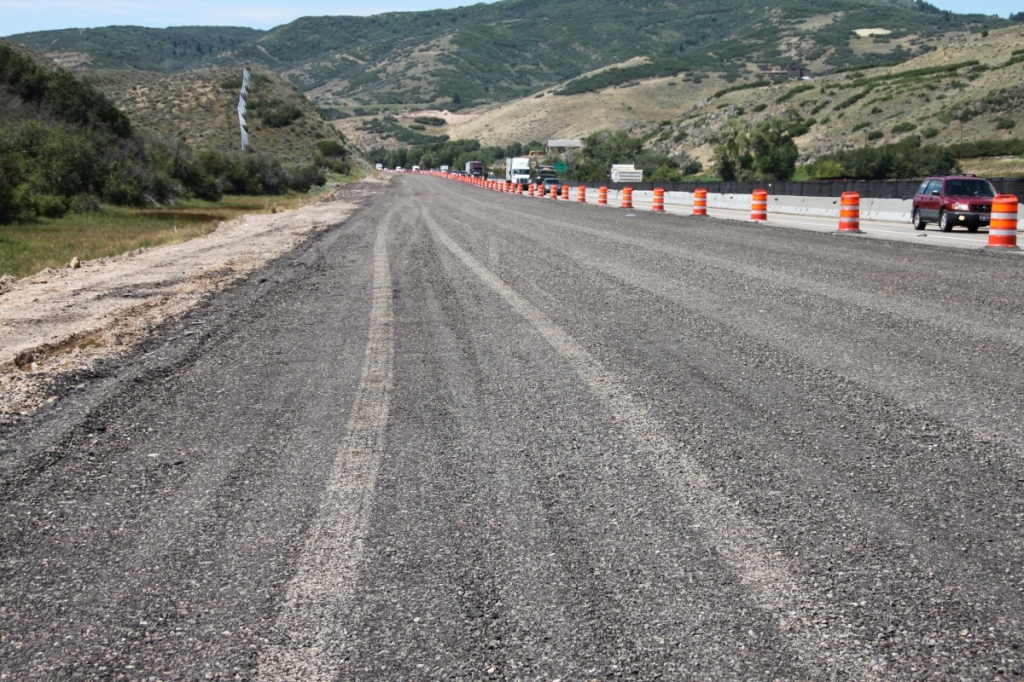
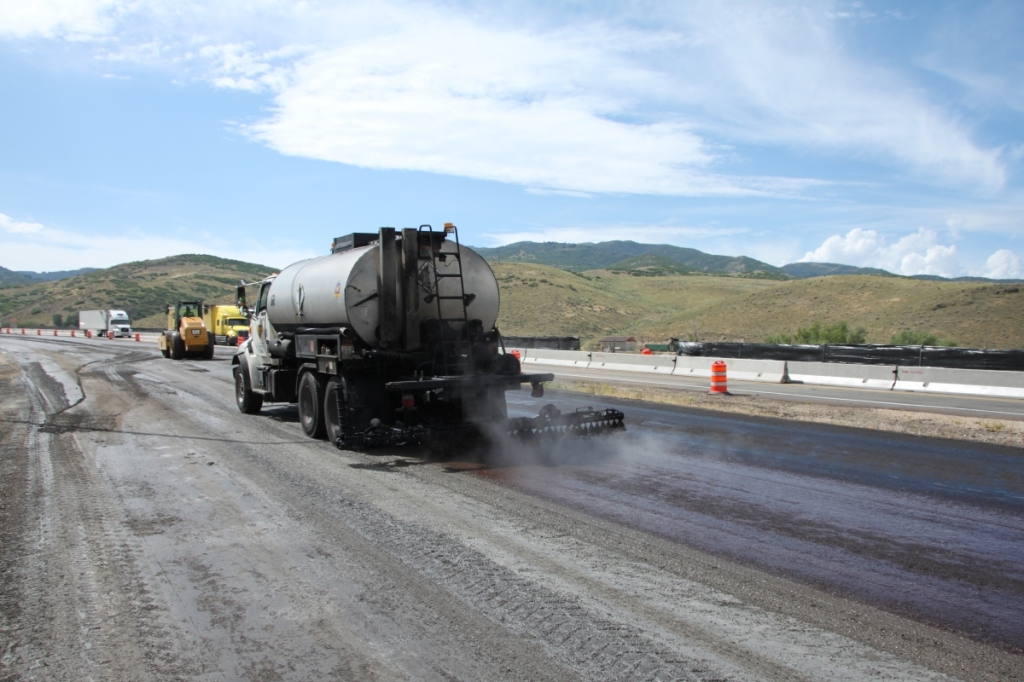
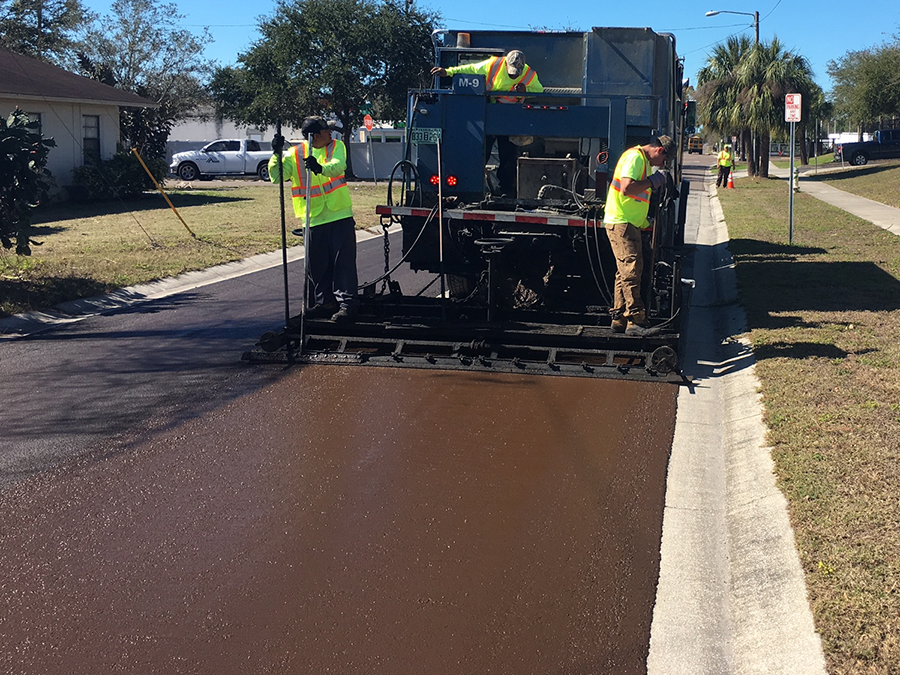
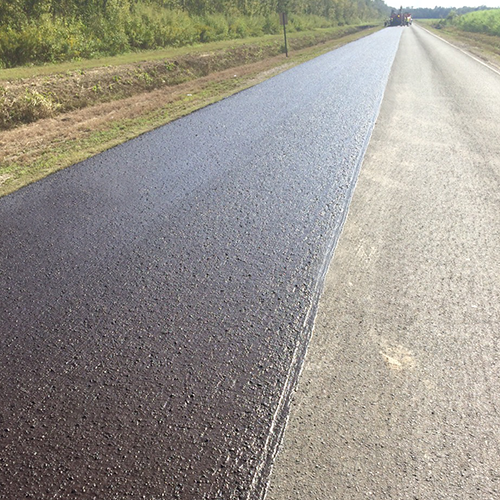
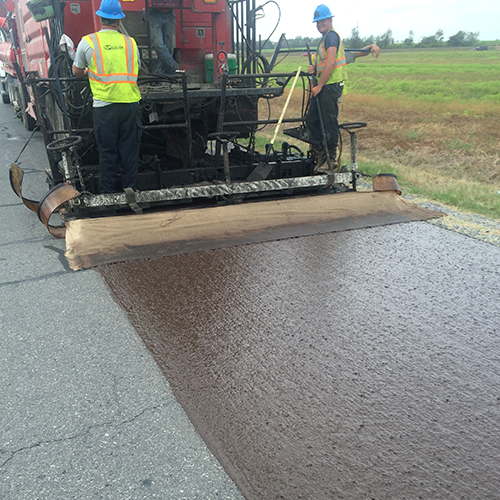
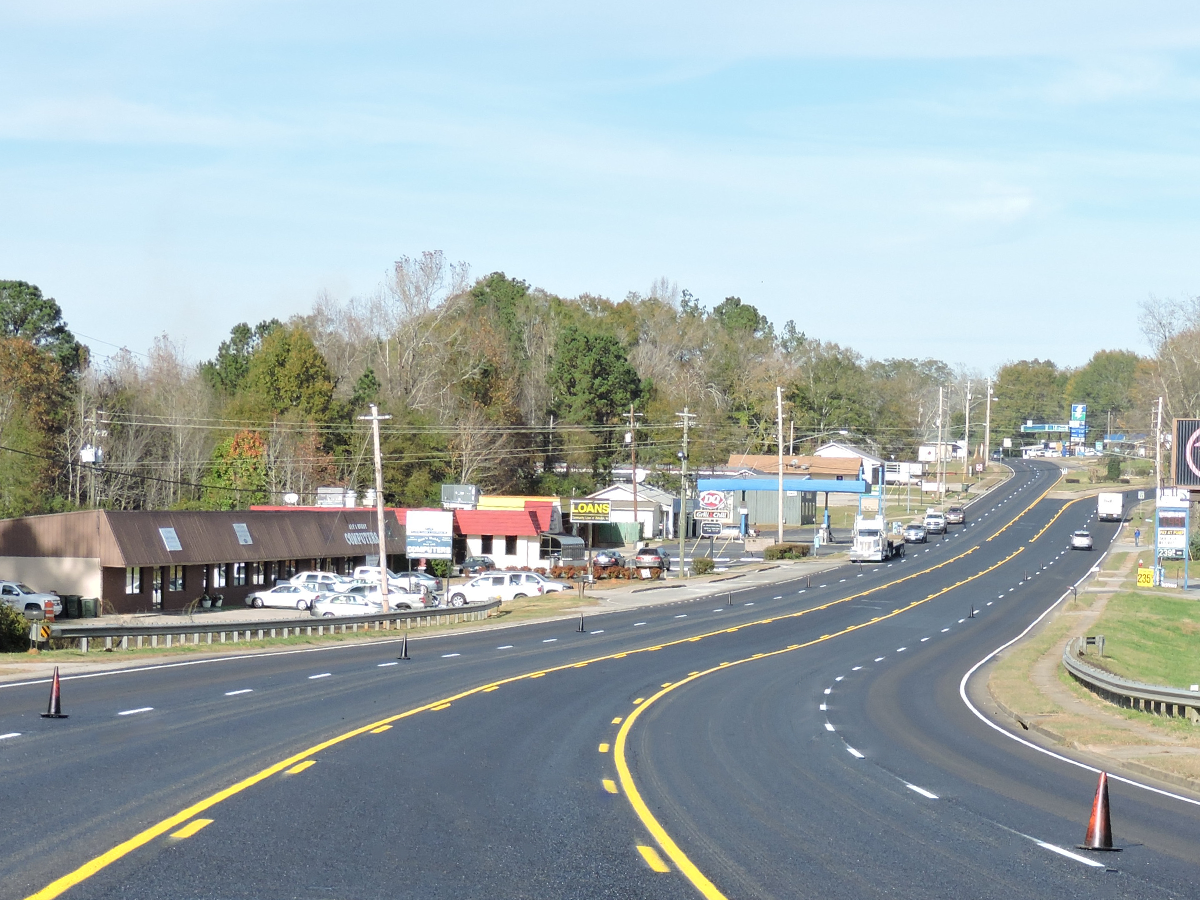
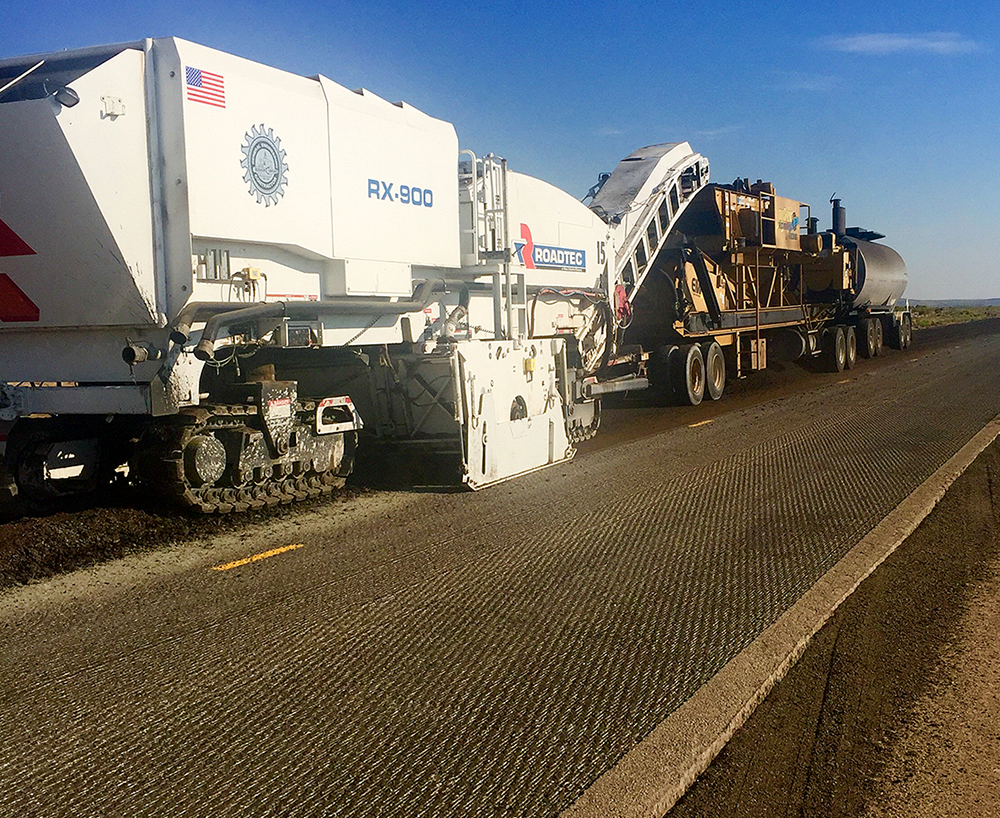
During the 2017 demo, contractors applied eFlex, a highly modified micro surfacing supplied by Ergon Asphalt & Emulsions (Ergon A&E) on I-59 along Mile Markers 19 – 21. This was the first time highly modified micro surfacing was applied on an Alabama interstate. Compared to the OGFC applied at the same time in that area, the highly modified micro surfacing has held up well to date. The results influenced ALDOT’s decision to try the treatment on a larger section of I-59 in 2024 – the largest highly modified micro surfacing job on an Alabama interstate. Ergon A&E supplied eFlex for this project as well.
BENEFITS OF EFLEX FOR HIGHLY MODIFIED MICRO SURFACING PROJECTS
eFlex is part of Ergon A&E’s eSeries line of high-performing pavement preservation and maintenance solutions and is designed to restore oxidized pavements, address raveling and provide a tough wearing surface able to withstand scuffing and tearing soon after application. It also provides a continuously high friction surface throughout the life of the treatment. eFlex is ideal for high-volume, high-speed roadways and those where constant braking and heavy passenger and utility vehicles are prevalent.
ALDOT is no stranger to micro surfacing treatments, having utilized both conventional and highly modified options for maintenance projects on roadways throughout the state with varying traffic volumes. They chose a high-polymer option for enhanced durability on I-59 due to its heavy traffic volume.
APPLICATION HIGHLIGHTS
The 2024 I-59 project called for a highly modified micro surfacing across four lanes (two eastbound and two westbound) along Mile Markers 1-19 in Sumter County, Alabama – 17.884 miles. After micro milling the existing OGFC surface, the contractor, Wiregrass Construction Company Inc., applied eFlex in two lifts at 22 pounds per square yard for both. The mix design specified Type III aggregate for the first lift and Type II for the second.
“This large-scale micro surfacing initiative required exceptional teamwork, not only within Wiregrass Construction but also in collaboration with the agency and suppliers,” said Matt Sony, Pavement Preservation Manager for Wiregrass Construction. This eFlex on I-59 application was the first micro surfacing job for the company’s Pavement Preservation Division.
For both eastbound and westbound applications, crews shifted traffic to one lane while the other received treatment, returning traffic to the surface within 1 to 1 ½ hours following each application.
“The strong communication and coordination between ALDOT, our suppliers and our team ensured that the final product met expectations,” said Sony.
SERVICE LIFE EXTENSION
Based on prior performance of the 2017 demo, ALDOT expects to get almost 10 years of service life out of the sections treated with highly modified micro surfacing for this 2024 project.
“Where we are anticipating the advantage is the performance longevity of the micro surfacing,” said Lyndi Blackburn, P.E., Assistant Region Engineer for ALDOT – West Central Region. “So far, it appears to be performing as anticipated, and we are happy with the results.” While there are multiple applications that could have restored I-59, including a new layer of OGFC, ALDOT anticipates the highly modified micro surfacing applications will prove to be economically beneficial over time, as it is expected to delay maintenance for a longer period.
THE STRATEGIC APPROACH TO SAVING YOUR PAVEMENTS
For agencies with roads showing signs of distress sooner than budgets allow, cost-efficient treatments, like highly modified micro surfacing, can keep asphalt pavements in good condition for an extended time.
Micro surfacing and other preservation treatments are key to stretching budgets to treat more roads at the right time, improving the integrity of your network long term.
Contact one of our expert resources to learn how you can flex your budget and save your roads with eFlex today.
https://ergonasphalt.com/wp-content/uploads/2026/08/LivingstonI59_300x250.jpg250300Rick Potratz/wp-content/uploads/2024/08/asphaltlogo2.pngRick Potratz2025-09-05 16:13:592026-09-08 12:44:04Largest Highly Modified Micro Surfacing on Alabama Interstate Adds Years to Pavement Life
Hot mix asphalt (HMA) surfaces are ideal pavement options for highways, residential and local roadways. Their unique properties allow for timely application and speedy return to traffic, while providing lasting durability against heavy traffic and harsh weather conditions. HMA surfaces are known for smooth ride quality meaning better fuel efficiency, higher safety and less wear-and-tear on motor vehicles for the driving public; with so many benefits, its no wonder this is the pavement of choice for the Chickasaw Nation in Oklahoma. However, the driving surface of HMA pavement can degrade over time from cracking, rutting and other major distresses. This can prove costly as conventional methods of repair include mill and fill where the upper one to two inches of old pavement are removed and a new HMA overlay is applied. While this is a widely accepted and utilized method of repair that can provide lasting results, such measures are expensive and can quickly overwhelm a maintenance budget. More progressive methods utilize responsible innovative treatments to help ease the cost burden of conventional measures and effectively maintain roadways. Chickasaw leaders sought to learn about these proactive methods of addressing roadway maintenance, ultimately leading them to pavement preservation.
The goal of pavement preservation is to extend the maximum service life of a roadway network in the most cost-effective means possible while meeting road user expectations. Contrary to what some believe, preservation treatments cost less per square yard to maintain than a road that is neglected and must be replaced every 15-20 years. Knowing which treatment to use, at the right time, on the right road, is pivotal in making pavement preservation work for you. Putting these practices in place early can allow agencies to receive up to 40 years of service life from their roads and save taxpayers thousands.
Determining which preservation treatment to use depends largely on a road’s Pavement Condition Index (PCI), which measures the condition of your pavement from 0-100, with 100 being the most adequate roadway in excellent condition. Any road with a PCI under 60 needs immediate attention, but those ranging from 0-24 indicate a failed roadway in need of full reconstruction. Key point, the lower the PCI rating, the greater the distress, and the more expensive the remediation treatment will most likely be. The good news is you can introduce preservation practices at most any point in a life cycle and reap the rewards of extended service and overall cost savings. That’s the beauty of pavement preservation.
Making StridesTowards Progress
The Chickasaw Nation’s road maintenance crew had faced a recurring problem with rutting on some of their HMA roads. In the past, they had tried applying chip seals over the distressed surfaces; however, chip seals are not designed as a long-term treatment for this type of damage and the costs began to pile up. Determined to find an effective solution, tribal leaders attended a seminar on pavement preservation and maintenance solutions where they were introduced to micro surfacing. Following the seminar, Nick Woodward, Chickasaw Nation Special Project Manager, met with Area Sales Manager Johnny Roe, with Ergon Asphalt & Emulsions, Inc., (Ergon A&E) to discuss how micro surfacing could become a useful tool in maintaining Chickasaw roads.
Micro Surfacing is a pavement preservation treatment designed to correct and provide longer-term relief from rutting and other minor distresses, as well as inhibit oxidation and raveling. Less expensive than a mill and fill HMA resurfacing application, it improves skid resistance by increasing surface friction, thus, enhancing safety for motorists, especially during hazardous weather conditions. This emulsion is also polymer modified, providing a more durable surface pavement and extending a roads service life by six to eight years. An added benefit of micro surfacing is this application provides an adequate foundation for future treatments to easily build upon through the pavement preservation process.
Developing A Plan
Following the initial meeting between Woodward and Roe, a plan was devised to test micro surfacing on three local roadways. Ergon A&Es CSS-1HLM micro surfacing emulsion was the chosen product for each of these applications. One of the roads selected for treatment was Village Road in Kingston, Oklahoma. This road was previously repaired with product treatments supplied by Ergon A&Ecrack seal, chip seal and fog sealin July 2013. While there was no evident distress to Village Road, micro surfacing treatment was the next proactive step in the best practices of pavement preservation to help maintain the roads exceptional PCI.
This illustration outlines a plan to get the best performance and maximum number of service years out of your roadways, while stretching your budget. The year and time to apply any combination of these treatments may be tailored to the current needs of your roadway.
PCI Chart showing the various stages of pavement preservation treatments used over time, including micro surfacing, which help maximize and extend the service life of a roadway.
Micro surfacing would also be applied to two roads in Ada, OklahomaChamber Loop and Seabrook Roadwhere chip seals and double fog seals were applied shortly after the Village Road project. Seabrook Road leads to the Chickasaw Nation wellness center. Chamber Loop Road is located two miles from Seabrook Road and leads directly to the Governors office.
Application Highlights
Roe and Technical Marketing Manager Ron Matteson, were available during construction, answering technical questions about the process and ensuring necessary amounts of CSS-1HLM micro surfacing emulsion from Ergon A&E’s emulsion plant in Waco, Texas were on-hand. Representatives from the City of Ada, Oklahoma, the City Ardmore, Oklahoma, and the Chickasaw Nation Department of Commerce were in attendance to observe during the application process.
Application of micro surfacing solution in Oklahoma.
On June 21, 2015, Intermountain Slurry Seal, Inc., began work on Village Road, which was expected to be a one-day project. The plan was to treat one side of the road at a time, applying the micro surfacing treatment at 25 pounds per square yard across the road surface. Inclement weather delayed completion of the application, but the already treated area was able to cure in just under two hours, despite heavy rainfall. In an effort to avoid extended traffic delays, the crew suspended construction on the remaining half of the project until conditions were more suited for a timely application. The next day, construction resumed and the second half of the one-mile stretch was completed, curing and allowing traffic to return to the road surface in approximately 45 minutes.
The micro surfacing applications on Seabrook Road and Chamber Loop began on June 23, 2015. The micro surfacing mixture was applied to a combined length of one-mile at 25 pounds per square yard. The weather was mostly hot, sunny and humid throughout this phase of construction allowing the treatment to cure and the road to reopen to traffic in 45 minutes; both projects were completed in one day.
Long-Term Strategy
The Chickasaw Nation, cities of Ada and Ardmore, and surrounding agencies will monitor the micro surfaced roadways throughout the winter months. A positive evaluation will likely lead to much higher demand for micro surfacing treatments throughout Oklahoma and surrounding markets. Meanwhile, Roe and the Ergon A&E team will continue to serve as a resource to the Chickasaw Nation for new and innovative asphalt technologies as they proceed down the path of best pavement preservation practices.
You can learn more about the best of pavement preservation practices at www.savemyroad.com.
https://ergonasphalt.com/wp-content/uploads/2025/12/Micro_Sized.jpg456640Rick Potratz/wp-content/uploads/2024/08/asphaltlogo2.pngRick Potratz2016-02-02 13:25:272026-09-08 09:33:44Micro Surfacing Gets Chickasaw Nation Roads Out of a Rut
High friction (or skid resistance) allows vehicles to move at accelerated speeds while reducing the tendency for slipping and sliding of tires along pavement, thereby decreasing the risk of skid-related accidents. When checking friction numbers within their road network, TxDOT reps found that a 10-year-old micro surfacing treatment produced the best results, which led them to reconsider its use.
“We checked friction numbers on many roadway surfaces including various seal coats (chip seals), hot mixes, LRA (limestone rock asphalt) and micro surfaced roads,” said Lewis Nowlin, P.E., former Area Engineer, TxDOT, San Angelo District, Junction Area Office. “I was surprised to see that a section of I-10 with 10-year-old micro surfacing resulted in the best friction numbers. These results helped our district make the decision to go with micro surfacing to help improve friction on another section of I-10 in Crockett County.”
Benefits
Micro surfacing treatments provide long-term results including a durable and high-friction surface that allows roads to withstand damage from heavy traffic loads as well as extreme weather, which helps to reduce the likelihood of vehicles skidding at accelerated speeds and/or hydroplaning. “When you’re looking to increase friction, the main product that’s going to get you the numbers you need is micro surfacing,” said Cody Chambliss, EAE Area Sales Manager – Texas.
Cost Savings
Typically, treatments such as an ultra thin lift overlay (UTLO) would be used to fix wear and tear and strengthen high-speed roads. This is certainly an exceptional tool to have in your toolbox if your budget allows for continual use of such an application; however, micro surfacing can yield greater long-term friction results throughout its service life than UTLO, and at a lower cost. On average, a UTLO is $6.50 per square yard. That’s almost double the cost of micro surfacing. The sheer volume of miles in need of improved friction numbers within TxDOT’s network called for a more conducive and economical solution.
Pre-Construction Training Offered
TxDOT had used micro surfacing in years past, but with the normal personnel changes in the department, its use began to dwindle. Opportunities for newcomers to learn more about its specific benefits for roads in their network had not been fully realized. “Since it had been 10 years since our last micro surfacing project, I was unaware of all the changes to the design and specifications,” Nowlin added.
Evaluation of surface friction across their network convinced TxDOT that they should give micro surfacing another try. Once the I-10 project was let and awarded, Ergon Asphalt & Emulsions (EAE) proposed a session in which the contractor, Intermountain Slurry Seal, would conduct design, application and inspection training to help TxDOT become better acquainted with best practices for successful micro surfacing treatments. EAE was on hand to provide input and support during the session.
“The training offered was crucial in ensuring a successful project,” said Nowlin. Upon completion of training, TxDOT was ready to move forward with the I-10 micro surfacing project, which was perfect for micro surfacing because of the high-speed traffic in the area.
It was also decided that a fog seal would be applied on shoulders along I-10, which would restore essential properties to the asphalt on these sections that were lost over time due to exposure to high west Texas temperatures.
Application Highlights
On August 3, 2020, Intermountain Slurry Seal began the process of applying the micro surfacing solution, supplied by EAE, at 22 pounds per square yard along the 96 lane mile stretch of I-10. Exit and entrance ramps throughout the project also received micro surfacing. The treatment was applied in two-mile increments, with traffic shifted to one lane during application. The fog seal, using EAE’s eFog rejuvenating fog seal emulsion, was applied on the shoulders at 0.10 gallons per square yard. Section by section, both treatments cured in less than an hour, at which time traffic was returned. The entire project was completed by September 1.
Results
The contractor did not encounter any raw material challenges during application, and TxDOT continues to be pleased with the results. There are plans for 2021 micro surfacing applications on roads where improved friction is necessary to ensure driver safety, including more in the San Angelo district.
Read about more conventional micro surfacing success stories here, and be sure to contact one of our expert team members in your area to learn how this solution can provide lasting benefits to roads in your network.
The Tennessee Department of Transportation (TDOT) decided a scrub seal would be the best option to address cracking along State Route 56. TDOT is no stranger to applying scrub seal, having used the treatment on roads throughout their network for 10+ years.
At less than half the cost of a mill and fill, a scrub seal allows agencies to seal cracks long term while also providing friction and enhanced durability. During the scrub seal process, emulsion is sprayed onto the road surface. A broom sled attached to the distributor forces the emulsion deep into voids and cracks. Aggregate is spread on top of the emulsion and then compacted. The roadway is then swept, which is a common practice following a scrub seal in order to remove excess aggregate from the road surface prior to return to traffic.
SR 56 Application
In May 2021, the contractor, Hudson Construction, applied a scrub seal treatment to five miles of SR 56. Ergon Asphalt & Emulsions’ eScrub rejuvenating scrub seal was Hudson’s emulsion of choice for this project. The emulsion was shot at 0.32 gallons per square yard and the spread rate for the aggregate (# 8 stone) was 18 pounds per square yard. Traffic was returned to the surface one hour after application.
The economical eScrub application is expected to extend the service life of the treated section of SR 56 by up to seven years.
Additional Use
In addition to serving as a stand-alone treatment, a scrub seal can also be applied as a stress absorbing interlayer or as the first course of a cape seal. Learn how other agencies are using eScrub here: eScrub Success Stories. Then, contact your local salesperson to find out if scrub sealing with eScrub is the right solution for your roads.
After careful consideration of treatments to meet ADOT’s desire to extend the service life of 32 lane miles of SR-260, it was decided that a cape seal treatment would be the best solution. Cape seals are combination treatments that help reduce moisture intrusion and provide a durable wearing course.
The SR-260 cape seal project was bid at a cost of approximately $6 per square yard. A hot-applied chip seal would be applied as the first course, followed by either a micro surfacing or slurry seal for the wearing course, depending on access to other routes. Micro surfacing would be designated for use to provide more durability in areas where that access exposes the surface to lateral forces from braking and turning. Conventional slurry seal would be applied in areas that were subjected to less stress. By utilizing both the micro surfacing and slurry seal treatments, ADOT would be able to evaluate the performance of each for future use in similar scenarios.
Prior to beginning the cape seal applications, cracks greater than 1/4 inch were sealed, and a few small sections that were badly worn were milled and leveled. “ADOT needed to level the failed sections of SR-260 with the rest of the sections to assure rideability and safety,” said Mo Rahman, P.E., EAE West Region Technical Marketing Manager.
SR-260 Application Highlights
In May 2020, traffic on the four-lane highway was shifted to two lanes as the hot-applied chip seal application began. Following the hot chip seal binder application, 3/8 inch pre-coated aggregate was applied. This process was completed in approximately three weeks, with traffic returned to each newly chip sealed section immediately following application.
Then, in June, micro surfacing applications began. This treatment was applied at 30 pounds per square yard. Although micro surfacing is designed to support straight rolling traffic within one hour, traffic was not returned for three hours, as ADOT wanted to ensure the new surface was cured sufficiently to withstand the variable traffic patterns. Slurry seal applications to designated sections began in July, also at 30 pounds per square yard. Each section cured in approximately two hours and traffic was returned six hours following application. (Note: It is typical for micro surfacing to cure faster than slurry seal systems.)
Exceeding Performance Expectations
ADOT was pleased with the outcome of the project and plans are in the works for additional cape seals in the state. “The cape seal project transformed a deteriorating segment of roadway into a very nice roadway, and the project exceeded all the goals and expectations for ADOT,” said Kevin Robertson, PE, Surface Treatment Engineer & Pavement Condition & Evaluation Manager. The SR-260 cape seal project saved ADOT approximately $3 million over the alternative solution and is expected to extend the service life of this 32 lane mile section of SR-260 for 10 to 12 years.
If you’re interested in learning how you can strengthen and extend the service life of your road and treat more miles using your existing budget, contact one of our expert team members near you today.
https://ergonasphalt.com/wp-content/uploads/2025/12/cape_seal_thumbnail-v2.jpg426640Rick Potratz/wp-content/uploads/2024/08/asphaltlogo2.pngRick Potratz2021-03-11 19:10:022026-08-26 11:20:18Cape Seal Saves $3 MM, Adds 10+ Years to SR-260
Public Works officials in Tom Green County, Texas, discovered a cost-effective approach to strengthening their road base using an 80% water to 20% CSS-1H emulsion mixture, which can extend the service life of a road for up to 10 to 15 years.
Background
One mile of Hawk Avenue in Tom Green County, Texas, had experienced rutting due to consistently heavy farm traffic. The County needed a cost-effective solution to repair and also strengthen the road so that it would be able to withstand the heavy traffic without cracking, rutting and giving in under pressure.
The County would typically apply cement-stabilization treatments to roads with similar distress and in need of stronger road bases. An alternative to cement stabilization is full depth reclamation (FDR) with asphalt emulsion, but the Countys budget would not allow for this application. The FDR would not only have provided the strong base the County desired but also a more flexible base (thanks to the asphalt emulsion binder) that would be able to better resist distress. The flexibility characteristics of emulsions are greater than cement, and are therefore, less susceptible to longitudinal cracks, which is a common distress as cement hardens.
Emulsion + Water = One Good Mix
Cody Chambliss, Area Sales Manager for Ergon asphalt & Emulsions (Ergon A&E) became aware of the issue on Hawk Avenue and suggested the County consider adding a small percentage of CSS-1H emulsion (used in FDR applications) to the water sprayed during compaction of the base following cement stabilization. By adding CSS-1H to the water, the County would be able to achieve the benefits of a stronger base, similar to an FDR, without the full expense of such an application. This mixture would also provide flexibility not achieved with cement applications and would seal the road base, preventing moisture penetration. The County had not heard of this method prior to consulting with Ergon A&E but decided it would be worth a try.
Application Highlights
During the application, nearly 12 inches of the existing road were pulverized. Cement was added to this material, which was then placed back into the grade. Typically, at this point, water is added for compaction. For every pass made with the maintainer, a water truck sprays the base to make sure it has the proper moisture content for maximum compaction. During this particular application, water was mixed with CSS-1H emulsion at a 4:1 ratio (80% water/20% CSS-1H) and then sprayed over the base with each pass until the road base reached the specified level. After the base course was completed, a two-course surface treatment using CRS-2 chip seal emulsion and grade 4 aggregate was applied over the base to serve as the driving surface.
Results
The County was pleased with the outcome of this project, noting that they were impressed with how hard the base set up and the fact that the emulsion helped seal the base layer, protecting it from water penetration. They have since continued to use this method in applicable areas within their network.
Contact your local Ergon A&E salesperson to find out the best treatment and the most cost-effective method for achieving exceptional road performance.
https://ergonasphalt.com/wp-content/uploads/2025/12/Tom-Green-County-FDR2.jpg640480Rick Potratz/wp-content/uploads/2024/08/asphaltlogo2.pngRick Potratz2018-08-14 13:25:272026-08-26 11:17:07Asphalt Emulsion and Water Mixture Provides Strong, Flexible Base
With many well-traveled thoroughfares in critical shape and in need of serious maintenance, the Arkansas Department of Transportation (ARDOT) was in need of a solution that would not drain their limited highway budget.
Sometimes, selecting a road maintenance solution based on budget restrictions can mean sacrificing some degree of life extension. But that wasn’t an option for ARDOT District 4 in 2016, when the agency embarked on a much-needed initiative to preserve many of their aging and distressed roadways. While they found success using hot rubber sealants on roads with minimal cracking, roadways with mass cracking were becoming more and more of a maintenance problem. Safety of the traveling public would soon become an issue as crack development was quickly outpacing repair crews. This prompted a diligent look at diversifying their pavement preservation strategy.
Due to the sheer volume of cracking, the department could not afford to mill and fill all of the highly cracked highways in their network. Such comprehensive solutions would simply put too much strain on budgets, schedules, crews, traffic and more. It was clear that something significant had to be done to preserve the existing roads, but mill and fill was simply not viable.
Ergon Asphalt & Emulsions (Ergon A&E) worked with ARDOT Maintenance Engineer Chad Davis to explore more effective solutions, including the pros and cons of each. One effective treatment option was a manual crack seal treatment program. While this would provide on average another three to five years of service to Arkansas’ roads, manual crack seal treatments are just that – manual.
Although manual crack sealing is cost effective for projects with a relatively low percentage of cracks, this method wouldn’t be optimal for successfully treating mass cracking. Both cost and estimated completion times would increase as the percentage of cracks increased, and some projects would not be feasible at all. ARDOT needed a solution that was less costly and timelier.
The answer came in the form of Ergon A&E’s innovative eScrub rejuvenating scrub seal and high-performance fog seal solutions. eScrub employs a simultaneous apply-and-scrub method to quickly address mass cracking in asphalt pavements. At an industry average of 25% of the cost for a mill and fill, eScrub is among the most cost-efficient solutions for repairing pavements exhibiting medium- to high-density fatigue or block cracking, loss of friction, oxidation and raveling.
Ergon’s high-performance fog seal is suitable for application on many surfaces, including chip seal and scrub seal treatments. The quick-breaking, trackless fog seal helps lock down aggregate, improving chip retention; it enhances new stripe visibility for safety; and it extends the expected service life of the chip/scrub treatment by two to four years. Once the fog seal has cured, traffic can usually return to the pavement within 1 1/2 hours.
Application Highlights
To test the efficacy of the new strategy, ARDOT District 4 crews scrubbed and fogged a 3.5-mile stretch of Highway 162 in Crawford County. eScrub was originally specified for a shot rate of 0.26 gallons per square yard; however, ARDOT made on-site shot rate adjustments in some sections, as necessary. “It’s not uncommon to make these kinds of adjustments on site,” said Ergon’s Darryl Gardner. “It’s simply best practice and shows that you are really paying attention to changes in the pavement condition during application.” Class 4 mineral aggregate (a mixture of aggregates less than 3/8 inch in diameter) was the specified aggregate type for this project.
Traffic was allowed back on the road immediately following the eScrub application, which is typical. ARDOT applied the fog seal a week later at a specified rate of 0.10 gallons per square yard, with adjustments as needed.
Thanks to the overall ease of application and fast ready times of these treatments, the project was completed in just two weeks – significantly less time than it would have taken to complete manual crack sealing on this same highway.
This fast application saved ARDOT a great deal of man-hours and allowed traffic to return far sooner than anticipated. After this 2016 combination treatment, the pavement condition increased from the point of needing to be replaced to a maintenance level. New cracks in the area treated along Highway 162 have remained minimal over the past four years.
This was the first main line scrub seal project for ARDOT District 4. They have since applied more than 88 lane miles of scrub seal and have fog sealed approximately 50-60 lane miles in the last three years.
Arkansas’ highways can be tough to maintain, but scrub seal and fog seal solutions have given these highways an extra five to seven years of service life. They have helped ARDOT move towards better roadway conditions across their network, while helping to ensure the safety of drivers and road maintenance crews.
https://ergonasphalt.com/wp-content/uploads/2025/12/IMG_9819_20170727023842.png632948Rick Potratz/wp-content/uploads/2024/08/asphaltlogo2.pngRick Potratz2020-09-29 13:50:272026-08-26 11:15:00Arkansas Rejuvenates Critical Highway with Mass Crack Treatment + High-Performance Fog Seal
In 2019, the ALDOT – Montgomery Division performed an emergency rut fill on a section of U.S. 82. The success of this project caught the attention of the Tuscaloosa Division. Lyndi Blackburn, P.E., ALDOT’s Assistant Region Engineer, West Central Region, consulted with Ergon Asphalt & Emulsions’ (Ergon A&E) Matt Jeffers about using the same method for U.S. 82 in Chilton County.
Following Jeffers’ review of the section of U.S. 82 and his recommendation to move forward with micro surfacing to address the issues, Blackburn determined the treatment would be most suitable and cost effective. In addition to filling ruts, additional lifts of micro surfacing would increase surface friction and also provide a smoother and more durable riding surface able to withstand repeated heavy truck traffic, including log trucks traveling to and from two lumber mills.
In the past, mill-and-fill was ALDOT’s go-to treatment for rut filling. While an effective treatment, mill-and-fill is not always the most cost effective for agencies. By utilizing micro surfacing, ALDOT was able to save millions, allowing them to refurbish a well-used rest area adjacent to the project.
Application Highlights
Whitaker Contracting Corp began treating U.S. 82 on June 27, 2022, and the project was completed the week of August 8, 2022. Ruts were filled with a mixture of CQS-1HP micro surfacing emulsion supplied by Ergon A&E and Type III aggregate, applied at 22 lbs/sy. Because ruts were greater than a half inch, they were filled with a continuous paver using a specialized rut-filling spreader box. Note that ruts less than a half inch can be filled with a continuous paver using a standard spreader box.
Following the rut fill application, micro surfacing was applied in two lifts using the CQS-1HP and Type II aggregate, totaling 38 lbs/sy. The first lift was applied to level the profile of the roadway and the second would serve as a surface course for improved durability, safety and enhanced friction.
Results
ALDOT has been pleased with the initial performance of the 2022 project. They plan to continue rut filling with micro surfacing along sections of U.S. 82 as necessary, with one project already in the works.
“Micro surfacing saved us approximately $2.3 million and allowed us to upgrade the parking in a rest area. We expect to get at least eight or more years of service from this project,” said Blackburn.
_________
The 2019 and 2022 projects have put micro surfacing on the map as a cost-effective rut fill solution for Alabama highways while proving the versatility of preservation and maintenance treatments. The ALDOT – Tuscaloosa Area earned national recognition for their project, receiving the Asphalt Emulsion Manufacturers Association’s 2023 Past Presidents’ Award for Emulsion Excellence.
If you’re interested in finding out how you can apply award-winning micro surfacing solutions to improve the performance of your roadways, contact your local Ergon A&E salesperson today.
Compared to conventional slurry seals, eFlex ES offers increased durability and longer-lasting high-friction surfaces, ideal for Bend’s wet climate. Also, its high level of polymer modification provides the road with increased resistance to damage from heavy utility vehicles and extreme temperatures, further enhancing its adaptability to diverse climates such as Bend. Ergon’s eFlex ES offers increased durability, extending the service life of roads in good to fair condition by 7 – 9 years or more.
Application
The project in Bend was performed on May 10, 2021, on over 35,000 square yards of road on various streets and cul-de-sacs. eFlex ES, coupled with a Type II aggregate, was applied at 15 pounds per square yard using truck mounted mix pavers. Traffic was returned to the surface two hours after application. Additionally, Doolittle Construction placed various standard slurry treatments on opposite sides of the streets and cul-de-sacs, allowing the City of Bend to conduct a side-by-side comparison of the effectiveness of eFlex ES. The entire project was completed within five hours.
When evaluated a year later, in 2022, the eFlex ES-treated sections showed an estimated 75% – 80% fewer power steering burns (none of which disrupted the integrity of the mix) compared to the sections that received standard slurry seal treatments. Theres always a risk with a pilot project especially when youre examining products side-by-side. But its living up to our expectations, said Paul Neiswonger, Streets and Operations Supervisor for the City of Bend. An even greater performance difference between the treatments is expected as the project ages and the roads continue to experience challenging weather and encounters with snowplows.
Slurry Seal Comparison Three Years Later: eFlex ES (left) vs. Standard Slurry (right)
Future Direction
As the evaluation of the pilot project continues, consistent positive feedback from City Managers suggests a high probability of future projects. Chuck Swann, Street Division Manager for the City of Bend said, “It’s definitely something we will add to our toolbox of applications.” Use of highly modified slurry seal presents a promising solution for achieving smoother, safer roads while ensuring longevity and sustainability, even in challenging weather conditions.
To learn more about eFlex ES Premium Slurry Seal and how it can enhance your roadways, contact the Ergon A&E representative in your area.
In 2016, Ergon Asphalt & Emulsions Area Sales Manager David Stroud and Technical Marketing Manager Tom Flowers introduced Dallas road officials to the eFlex solutions for their short- and long-term pavement preservation needs. eFlex premium micro surfacing and eFlex ES premium slurry seal systems are both highly polymer modified for increased durability and longevity. In addition to providing increased protection from scuffing and power steering burns early on, eFlex and eFlex ES also provide high friction surfaces that retain their friction levels even in harsh conditions throughout the life of the treatments, increasing the safety of the driving public.
After demos were conducted, the city was pleased with the finished product. eFlex and eFlex ES had withstood intense traffic and extreme temperatures. The decision was made to include highly polymerized premium micro surfacing and highly polymerized premium slurry seals in the citys 2017-2018 pavement management program.
Application Highlights / Project Details
The city let approximately 290 lane miles in 2017 and another 200 lane miles in 2018, to be treated with highly polymerized micro surfacing and slurry systems. Viking Construction, headquartered in Georgetown, Texas, was chosen as the contractor, and they selected Ergons eFlex and eFlex ES.
eFlex micro surfacing treatments were applied on roads in high-traffic areas, and eFlex ES slurry seal treatments were applied on lower traffic roadways including residential areas. Treatments were applied in single lifts, and Ergon A&E and Viking regularly monitored the applications and temperatures at project sites to make adjustments as needed in order to ensure the citys expectations were met.
Quick Return to Traffic
The roads treated with eFlex ES slurry seal were closed for construction and reopened to traffic within one to two hours following each application. The roads treated with eFlex micro surfacing were closed one lane at a time during construction and reopened to traffic approximately one hour after each treatment.
Results: A Powerful Performance for the eFlex Systems
City representatives are pleased with the outcome of the projects both in performance and appearance and are making plans to schedule regular applications of highly polymerized micro surfacing and slurry seals to maintain strong, durable and safe wearing courses for roadways within their network. In fact, the city has begun treating over 400 additional miles of roadway with these systems during the 2019-2020 construction season.
Cost Savings: Millions Saved = More Miles Treated
At $3.50/square yard, eFlex is $6.50/square yard less than mill and fill. Calculating the 590 miles Dallas treated in 2017/ 2018, times a cost savings of $6.50/square yard when using eFlex, the city saved well over $24.7 million. By the time another 400 miles have been treated during the 2019 season, that savings will total over $41.5 million. This pavement preservation technique not only allows the city to extend the service life of treated roads by approximately eight years, but they are also able to utilize those funds to treat more miles each year than they could with traditional methods.
To learn more about the eFlex/eFlex ES family of products and how they can make your roads tougher longer, contact the Ergon Asphalt & Emulsions representative in your area.
https://ergonasphalt.com/wp-content/uploads/2025/12/Work-Truck-Above.jpg242363Rick Potratz/wp-content/uploads/2024/08/asphaltlogo2.pngRick Potratz2019-11-11 13:25:272026-08-21 10:25:08Success of Ergon’s eFlex Solutions Prompts Dallas to Add Highly Modified Premium Micro and Slurry Surfacing to City Specs
Three miles of FM 2105 along the west side of San Angelo, Texas, had base failures and displayed alligator cracking due to consistently large volumes of heavy traffic.
The only way to truly correct base failure is to dig up the road, replace with new material and resurface. In the case of FM 2105, completely reconstructing the base and resurfacing would cost hundreds of thousands of dollars. The Texas Department of Transportation (TxDOT) needed an inexpensive treatment that would mitigate damage to FM 2105 and prevent the road from completely giving out, until funds became available for reconstruction and resurfacing.
Due to its unique curing properties, it was determined that a chip seal application using a cationic high float for the binder would be the best and most affordable option. Ergon Asphalt & Emulsions, Inc., would supply the emulsion, CHFRS-2P, for the project and be onsite to provide assistance when needed.
How Chip Seals Work
In a chip seal application, emulsion is sprayed on the road to fill crevices or cracks ideally less than 1/4 in size. This helps prevent water penetration into the vulnerable base material, which ultimately keeps cracks from widening and load-related damage from occurring. A layer of aggregate is then applied. A pneumatic roller is used to compact the material (or set the aggregate into the emulsion) and finally, a rotary broom is used to remove excess aggregate, creating a smooth riding surface. For cracks 1/4 and larger, a high-quality hot melt crack sealer should be applied.
FM 2105 Application Highlights
The three-mile section of FM 2105 was chip sealed in one day, with temperatures around 90°F. The CHFRS-2P emulsion was sprayed onto the surface at a rate of 0.35 gallons per square yard followed by the application of Grade 5 aggregate, which is sized 1/8.
The chip seal was applied one lane at a time, first in a two-mile section, then followed by application to the remaining mile. Traffic was able to return to the road within two hours following the chip seal, and there was no bleeding or abnormal aggregate loss.
Project personnel were pleased with the outcome and noted the application as a fast and simple process for sealing badly distressed pavement.
Thanks to the chip seal application, TxDOT was able to meet the immediate needs of the road at a cost that fit their budget, while extending the service life of the road for nearly two years. Approaching one year since application, FM 2105 is still holding up well.
Background: The pavement on the rest area along I-20 (near Mile Marker 85) in Tuscaloosa, Alabama, was oxidized and raveling. In addition to constant passenger vehicle traffic, the area was wrought with distresses caused by the heavily- loaded semi-trucks frequently turning into and throughout the area and parking for extended periods of time. In 2016, ALDOT’s Mark Waites asked Ergon A&E reps Matt Jeffers and Anthony Quattlebaum if there was a cost-effective, long-term solution to this issue. They suggested a cape seal using Ergon’s eScrub rejuvenating scrub seal and eFlex premium micro surfacing. Cape seals involve the combination of two or more treatments that allow for increased protection of underlying road layers by preventing water intrusion and providing a durable wearing course. This would be the first cape seal treatment applied in a rest area in Alabama.
Application Highlights: In August 2019, funds were allotted for the cape seal project to begin as part of a larger project on I-20. Charles E. Watts was selected as the scrub seal contractor and Whitaker Contracting was awarded the bid for the micro surfacing application. The rest area was closed to traffic during application.
eScrub was applied as the first layer of the cape seal. eScrub’s apply-and-scrub method forces emulsion deep into voids and cracks for a long lasting seal while its rejuvenating agent revitalizes the pavement. Next came the application of the highly polymerized eFlex for a tough wearing surface able to withstand heavy passenger and utility truck traffic, resulting in less scuffing, power steering burns and raveling. Together, these treatments are expected to extend pavement life by 8 – 10 years.
eScrub was applied at a shot rate of 0.30 gallons per square yard and covered with size 89 aggregate, which was applied at an average of 19 pounds per square yard. Traffic was returned to the pavement within a few hours following this application. Nearly two weeks later, eFlex was applied over the scrub seal – to finalize the cape seal process – at 17 pounds per square yard (single lift). While the surface would accept a typical return to traffic within one hour, Whitaker Contracting decided to wait 12 hours before turning traffic onto the pavement to ensure it was ready to withstand the heavy trucks rolling in.
Results: ALDOT, Contractors and EAE were pleased with the initial results, noting excellent color and no power steering burns, raveling, pavement deformation or cracking five months after application. ALDOT will continue to monitor the area over the next few years to get a full scope of the impact of cape seals in highly trafficked rest areas.
Cost Savings: At approximately $5 per square yard for eScrub and eFlex combined, ALDOT achieved significant cost savings, spending less than they would had they applied the only other alternative – a mill and fill at $8 – $12 per square yard.
Long-Term Strategy: Monitor the area at 1, 5, 8 and 10 years for a more complete picture of the impact of cape seal treatments in highly trafficked rest areas.
https://ergonasphalt.com/wp-content/uploads/2025/12/cape_seal_solution-scaled.jpeg19202560Rick Potratz/wp-content/uploads/2024/08/asphaltlogo2.pngRick Potratz2020-06-09 19:28:592026-08-21 08:50:35Cape Seal in Tuscaloosa, Alabama Rest Area
Cape seals combine the benefits of two treatments for increased protection of underlying road layers by preventing water intrusion and providing a durable wearing course.
Project Details In preparation for the cape seal project, the City, along with the selected contractor, Missouri Petroleum, proactively communicated with impacted citizens and businesses using door hangers and social media, as well as the official City of Malvern webpage. To ensure public safety in and around work areas, Missouri Petroleum also provided wooden road barriers and road closure signs.
Application Highlights
In 2020, the City was approved for a bond issue to meet the necessary investment to address isolated structural distresses before the cape seal project. In 2021, Missouri Petroleum applied a rejuvenating scrub seal using eScrub as the first layer of the cape seal to 12.3 miles of road.
During this process, eScrub, a polymer modified and rejuvenated asphalt binder, was applied over existing pavement at a shot rate of 0.30 gallons per square yard and then covered with a layer of Class 4 aggregate that was rolled and embedded into the modified binder. The use of a scrub broom forces the binder deep into the cracks, repairing mass cracking and revitalizing the pavement by returning asphaltenes into the original asphalt. The scrub seal was followed by the application of highly polymerized eFlex micro surfacing at 25 pounds per square yard. eFlex works to inhibit oxidation and provides an extremely durable wearing surface. Together, these treatments are expected to provide a minimum of 7-10 years of life extension for the treated streets.
The performance of treatments applied in 2021 and the publics positive response thereafter led to the City cape sealing another 17.7 miles of network streets in 2022.
Results
The City of Malvern and the driving public are enjoying the finished result, including the look of freshly laid pavement and enhanced durability. The applied combination of rejuvenating scrub seal and high-polymer micro surfacing has addressed the serious distresses our streets were experiencing and has held up well under snowplowing, said Jacob Wright, City of Malvern Street Department Superintendent. The treatment has greatly improved the overall ride quality and has provided a surface capable of being maintained for the next 10 years. The City is extremely pleased with the finished product and now has another tool in its pavement maintenance toolbox.
Cost Savings
The City was able to save millions of tax dollars using cape seal as opposed to the traditional mill-and-fill approach. In addition, by sealing the high level of cracking, the treatment is expected to perform much better than a mill and overlay, where reflective cracking would have returned in 2-5 years, incurring more expense.
Long-Term Strategy
The City plans to continue to improve the overall health and safety of its streets by tracking the lane-mile-years of service life extension and documenting data within its pavement management program.
https://ergonasphalt.com/wp-content/uploads/2025/11/Malvern_Arkansas_1632x1224.jpg12241632Rick Potratz/wp-content/uploads/2024/08/asphaltlogo2.pngRick Potratz2023-02-10 21:38:332026-08-21 08:46:34Cape Seal Improves City of Malvern Street Network
Typical heavy traffic loads on Watson Road in south San Antonio, TX.
Application Highlights
The county construction crew used a Wirtgen reclaimer provided by Ramming Paving, Inc., to mix the 1.8-miles of Watson Road. The mix design provided by PaveTex Engineering and Testing called for an emulsion rate of 4.5% to meet agency specifications for strength. The emulsion was applied at a depth of 8 inches.
After mixing, the crew compacted the treated area using a vibratory padfoot roller followed by a maintainer or grader to level the surface. Additional compaction was achieved by using a pneumatic roller and finally a steel wheel roller in order to ensure an adequately shaped road able to withstand heavy traffic loads.
Full Depth Reclamation in progress. This treatment, with asphalt emulsion, results in a much stronger base and provides moisture resistance.
A Bump in the Road
Three days into application, the construction crew noticed 3″- 4″ ruts on portions of the 0.9 miles of treated area. This was attributed to the emergence of unforeseen subsurface moisture brought to the surface by vibration from rollers during compaction. Halting operation, Ergon A&E’s Technical Marketing Manager Tom Flowers and Bexar County Assistant Superintendent John Jordan devised a plan to correct these ruts and address the subsurface moisture.
Adjust the Concept
Excess moisture present in the existing roadway during an FDR application usually calls for the addition of a drying agent in order to achieve proper moisture levels for a successful application. It is not uncommon for cement or lime to be used as drying agents in FDR projects in conjunction with asphalt emulsion. In fact, mixing too much water with emulsion can prove to be a deterrent to its performance.
The county decided to re-treat the rutted section of Watson Road at a depth of 3 ‘ 4″ with 2% cement, as well as an additional 1% of CSS-1H, which would actually correct the ruts and reform bonds that were broken in the process of re-mixing an already treated and compacted section. Without additional CSS-1H, the treated area would have still been vulnerable to moisture penetration whether cement was added or not, as its original design was disturbed. The addition of cement facilitated a drier surface, enabling the asphalt emulsion to provide optimum strength for the long haul.
The construction crew completed the remainder of the project course with 4.5% emulsion and 2% cement, the design adjusted to meet the new requirements of the roadway.
A two-course double chip seal surface treatment was applied to Watson Road following the FDR to protect the new base course.
The final product holding up well with no signs of rutting.
Stay the Course
The damage to Watson Road could have gotten much worse had the county not been proactive in finding a solution to 1) combat excess moisture and 2) steer the FDR treatment back on the right path mid-application. Furthermore, the decision to use asphalt emulsion as the main component in the FDR application, over cement, lime and other stabilizing agents, proved the best choice as it is the only solution designed to provide long-term strength and durability while also providing moisture resistance for the treated base.
Long-Term Strategy
Watson Road is now holding up well with a stronger road base and has not shown any signs of rutting. The county expects the FDR will meet expectations of serving as a long-lasting solution, extending the service life of this road for years to come.
The life of a roadway goes through many cycles, waxes and wanes between care and attention and disrepair. The birth of a road begins with the coordinated effort of government stakeholders, engineers and local contractors. After a road has come to fruition, its care and maintenance is less expansive, allowing the local government to take charge of maintenance from within. Measures taken in pavement preservation are less expensive than reconstruction and allow the existing roadway to last longer than it would without remedial maintenance. However, even with proper maintenance, a road will eventually begin to need more extensive treatments or reconstruction measures where a contractor must be utilized. Maintaining the delicate balance between these two groups is what keeps a stable infrastructure with a less than flexible budget.
In the spring of 2015, Blount County, in north central Alabama, made substantial investments in their road maintenance equipment, adding a one-man pothole patcher, conventional chip spreader and pneumatic tire roller to their maintenance fleet to better elevate their road maintenance and chip seal program. This new equipment allows the crew to quickly and proficiently address minor road distresses, too small for contractors to competitively price out. As of late summer, the County is also in the process of building an 8,000-gallon storage tank to house a small supply of CRS-2 emulsion for maximizing use of the new pothole patcher. Although it can be used in pothole patching, CRS-2s primary use is in conventional chip seals.
A conventional chip seal with CRS-2 is a widely used pavement preservation treatment, where emulsion is applied by a distributor onto an existing surface, followed immediately by a layer of continuously grated aggregate. The aggregate is rolled and embedded into the emulsion, creating a smooth driving surface. This type of treatment is most often used to address minor cracking, loss of friction and raveling, as well as pavement oxidation. Modestly priced with a national average of $2.25 per square yard, conventional chip seals using CRS-2 are a cost-effective road treatment that, when used properly, can extend the life of a road by five to seven years. Its quick-curing quality allows traffic to be returned in a matter of hours following treatment, leaving motorists minimally inconvenienced.
Harnessing the full capabilities of conventional chip seals and the multifaceted benefits of CRS-2, the County will realize high returns on investment with an increase in available funds saved through responsible pavement preservation practices. These savings will allow more roads to receive maintenance in a given year. As the roads continue to age, the accumulated cost savings will provide funds to bring in contractors for more intensive treatments as the roads near the end of their life cycle.
Part of our County maintenance program is where we evaluate our roads and decide which ones are in the greatest need of maintenance, said Winston Sitton, County Engineer for Blount County. With this upgraded chip seal equipment, we can make our funds stretch farther and get to more roads on our list over a single paving season than before.
Ergon Asphalt & Emulsions, Inc., (Ergon A&E) seeks to be a contributing resource to contractors and county and state agencies alike, helping make these road maintenance dollars stretch farther. Ergon A&Es emulsion plant in Birmingport, Alabama, is a major provider for emulsion in central and northern portions of the state, including Blount County, offering several options covering an assortment of distress applications. In addition to being an emulsions supplier, Ergon A&E also contributes its expertise in technical application to help make road projects go smoothly. The Technical Operations team helps troubleshoot problems crews face, offering advice on technique, product solutions, equipment, application rates and overall training. Most common is the resource found in the Ergon A&E Sales team. Ergon A&E offers site selection, where sales team members visually inspect road conditions first-hand alongside an agency. This affords a more in-depth analysis of road conditions, providing better recommendations for treatment options for the most cost-effective and successful project outcome.
Ergon A&E is pleased to provide varying resource tools to its customer base. To learn more about the benefits of pavement preservation treatments, including chip seals, visit www.savemyroad.com.
https://ergonasphalt.com/wp-content/uploads/2025/12/Chip-Seal-Crop1.jpg457640Rick Potratz/wp-content/uploads/2024/08/asphaltlogo2.pngRick Potratz2015-09-15 13:25:272026-08-04 13:47:59Blount County Taxpayers Win with CRS-2, Chip Seal Program
When the time came for the Tennessee Department of Transportation (TDOT) Region 2 to repair a six-and-a-half-mile stretch of State Route (SR) 111 in Overton County, Tennessee, they wanted a cost-effective treatment that would repair and extend the life of the pavement. It had been seven years since this four-lane highway that runs from the Putnam County line to north of SR-293 was last paved with 1.5 inches of hot mix asphalt.
A traditional micro surface was originally selected; however, Ergon had another treatment in mind that would meet or exceed TDOTs needs.
eFlex Premium Micro Surfacing
eFlex is a premium micro surfacing solution that contains twice the amount of polymer than conventional micro surfacing treatments. It uses a highly modified asphalt base and an effective emulsifier package that significantly increases the durability and flexibility of the road surface. Contractors throughout the United States have applied it successfully, but it had not yet been used in the state of Tennessee. Due to the condition of the pavement, SR-111 would be a fitting candidate to introduce the high-performing benefits of eFlex to the market.
Pavement Condition
Over time, no matter what a roadway is built with, heavy traffic levels will cause damage. And SR-111 was heavily trafficked to the tune of an average daily traffic level of about 16,880 vehicles, which can accelerate deterioration such as oxidation and raveling. Adding insult to injury, it sits atop a plateau that requires snowplowing in winter months.
And the Bid Goes To
TDOT Region 2 awarded the SR-111 micro surfacing job to Hudson Construction, a contractor Ergon has supplied on previous projects. Hudson typically paves with their in-house conventional micro surfacing product in this region. However, Ergons Mark Clark had been in talks with Hudson District Supervisor Todd Nance for a while about the use and benefits of eFlex; Mark was confident eFlex would be a better solution to address distresses on SR-111 while providing enhanced durability and resistance to heavy traffic loads long term. Convinced of the power of eFlex, Todd/Hudson was on board with giving high-performance micro surfacing a shot.
With Hudsons support, Ergons Matt Jeffers, who worked closely with Mark Clark on this project, visited with representatives from TDOT, providing the necessary information to convince them to green-light the eFlex replacement, assuring a good ROI over time.
TDOT officials were familiar with the benefits of micro surfacing, but agreed the long-term performance challenges would be better addressed by using a highly polymerized micro surfacing system over the conventional options.
Application Highlights
At the start of the preservation process, a test strip of eFlex was applied to a turning lane and approved by TDOT inspectors. With surface temperatures at 101°F, Hudson Construction started applying eFlex at 22 pounds per square yard at the Putnam/Overton county line. They continued northbound into Overton County. The project also included an application of .10 gallons per square yard of high-performance fog seal on the shoulders. Work was completed in three days, and the eFlex application provided a smooth and dark appearance similar to that of conventional hot mix, which met TDOTs expectation. The constructability and appearance of eFlex were very impressive, commented Nance.
Ergon expects the eFlex treatment to extend the life of SR-111 by another eight to 10 years.
Durability for the Long Haul
When appropriately practiced, pavement preservation follows a simple but effective maxim: the right treatment, for the right road, at the right time. That equation is what made eFlex the right choice for SR-111. Its increased polymer content allows eFlex to withstand a lot of punishment, including stressors caused by repeat loads from heavy traffic. TDOT can expect the eFlex treatment to extend the life of SR-111 by another eight to 10 years at one-third of the cost of hot mix asphalt (according to the industry average).
A number of roads within the City of Santa Clara, Utahs, network were set to receive slurry seal treatments in accordance with the citys 2017 Slurry Seal Program. Initially, latex modified slurry seal, commonly used in the West Region of the United States, was the only emulsion supplied for this project. Ergon Asphalt & Emulsions (Ergon A&E) became aware of the program and decided to pitch the idea of allotting a few roads to be treated with the new eFlex ES premium slurry seal for comparison purposes.
eFlex ES, the newest member of Ergon A&Es e-Series family of products, was designed to offer increased durability and resistance over conventional and modified slurries.
Together, eFlex ES premium slurry seal and its sister product, eFlex premium micro surfacing, make up the new family of premium slurry surfacing systems. The term slurry surfacing is inclusive of all slurry seal and micro surfacing systems.
eFlex ES can be used to correct minor distresses and extend the service life of a road for a minimum six to eight years when placed at the right time in its life cycle. A high level of polymer modification in this premium slurry seal allows it to set even faster while also providing greater protection for a longer length of time. It also provides a continually high friction surface for additional safety in rainy weather. Ergon A&Es Greg Hunt collaborated with Scott Maybe of Intermountain Slurry Seal, the contractor for the project, to present the city with the advantages of using the product.
It was decided that four of the roads to receive a slurry seal applicationLava Flow Drive, Concord Avenue, North County Lane, and Little League Drivewould be treated with eFlex ES. It was the expectation that eFlex ES would show less power steering marks and raveling than the latex modified slurry seal. Another plus that swayed the agencys decision to try eFlex ES was the promise of increased resistance to thermal and fatigue cracking. eFlex ES would also withstand snowplow damage during the few days a year Santa Clara receives snowfall.
An Easy Transition
Paragon Technical Services Mike Hemsley, Technical Director of Field Services, Mix Design and Performance Testing, performed product testing to ensure eFlex ES would work with the existing aggregate on the roads, so making the switch would not be an inconvenience to the contractors. eFlex ES was designed in order that agencies with a desire to make the switch to the premium side need only place an order, as the application equipment and other materials would remain the same.
Application Process
The roads to be treated all suffered from thermal and quarter-inch fatigue cracking. As recommended, all cracks ¼ and larger were sealed prior to the slurry seal application. In three days, eFlex ES was applied at 14 pounds per square yard to each of the four roads with a break time around five minutes, a cure time of approximately 25 minutes and a return to traffic time of three hours. The only challenge during the project was completing the handwork before the emulsion broke. The Intermountain crew adjusted accordingly and the small inconvenience is expected to be well worth the effort.
The Results Are In
The City of Santa Clara was pleased with the overall eFlex ES application, including its fast cure and return to traffic times. Nearly four weeks after application, there was no raveling on the eFlex ES-treated roads. The city will continue to monitor the progress of the applications and compare the results.
https://ergonasphalt.com/wp-content/uploads/2025/12/Santa-Clara-eFlex-Project.png427640Rick Potratz/wp-content/uploads/2024/08/asphaltlogo2.pngRick Potratz2017-10-03 13:25:272026-07-22 13:59:54Increase Durability with eFlex ES Premium Slurry Seal
Ergons ePrime, an environmentally friendly, solvent-free prime coat was selected for use in the iconic national park.
Background
Yosemite National Park is one of Americas national treasures. This park is home to large and rare sequoia trees, incredible waterfalls, mule deer, black bears and other wildlife. It receives hundreds of thousands of visitors per month and millions annually. People may be most familiar with the parks half dome and glacier-carved valley, both subjects of some of the worlds most iconic pictures.
The Central Federal Lands Highway Division serves as the agency managing Yosemite’s road networks. They recently reconstructed the park’s south entrance, part of State Route 41 (SR 41) and 2.5 miles of Mariposa Grove Road, where tourists go for a close-up view of the sequoia trees. ePrime, an environmentally friendly, solvent-free prime coat supplied by Ergon Asphalt & Emulsions, Inc., (EA&E) was selected for use on this project.
The Challenge: Constructing New Pavement Sections While Open to Traffic
Priming an aggregate base is an important step toward preventing slippage, as the total road structure is bonded together in a homogenous manner (becoming one), which results in a significant increase in the overall strength of the asphalt pavement. One of the challenges for Central Federal Lands was finding a prime coat that would be environmentally friendly and allow for same-day construction, cross traffic, and paving, as contractors usually have to wait up to 48-72 hours before paving over solvent containing prime coats.
Solution: ePrime Environmentally Friendly Prime Coat
Upon researching alternatives that would cut down the amount of waiting time after a priming application, Central Federal Lands and the contractor, Herback General Engineering (HGE), determined ePrime was the solution that would meet their desire to achieve same-day paving.
This fast-curing prime coat is designed to significantly reduce slippage, and the fact that it is VOC-free was a huge plus for Central Federal Lands because strict regulations are in place to ensure products used for various Yosemite Park projects are safe for its sensitive environment. The only other alternative was priming using SC-250 cutback asphalt, but same-day paving cannot be achieved with this method.
ePrime application on Mariposa Grove Road (just under 5000 ft. elevation).
Application Highlights
EA&E had representatives on site to assist HGE with determining the correct application rate, as well as other technical aspects of this project. ePrime was applied at 0.15 gallons per square yard one lane at a time, curing in 30 minutes to an hour and supporting paving in three hours. The project began in August of 2017 and was completed in two phases.
Phase One: Mariposa Grove Road
The first phase completed was work on the 2.5-mile stretch of Mariposa Grove Road, which was closed to tourist traffic during this process, but not to construction traffic, as there were projects on each end of the section to be reconstructed. This meant heavy equipment from other contractors rolling over the ePrime-treated section repeatedly. However, because ePrime was developed to perform well in such scenarios, the treated road held up and was able to withstand the heavy traffic until the overlay could be applied. Due to a delay on some sections along the 2.5-mile segment , the ePrime was in place for nearly three weeks prior to being paved, protecting the roadway base which remained strong and intact.
ePrime-treated road weeks after application, prior to paving.
Phase Two: SR 41
The last part of the project, completed in October of 2017 at an elevation of just under 5000 feet, was the south entrance (part of SR41). During this phase, incoming park traffic was allowed to drive on the ePrime-treated surface; there was no alternative because the entrance is a two-lane road. In spite of the weather concerns and the high traffic level, ePrime performed well during construction. The ePrime broke quickly and allowed us to run construction and park traffic on it until we could overlay it, said Peter Griffin, Project Manager / Estimator HGE. It was very durable and held up well.
ePrime provided the solid foundations needed in order for the hot mix asphalt overlays to adhere to the aggregate bases of the two Yosemite Park roads, preventing slippage and ensuring the asphalt would stay in the respective lanes.
Yosemite is just one of a long line of national parks in the western U.S. where ePrime has been applied. Others include Lake Mead National Park, Joshua Tree National Park, Zion National Park and Bryce Canyon National Park, just to name a few.
https://ergonasphalt.com/wp-content/uploads/2025/12/fullsizeoutput_8de3.jpeg885882Rick Potratz/wp-content/uploads/2024/08/asphaltlogo2.pngRick Potratz2018-05-08 13:25:272026-07-22 13:57:43Eco-friendly Prime Coat Application in Yosemite National Park
According to the Asphalt Pavement Alliance, asphalt is recycled at a greater rate than any other material in the United States. Treating pavements with recycled asphalt is less costly than paving or repaving with new asphalt, and is a more environmentally friendly approach.
Environmental Impact
Recycled asphalt processes result in reduced emissions because they require less trucking and less energy during construction and have a smaller carbon footprint due to the fact that aggregate is reused. Of the recycling methods available, Cold In-Place Recycling (CIR) has perhaps the greatest environmental impact, as it can address cracking and restore pavement without the use of heat. This is a significant benefit for both the environment and construction crews because it reduces pollution and exposure to fumes.
The CIR Process
During the CIR process, existing pavement is milled at depths ranging from three to five inches. This material is crushed, mixed with a recycling emulsion and other additives as needed, replaced and then compacted.
This process allows for an energy efficient, cost-effective and timely solution for renewing your pavements. According to pavementineractive.org, CIR treatments are most effective when applied in sunny, dry conditions that allow the additives to set properly, which made it a fitting solution to treat an aged section of State Route 247 in San Bernardino, California an area known for its dry climate. Following are details about this project as featured in June 2019 (No. 50) edition of CP2 Center News, a Newsletter of the California Pavement Preservation Center.
CIR in San Bernardino County
By: Marco Estrada, PRS
On State Route 247 near Lucerne Valley in San Bernardino County, Pavement Recycling Systems (PRS) performed Cold In-place Recycling (CIR) on over 230,000 SY of old asphalt pavement. The distresses in the existing pavement were block cracking and alligator cracking, but the underlying base showed no signs of failure, which made this the perfect candidate for CIR. The project required 3.5 of CIR with a 2.5 RHMA cap on top. The CIR process has an incredibly small footprint that allows for minimal lane closures and a reduced impact to the regional traffic. Traffic was fully opened at the end of each day and in between the CIR and RHMA processes. Matich Corporation led the project as the Prime Contractor as well as the supplier for the rubberized hot mix asphalt (RHMA) that would overlay the CIR. Ergon Asphalt & Emulsions supplied the emulsion for the CIR process. The emulsion used was a CIR- EE mixed in at a rate of 2.75%.
PRS used a Caterpillar PR-1000 milling machine as part of their CIR train of equipment. The cold, wet CIR mix was deposited in a windrow for placing with a Caterpillar AP-1055 paving machine. Rolling was done with a 25-ton rubber-tire roller and Caterpillar P380. Overall, the project consisted of 19 days of CIR work and 18 days for the RHMA overlay, both portions were completed fully on-schedule.
Using CIR and recycling all the old asphalt pavement in-place not just cuts out the need to produce virgin asphalt by reusing materials in- place, it also reduces or eliminates the need for hauling of materials offsite. In total, this project eliminated approximately 4,000 truckloads of material, which greatly reduced traffic and CO2 emissions. This was not the only positive environmental impact provided on this project; the use of RHMA eliminated roughly 70,000 tires from landfills.
Mike Ristic, the Maintenance Engineer for Caltrans District 8, is no stranger to the CIR process. He talked about his experiences with the process, 2011 was when we started our first CIR project with SR 62 and US 95. Both projects came out great, as well as every CIR project we have done over the years. Overall, in District 8, we have done over 200 lane miles of CIR and plan to add more lane miles every year. He went on to talk about the benefits of using CIR, stating that, The pavement life that we are getting out of our recycled roads is 15 years or even more. We keep them maintained with seal coating to make sure that we get even more years of performance. Referencing Caltrans goals for sustainability, Mike adds, CIR is great on these projects because we recycle our existing pavement resources and eliminate the hauling of materials to asphalt plants that are typically 50 or more miles away. All results from CIR are very positive. The process is quicker (when compared to remove and replace methods) on the projects that we selected, and the final surface rides very smooth.
As is with all Caltrans projects, there was a smoothness requirement for a Mean Roughness Index (MRI) of 60 or lower using IRI measurements. The paving operation was highly efficient utilizing best paving practices and grade controls on paving equipment and the final pavement surface obtained the required smoothness, exceeding the requirement with minimal corrections needed. The project also required the use of Intelligent Compaction (IC), to achieve a longer life by achieving more uniform and better overall compaction of the CIR and RHMA. IC Rollers utilize GPS mapping, which allows the operator to view the precise location of where compaction has been completed or areas that require further rolling. This makes sure that no areas of the mat are missed during the compaction process, which ensures adequate support, stability and strength leading to a long-lasting road.
As part of the San Antonio 2017 District-Wide Seal Coat Project, 3.7 miles of FM 2200 in Medina County, Texas, were set to receive a chip seal application. The owner of the project, Texas Department of Transportation (TxDOT), has historically applied emulsion-based chip seals on rural roads such as FM 2200 every seven years as a preventive maintenance measure, even with no significant distress present.
Chip seals are designed to treat top-down fatigue cracks, raveling and oxidation, extending a roads service life for five to seven years. They also provide increased surface friction for greater protection for commuters. In a chip seal application, an asphalt binder is applied to the existing roadway, sealing cracks less than ¼ inch. Aggregate, which is used to enhance surface friction, is then applied and rolled into the binder.
TxDOT contracted Clark County Construction of Texas, Inc., for the FM 2200 chip seal application. Ergon Asphalt & Emulsions was selected to supply the chip seal emulsion, CHFRS-2P, from its Pleasanton, Texas, facility. CHFRS-2P is a cationic high float emulsion that provides greater durability than conventional chip seals and a stronger bond with the aggregate applied over the emulsion. As an extra benefit, return-to-traffic time for CHFRS-2P chip seals is usually 30 to 50 percent faster than conventional chip seal emulsions.
Application Highlights
In a one-day application, CHFRS-2P was shot at 0.42 gallons per square yard followed by the application of Grade 4 aggregate, supplied by Anderson Columbia, at 115 square yards per cubic yard. Shortly after application, the road was reopened to traffic.
Results
Eleven months after application, a TxDOT representative noted the roads consistency and commented that the seal coat on FM 2200 was still holding up well. The agency plans to continue using CHFRS-2P on emulsion seal coat projects throughout the state.
Chip seals are one of many preventive maintenance and pavement preservation treatments used to protect and extend the service life of a road. Contact your local Ergon Asphalt & Emulsions salesperson to find out more information on how chip seals and other solutions can help meet the specific needs of your road.
Background: When the International Slurry Surfacing Association (ISSA) announced that they had created a new award in early 2020 for Preservation Performance, Mark Ishee, Ergon Asphalt & Emulsions Vice President Pavement Preservation, immediately knew he had to nominate the Mississippi Department of Transportation (MDOT) and Vance Brothers for a micro surfacing job done in Tunica County, Mississippi, almost 15 years ago. We are pleased to announce that they were winners!
In 2005, MDOT District 2 chose micro surfacing to treat 12 miles of Highway 61 in Tunica County, a multi-lane divided highway leading from the city limits of Tunica north to the DeSoto County line. At the time, Tunica was one of the nations largest gambling meccas, behind only Las Vegas and Atlantic City. MDOT wanted to reprofile the highway, adding a durable wearing course designed for life extension and condition-improving benefits. The project called for treating driving lanes only. Traffic counts at the time of the project were high volume, exceeding 13,000 vehicles per day. The existing pavement was dense graded hot mix with oxidation, light raveling, minor rutting and cracking.
Application Highlights: Goals of this $1.1 million project included extending pavement life 6-8 years and protecting already oxidized pavement from further oxidation and raveling. Micro surfacing materials were applied in two thin lifts to driving lanes only, with 25 pounds of dry rock per square yard in the first lift and 20 pounds per square yard in the second. The CSS-1HP emulsion (204,500 gallons) was provided by Ergon A&Es Vicksburg, Mississippi, plant, and applied at 11.0% +/- 1.0%. Paragon Technical Services had a mix design engineer on site who reported that the optimum emulsion content was on the lower side of the specified range for the initial lift, in order to address rutting observed on the roadway. The emulsion content on the final lift was at optimum. Vulcans Black 11s aggregate, which passed the Mississippi Type V aggregate specification, was supplied by Vulcan Materials Company in Grand Rivers, Kentucky.
Every job has its challenges, and this one was no exception as Hurricane Katrina made landfall on the coast of Mississippi a couple of weeks after construction got underway. Although the Delta did not suffer the devastation experienced on the Coast, the job was shut down for several days due to weather. Traffic increased as people evacuated southern Mississippi and Louisiana. The hotel where Vance Brothers was boarding their crew even tried to force them to leave, so they could charge higher rates to Katrina evacuees.
Results: We are proud to report that this project has extended the service life of the pavement well beyond expectations almost double the expected life and provided a durable wearing surface with a friction value well above acceptable limits. No additional work has been performed on this roadway since 2005.
Cost Savings: By treating Hwy 61 (the right pavement) with the right treatment at the right time, MDOT not only improved the performance and extended the life of the roadway, but they have been able to repurpose millions of dollars that would have been required for reconstruction had this treatment not performed so well.
The annualized cost of this project, completed almost 15 years ago, comes to $1,637 per lane mile, or 24 cents per square yard. Any way you look at it, thats money well spent.
This 132-mile section of four-lane highway having a treatment on it that has lasted almost 15 years has allowed MDOT to reallocate that $3 or $4 million that we would typically spend on a mill and fill or something comparable, times 2 or 3, so its been well worth it, said Mitch Turner, MDOT District Engineer. In my opinion, micro surfacing should be in our toolbox.
By taking preventative steps it protects the road foundation and prevents expensive reconstruction and rehabilitation projects, added Melinda McGrath, MDOT Executive Director. This preventative treatment has been very successful.
https://ergonasphalt.com/wp-content/uploads/2025/12/thumbnail_image003-copy-1.png676932Rick Potratz/wp-content/uploads/2024/08/asphaltlogo2.pngRick Potratz2020-06-19 13:28:592026-07-07 19:42:24Tunica County 2005 Micro Project Wins 2020 ISSA Preservation Performance Award
In terms of safety, it became clear that a typical solution such as an asphalt overlay would not be acceptable. Though quick and simple, this solution would result in drop-offs too high to meet federal guidelines and too dangerous for the traveling public. Mitchell County needed a solution that would not alter Glen Elder Roads surface elevation.
Given this information, and upon evaluating the core provided by Coughlin and the mix design provided by Paragon, it was decided that a 4-inch CIR finished with an appropriate chip seal would be optimal.
In stark contrast to a mill and fill, the total cost for this option, including materials and workmanship, was approximately $102,000 per centerline mile at $87,000 per centerline mile for the CIR plus $15,000 per centerline mile to install the chip seal. Thats a savings of $68,000 per centerline mile over the mill/hotmix option.
In addition, the CIR option would address cracks down to 4-inches deep, whereas the mill and fill option would only address the top two inches of asphalt. According to industry standards, where cracks return on average one year later per inch of material, the CIR option is expected to manage cracking twice as long as the traditional mill and fill solution.
Application Highlights
During the CIR process, four inches of the existing pavement on Glen Elder Road were milled, mixed with Ergon A&Es CIR emulsion, and then replaced.
Following the CIR process, Ergons CRS-1HP chip seal emulsion was applied at a shot rate of 0.35 gallons per square yard with ½-inch quartzite aggregate chips. Chip seals are typically applied following CIR applications to serve as wearing courses and/or to address any surface irregularities.
Ultimately the safest solution for any road is a solution that lasts. By using CIR finished with a chip seal, Mitchell County was able to reduce the cost of the treatment while increasing its efficacy, reduce construction time, keep motorists safe, and keep the traveling public away from unsafe drop-offs.
https://ergonasphalt.com/wp-content/uploads/2025/12/mitchellco2.jpg632948Rick Potratz/wp-content/uploads/2024/08/asphaltlogo2.pngRick Potratz2020-10-19 13:35:362026-06-02 16:27:31CIR + Chip Seal In Mitchell County, Kansas Is A Safe, Effective Rehabilitation Solution
The group decided to make the project 9 (instead of the originally scheduled 10) in order to stay out of the clay. The reasoning was there would be no diminishing or detrimental effects by reducing the FDR material by 1 as compared to either incorporating the clay instead of granular base, or having to bring in the granular base and do a whole new design. Two days following the shutdown, it was time to get back to work.
Application Highlights
The Coughlin Company chose an engineered emulsion supplied by Ergon A&E for the FDR binder, as a commodity emulsion would not be adequate for this particular project. The additional benefit of using an engineered emulsion over commodity is increased durability and resistance to heavy traffic early on, which is critical for airports as there is constant high and heavy traffic.
The mix design, conducted by PTSi utilized millings of the reclaimed asphalt pavement (RAP) along with high-quality surfactants and cement. The targeted amounts of 2.9% asphalt emulsion to 0.75% cement were finalized by adjusting mix parameters within tolerances of the design. FDR was performed along the entire length and width of the runway. The existing asphalt material was pulverized and graded, then stabilized before being compacted from the bottom up to form a new and improved roadbed. The work was completed in short order while takeoffs and landings were temporarily moved to a taxiway so that the airport could remain open. Ergon A&E support personnel spent two days on site, a fraction of the projects total two-week timeline but an important two days to be sure.
Thanks in part to Ergon A&E, the project was a technical success, winning various awards for the quality of the work and, in particular, the smoothness of the wearing course.
All emulsions arent created equal, said Darren Coughlin, president of the Coughlin Company. We know we can always count on Ergon A&E for quality, outstanding service and expert technical support throughout every project. Ergon works with us on jobs from California to Kansas, and everywhere in between. From construction to follow-up, theres nobody better they lead the way in promoting excellence in our industry.
Congratulations are due to APAC and the Coughlin Company for completing such a difficult project.
Students and faculty from the University of Arkansas visited the Claremore site regularly during construction to study the efficacy and environmental impact of the work as part of a joint research project between the University and Ergon A&E.
This would be the first time FDR would be used to treat a fly ash road. Ergons engineered emulsion FDR-EE was the selected binder for this process. This emulsion would help facilitate a stable base able to resist moisture damage while also serving as a strong bonding agent for fly ash particles. The FDR application would be followed by a prime coat to prepare and protect the newly constructed road base, and then a chip seal to facilitate return traffic and further seal out moisture, keeping the ground water from rising to the surface. A 1.5-inch hot mix asphalt overlay would be applied as the final wearing course for increased structural value and durability as well as a smooth, dust-free driving surface.
Application Highlights
The County decided to move forward with a winter start date for the one-mile project in early January 2020. FDR, like other asphalt-based treatments, is not typically applied during winter months, as warmer temperatures and drier conditions are more suitable for both performance and production. However, Indigo Road needed immediate attention and the County was eager to see how the FDR-EE would perform. The FDR contractor, Ranger Construction, pulverized six inches of Indigo Road. The pulverized material was then mixed in place with Ergons FDR-EE, reshaped and compacted.
FDR-EE Mixture Stands Up to Traffic/Weather: Truck traffic was allowed back on the road immediately following application, as there was simply no other option. While it took one week for the mixture to reach optimal water content under consistently heavy rainfall, the FDR-EE mixture held up and withstood the same destructive truck traffic that had so badly deteriorated the previous road structure.
Once the FDR-EE had cured, Hudson Construction applied a prime coat using Ergons MC-70 at a shot rate of 0.10 gallons per square yard. Again, trucks traveling to and from the sand pit were back on the road immediately following application. Even under pressure from traffic and subjected again to heavy rainfall, the prime coat held up.
Cold and wet weather forced Hudson to wait a month before applying the chip seal using one of Ergons conventional chip seal emulsion products (CRS-2H) along with size 89 aggregate as the cover stone. The final stage of the project was completed the second week of March, when Preferred Materials Inc. applied the 1.5-inch asphalt overlay.
This has been a huge success for the community and will be a great opportunity going forward for all involved, said Neal Howard of UHK. This could not have been accomplished without the efforts of Ergon Asphalt & Emulsions and Paragon Technical Services.
Results
Effingham County Road Department was impressed with how well Indigo Road held up under constant pressure, cold and extremely wet weather. Even though the treatments were placed outside the recommended seasonal application time and were subjected to heavy traffic immediately following application, the Board Members of Effingham County were very pleased with how well they performed. Note: When applied according to seasonal recommendations and without consistently heavy rainfall, this same treatment can be completed in weeks instead of a span of three months. Additionally, FDR applications using Ergons engineered emulsion are suitable for all types of roadways in need of rehabilitation.
Cost Savings
The County was able to save big with the FDR process. At a centerline mile cost of around $560,000, the FDR treatment plan, including the subsequent treatments for additional durability and resistance, was less than half of that required to remove, transport and then reconstruct the road. If this same process could be used to treat all 900 miles of fly ash roads in southeast Georgia, state, county and city agencies would recognize a potential combined savings of over $800 million.
Long-Term Strategy: Realizing the success of the Indigo Road project, Effingham County plans to continue FDR-EE applications on other fly ash roads within their network.
Goals of this $1.1 million project included extending pavement life 6-8 years and protecting already oxidized pavement from further oxidation and raveling. Micro surfacing materials were applied in two thin lifts to driving lanes only, with 25 pounds of dry rock per square yard in the first lift and 20 pounds per square yard in the second. The CSS-1HP emulsion (204,500 gallons) was provided by Ergon A&Es Vicksburg, Mississippi, plant, and applied at 11.0% +/- 1.0%. Paragon Technical Services had a mix design engineer on site who reported that the optimum emulsion content was on the lower side of the specified range for the initial lift, in order to address rutting observed on the roadway. The emulsion content on the final lift was at optimum. Vulcans Black 11s aggregate, which passed the Mississippi Type V aggregate specification, was supplied by Vulcan Materials Company in Grand Rivers, Kentucky.
Every job has its challenges, and this one was no exception as Hurricane Katrina made landfall on the coast of Mississippi a couple of weeks after construction got underway. Although the Delta did not suffer the devastation experienced on the Coast, the job was shut down for several days due to weather. Traffic increased as people evacuated southern Mississippi and Louisiana. The hotel where Vance Brothers was boarding their crew even tried to force them to leave, so they could charge higher rates to Katrina evacuees.
Results
We are proud to report that this project has extended the service life of the pavement well beyond expectations almost double the expected life and provided a durable wearing surface with a friction value well above acceptable limits. No additional work has been performed on this roadway since 2005.
Cost Savings
By treating Hwy 61 (the right pavement) with the right treatment at the right time, MDOT not only improved the performance and extended the life of the roadway, but they have been able to repurpose millions of dollars that would have been required for reconstruction had this treatment not performed so well.
The annualized cost of this project, completed almost 15 years ago, comes to $1,637 per lane mile, or 24 cents per square yard. Any way you look at it, thats money well spent.
This 132-mile section of four-lane highway having a treatment on it that has lasted almost 15 years has allowed MDOT to reallocate that $3 or $4 million that we would typically spend on a mill and fill or something comparable, times 2 or 3, so its been well worth it, said Mitch Turner, MDOT District Engineer. In my opinion, micro surfacing should be in our toolbox.
By taking preventative steps it protects the road foundation and prevents expensive reconstruction and rehabilitation projects, added Melinda McGrath, MDOT Executive Director. This preventative treatment has been very successful.
https://ergonasphalt.com/wp-content/uploads/2025/12/thumbnail_image003-copy.png676932Rick Potratz/wp-content/uploads/2024/08/asphaltlogo2.pngRick Potratz2020-12-14 16:24:582026-06-02 16:23:25Award-Winning Tunica County Project Extends Roadway Life by 15 Years and Counting
Part of the citys 2020 maintenance included the application of slurry seal treatments using Type II RAP on multi-lane arterial streets. By using 100% RAP in the slurry design, the city was able to skip the aggregate mining/processing phase and reduce landfill waste all while reducing emissions. In context, adding just 20% of RAP to new asphalt pavements reduces emissions by 14%, according toGedeon GRC Consulting.
Treatment Prep
All cracks ¼ inch and greater were sealed with a hot-applied rubberized asphalt crack sealant prior to the slurry seal applications, which began in April 2020. The existing asphalt surface was micro milled to about ¼ of an inch to reveal curb height and make the surface smoother. In addition, there were some sections that were patched, correcting minor base failure. These preliminary steps facilitate long-term performance, proper drainage and a smooth ride.
Traffic Management
Prior to slurry sealing the designated arterial streets, the city discussed ways in which they might help mitigate delays on these heavily trafficked roadways that lead to and from shopping centers and businesses, like Blackberrys U.S. Headquarters and the Ford Motors National Design Center. However, COVID-19 had become widespread and statewide travel restrictions had been put in place just before the project was set to begin. This made it possible for more aggressive daytime applications to be accomplished without inconveniencing drivers.
Application Highlights
The contractor, Pavement Coatings Co., applied 12,500 tons of RAP slurry seal to 1,784,508 SY of roadway at an application rate of 14 pounds per square yard. The slurry seal cured within two hours and was rolled using a rubber tire roller then returned to cross traffic immediately following. Rolling, a specified requirement of RAP slurry seal, improves cohesion and helps to significantly reduce post sweeping needs. The RAP slurry seal application began during the first week of April and was complete by June 18, 2020.
The City of Irvine is pleased with the RAP slurry seal performance to date, and the environmentally friendly benefits of using the RAP were bonuses for this green community.
If you’re interested in applying eco-friendly slurry seals to extend the service life of your roads, contact us today. We’ll lead you in the right direction.
When faced with the task of deciding which rehabilitation method was best for the City of Lamesa and Dawson County, Garver, the lead engineering/design firm for this project, identified full depth reclamation (FDR) as a cost-efficient method that would help strengthen LUV Runway 7-25 at the structural level while also improving durability and extending its service life.
Garver discovered the FDR process while attending a workshop coordinated by representatives from Ergon Asphalt & Emulsions along with other industry partners. The firm compared the FDR benefits they learned during the workshop to the structural needs of Runway 7-25 and determined the treatment would be a good candidate for roadway rehabilitation.
First Airport FDR in Texas The $1.8 million Runway 7-25 project marked the first time FDR was applied at an airport in Texas following the addition of liquid asphalt FDR to the Federal Aviation Administrations airport construction specifications in December 2018 under item P-207. Adding liquid AC to the construction specifications opened the door for a wider range of treatment options with fast return-to-traffic times that are also cost effective and better for the environment, said Tom Flowers, Technical Marketing Manager for Ergon Asphalt & Emulsions.
Benefitsof FDR During the FDR process, a typical depth of 6 12 of existing pavement and aggregate base are typically reclaimed, mixed with a binder and compacted, resulting in a strong, durable road base.
Cuts Cost With FDR, agencies can save up to 40% when compared to the alternative method of total reconstruction.
Eco-Friendly
Additionally, because FDR is a recycled asphalt treatment, truck traffic and resulting emissions are significantly reduced, as the existing road material does not have to be processed, hauled to a hot mix plant and mixed with a binder and then hauled back to the project site. Everything is done on-site.
Quick Return to Traffic One of the most important benefits of FDR for airport roadways in particular is its fast return to traffic. With FDR, airport traffic can be returned to the surface just weeks following application. Using standard reconstruction methods, traffic is typically not returned for months.
Application Highlights From mid-June 2019 to early August 2019, the contractor, Duininck Inc., performed the FDR application at a depth of eight inches to 4,006 x 60 of Runway 7-25, or nearly four lane miles. A high-yield emulsion was chosen as the binder for this application due to its proven effectiveness in the West Texas region for restoring highway pavement sections long-term, resulting in reduced maintenance costs over time.
Aircraft traffic was returned to the runway 57 calendar days following the FDR application and placement of a new asphalt surface course. The project was phased such that the adjacent runway was not impacted during construction, which helped keep the airport operational.
Post Application The City of Lamesa and Dawson County were pleased with the application and fast return to traffic. Since 2019, there have been two more airport FDR projects in Texas utilizing this same method, with more expected in the future. Airport runway rehabilitation is a growing market, said Tom Flowers. Were excited for agencies to see the benefits of this treatment on runways in Texas, and we look forward to being a resource in best practices for runway maintenance.
Oklahoma DOT Evaluates New Pavement Preservation Treatment
While the Oklahoma Department of Transportation (ODOT) had experience with pavement preservation, they were interested in additional treatment options for roads in their network. Hwy 32, which was experiencing longitudinal and transverse cracking, provided an opportunity for ODOT to consider a new treatment to add to their preservation toolbox that was less costly and less time consuming than the previous method used to address these common distresses .
Right Treatment, Right Road, Right Time Pavement preservation using asphalt emulsions has proven to keep roads in good condition longer and provide significant savings over the alternative fix the worst first and/or hot mix only approaches to road maintenance. As reported in the Federal Lands Transportation Fact Sheet on Pavement Preservation: An FHWA pavement preservation study found that a dollar spent on pavement preservation can halve the cost of maintaining a road through its life cycle.
ODOTs Traditional Approach Blade-Laid Hot Mix + Chip Seal
To address cracking on Hwy 32 in times past, ODOT would apply a blade-laid hot mix, placing asphalt mix at various depths (typically no greater than one inch) to level the profile of the roadway. This was followed by a chip seal that served as a wearing course and helped prevent moisture intrusion.
This was the only method ODOT was aware of at the time that would yield the results they desired at the low price point allotted for low volume roadways like Hwy 32. While an effective method for meeting immediate road needs, the blade-laid hot mix + chip seal would not create the result ODOT desired, which was to keep roads in good condition for a longer period of time.
Introducing the Scrub Seal Treatment A Lasting Mass Crack Sealant At Ergon A&E, we strive to not only provide quality products, but also to guide agencies in the direction of best practices for their network needs while offering technical support along the way. Ergon A&Es western Oklahoma Area Sales Manager Johnny Roe and Technical Marketing Manager BJ Cottman had been in talks with Tracy Terrill, ODOT District 7 Maintenance Engineer, about a solution that would not only address mass cracking, but provide a longer-lasting seal and improve durability at a lower price than the blade-laid + chip seal process. That solution was a scrub seal.
How Scrub Seal is Applied
During the scrub seal process, emulsion is sprayed at a specified rate onto the road surface. The emulsion is then immediately forced deep into voids and cracks using a mechanized broom sled attached to the distributor truck. This method ensures emulsion reaches cracks at a greater depth than traditional chip seals to yield a longer-lasting seal. Aggregate is then applied onto the emulsion, and the new surface is rolled, swept and can be returned to traffic typically within 1-1.5 hours of the application.
Scrub Seal on Highway 32 Upon surveying distresses and evaluating the benefits of scrub seal, ODOT decided to apply the treatment along 17 centerline miles of Hwy 32 that were experiencing mass cracking. Following the application, ODOT planned to monitor the new surface to determine if scrub seal was a suitable solution to add to their preservation toolbox.
Ergon A&Es eScrub was the selected emulsion for the scrub seal application.
eScrub Rejuvenating Scrub Seal
eScrub is a polymer modified rejuvenating emulsion used to repair pavements exhibiting mass cracking, friction loss, oxidation and raveling, enhancing the quality and durability of asphalt pavements long term.
Rejuvenating Scrub Seal Performance and Cost Benefits
When applying a scrub seal using eScrub, agencies see typical life cycle extensions of five to seven years. And using a project-specific cost of $2.05 per sq yd, this treatment is less expensive than the average cost of blade-laid hot mix + chip seal at $3.73 per sq yd.
Application Highlights
The scrub seal project began on June 22, 2021, and was completed in five days. eScrub was applied at 0.38 gallons per sq yd, and 3/8 chips were used for the surface aggregate.
The ODOT District 7 Maintenance Division utilized a pilot car throughout the project so traffic could continue to flow during construction. Traffic was returned following final rolling over newly scrub sealed sections. The day following application, ODOT Maintenance forces used a rotary broom to remove excess chips.
Scrub Seal Cost Savings
Moving forward, by using the scrub seal technique, ODOT will see a cost savings of 45% in lieu of their typical treatment.
Bryce Lawson, P.E., ODOT District 7 Assistant Maintenance Engineer, said: To date, the project is performing as expected, and we are looking forward to monitoring the long-term success of the scrub seal. We are grateful for our partnership with Ergon, as they explained the scrub seal process and worked alongside our maintenance crews throughout the duration of the project. We learned a new tool to put in our toolbox as we continue in our search for ways to better maintain Oklahomas highway system.
Long-Term Strategy
Realizing the success of the Hwy 32 scrub seal, the ODOT District 7 Maintenance Division plans to continue to use the scrub seal technique on other roads in their network.
https://ergonasphalt.com/wp-content/uploads/2025/11/escrub-okalahoma-thumbnail.jpg12241632Rick Potratz/wp-content/uploads/2024/08/asphaltlogo2.pngRick Potratz2022-03-16 16:03:072026-06-02 16:15:31ODOT Seals Cracks Long Term at Low Cost with Scrub Seal
A triple seal + fog seal is a fitting solution for upgrading dirt roadways like Butler Road. This combination surface treatment allows for exceptional performance with minimal maintenance over time.
What is a Triple Seal?
A triple seal consists of chip seal applications applied in three lifts. With each lift, an emulsion is spray-applied onto the surface at a specified rate followed by the spreading of aggregate over the emulsion. Differently sized aggregates are used for subsequent lifts, each layer filling voids from the previous course, facilitating a strong and long-lasting seal.
A triple seal treatment plus a high-quality fog seal, enhances road durability, helps to prevent moisture intrusion, ensures reduced tire noise and results in a smoother ride quality with longer-lasting rock retention as compared to single and double chip seals. When compared to the cost of traditional hot mix asphalt applications, agencies can see savings of up to 65% with a triple seal + fog seal treatment. This is a huge benefit for agencies like Laurens County.
Application Highlights
The three-mile Butler Road project began in May 2021, with The Scruggs Company as the contractor. In preparation for the triple seal, MC-70 emulsion, supplied by Ergon Asphalt & Emulsions (Ergon A&E), was applied as the priming base. Priming is an important step when applying a surface treatment over a dirt road. It helps enhance the structural integrity of the roadway by serving as a waterproof barrier, preventing moisture intrusion and reducing the likelihood of potholes. It also provides a layer of asphalt binder for a subsequent asphalt treatment to adhere to effectively. (Note that asphalt bonds better with asphalt than a dirt road without any primer.) Sand was applied over the MC-70 to serve as a protective barrier to traffic that was allowed back on the surface immediately following the application.
Four months after priming (due to scheduling challenges), The Scruggs Company applied the triple seal using CRS-2H chip seal emulsion, supplied by Ergon A&E, and aggregates brought in from the Martin Marietta Ruby Quarry.
Triple SealApplication
The Scruggs Company applied the CRS-2H emulsion at 0.30 gallons per square yard followed by Size 6 aggregate for the first lift; 0.22 gallons per square yard followed by Size 7 aggregate for the second lift; and 0.18 gallons per square yard followed by Size 89 aggregate for the third and final lift. Each lift was rolled after the aggregate was applied.
This phase of the Butler Road project was completed in three days. Traffic was immediately returned to the treated section after all three lifts had been completed.
Fog SealApplication
Following the triple seal, a fog seal using Ergon A&E’s eFog HP high-performance emulsion was applied at 0.12 gallons per square yard to further lock down aggregate. Scheduling challenges throughout this project caused the fog seal application to be delayed by a few weeks; However, fog seals can typically be applied as early as three days after a chip seal/triple seal application.
The fog seal provided Butler Road with a dark appearance similar to the fresh hot mix asphalt look without the new pavement cost, which agencies and citizens appreciate. Traffic was returned within 90 minutes following the fog seal application.
Results
Butler Road is holding up well, and Laurens County remains pleased with its performance. The triple seal + fog seal once again proved to be an outstanding solution for upgrading and improving road durability at a low cost.
___________
From dirt roads to paved roads, Ergon A&E offers surface treatment options designed to address multiple distresses while enhancing durability and performance. If youre interested in upgrading your dirt roads long term, contact one of our expert team members today.
https://ergonasphalt.com/wp-content/uploads/2022/07/Unknown-3.webp6301600Rick Potratz/wp-content/uploads/2024/08/asphaltlogo2.pngRick Potratz2022-07-26 19:32:422026-06-02 16:14:30Dirt Road Upgrade: Durability at Low Cost With Triple Seal + Fog Seal Surface Treatment
Historically, many owner agencies in the Boston metro area and throughout the region would predominately utilize mill-and-pave/mill-and-fill techniques to address roadway distresses brought on by aging, traffic and environmental factors. That is, until indus representatives helped enhance the Town’s understanding of the concept of pavement preservation and various options available to improve road performance and cost-effectively extend service life. One of those options presented was rejuvenating fog seal.
Upon learning more about the benefits of fog sealing from long-time industry resource, Ergon Asphalt & Emulsions (Ergon A&E) Scott Metcalf, indus approached the Braintree Engineering Department with what would become a years-long case study examining the impact of rejuvenating fog seal applications, including how they help delay the need for more costly maintenance over time. The Town engineer agreed to allow indus to test the potential value of fog seals on a quarter-mile segment of Granite Street, a heavily trafficked road right around the corner from indus headquarters, applying the treatment every three years until the need for more costly maintenance presented itself. An overview of the application and present-day results follows.
eFog Rejuvenating Fog Seal Case Study
In September 2015, northbound and southbound lanes of Granite Street received a 2″ HMA mill-and-pave. Indus planned to apply a fog seal the following year and then every three years thereafter to the southbound lane of the quarter-mile test segment. The northbound lane would be left untreated, allowing indus and the Town Engineer to compare the condition of treated versus untreated roadway sections.
Ergon A&Es eFog rejuvenating fog seal was the emulsion selected for this study. Part of the exclusive eSeries product line, eFog helps restore essential elements to asphalt pavements that are lost due to the aging/oxidation process. Its like sunscreen for your road, said Metcalf. It reduces oxidation, kind of like sunscreen helps prevent burns to the skin. Additionally, eFog helps prevent raveling caused by oxidation and can be used as a cold pour crack filler. Agencies see a typical life extension of 2-4 years for pavements treated with a single application of eFog.
Application Highlights
In 2016, eFog, supplied by Ergon A&E, was applied on the southbound lane of Granite Street at a rate of 0.10 gallons per square yard. Three years later, eFog was applied to the previously treated southbound section at 0.08 gallons per square yard, and then again in 2022 at 0.08 gallons per square yard. Suit-Kote, a vertically integrated asphalt emulsion manufacturer, applicator and engineering/technical services company licensed to manufacture and sell eFog throughout the Northeast, provided the emulsion utilized for the 2019 and 2022 applications.
Results
We have witnessed raveling occurring in new asphalt pavements very soon after their installation. With eFog rejuvenating fog seal, we have been able to help our clients slow this pavement distress and, in several cases, prevent raveling from occurring when applied early. As pavement managers search for cost-effective methods to maintain their asphalts, we have found eFog to not only extend the life of their pavements, but to do it at a very low equivalent annual cost.
Art Baker, Client Services Manager for Indus
Results to date clearly show eFog has delayed the need for milling and repaving. A comparison of treated versus untreated sections of Granite Street, seven years after the initial mill-and-pave, reveals noticeably more raveling and fine aggregate loss in the untreated lane than the treated lane. Whereas the Town of Braintree would expect to mill and repave aged and distressed pavements every 10 to 12 years, if not sooner, the treated section of Granite Street is showing no signs of the need for such invasive and expensive measures.
Additionally, a snowstorm highlighted another benefit of rejuvenating fog seal as a surface protection solution that helps prevent moisture intrusion. Following the storm, indus noted the treated southbound section of Granite Street dried much faster than the untreated northbound section. This is an important distinction, especially in a freeze-thaw environment like the Northeast, as moisture in pavement can lead to faster deterioration.
The eFog applications and case study will continue every three years until the need for a more costly intervention treatment arises. The longer indus can successfully reapply eFog while achieving exceptional performance, the better for making the case for rejuvenating fog seals as a cost-effective method for maintaining roadways in the region.
____________
As a leading industry resource committed to improving infrastructure across the U.S., Ergon A&E was happy to be part of this endeavor to not only highlight rejuvenating fog seal, but to show agencies how pavement preservation techniques can help make the best use of road budgets.
_____________
In addition to eFog, Ergon A&E offers conventional and high-performance fog seal emulsions for various road needs. Contact one of our expert team members to learn how we can put our fog seal products to work for you.
https://ergonasphalt.com/wp-content/uploads/2025/11/EAE_Braintree_Massachusetts_1632x1224.jpg12241632Rick Potratz/wp-content/uploads/2024/08/asphaltlogo2.pngRick Potratz2023-01-17 16:25:002026-05-29 19:42:41Case Study: Rejuvenating Fog Seal Extends Pavement Life in the Northeast
The first step to improving chip seal performance on the Citys streets was identifying the reasons for the problem. Ergon Asphalt & Emulsions Cody Chambliss was instrumental in helping to identify application issues and then educate the City on best practices for better chip seal results. He also introduced the City to a solution to help improve aggregate retention even on perfectly constructed chip seals eFog HP high-performance fog seal.
eFog HP locks in aggregate on chip sealed surfaces. Its trackless properties provide an additional benefit on roadways in residential areas, as it helps prevent material from being tracked onto driveways. Along with performance qualities, an eFog HP application results in a dark pavement look similar to new hot mix that makes striping more visible and that stakeholders prefer.
The City of Austin utilizes eFog HP as a cost-effective preservation treatment that extends the life of our pavements while also adding the benefit of preventing raveling on segments that were previously seal coated, said Tyler Steinbarger, City of Austin Program Manager III.
_____________
Note that in Texas, the terms chip seal and seal coat are used interchangeably.
_____________
_____________
So, how did this high-performance fog seal earn City approval for improving chip seal performance?
Application Highlights
To test the effectiveness of eFog HP, including its trackless properties, the City agreed to trial applications in the Onion Creek Subdivision in Austin, Texas, in August of 2021. This would be the first time this emulsion was applied within the Citys network.
Although the City has an in-house chip sealing crew, Lone Star Paving was selected as the contractor for this project. In a two-week application, Lone Star applied the eFog HP emulsion at an average rate of 0.13 0.15 gallons per square yard throughout the subdivision. The treatment supported a return to traffic in 40 to 45 minutes.
Results
The City was pleased with the aesthetics and performance of eFog HP in the subdivision. Additionally, its trackless feature reduced citizen complaints about product in their driveways.
The City has since applied eFog HP over chip sealed surfaces in more areas throughout their network. They have found improved aggregate retention has reduced construction time for new chip seal projects. Prior to eFog HP, in-house crews would typically have to spend time sweeping excess chip seal aggregate following application. However, training on best chip seal practices, coupled with eFog HPs ability to keep aggregate in place, has reduced the amount of excess aggregate post chip seal application.
Cost Savings
At $0.25 per square yard, eFog HP has resulted in significant cost savings for the City of Austin. Alternative methods like resealing or applying micro surfacing treatments would cost $4- $6 per square yard.
Long-Term Strategy
The City plans to apply the high-performance fog seal to 100 – 130 lane miles annually on new chip seals, as well as chip sealed surfaces that are four to five years old, to prevent raveling/further raveling, slow deterioration and extend service life up to four years before additional maintenance is needed.
https://ergonasphalt.com/wp-content/uploads/2025/11/Austin_Texas_1632x1224.jpg12241632Rick Potratz/wp-content/uploads/2024/08/asphaltlogo2.pngRick Potratz2023-03-09 15:14:172026-05-29 19:41:42Trackless High-Performance Fog Seal Improves Aggregate Retention in Texas
What is Tack Coat?
Multiple asphalt layers create a single uniform pavement structure that flexes under stress. The bond that connects these layers is a thin liquid asphalt emulsion called tack coat. Ergon’s eTac is an innovative trackless bond/tack coat emulsion that provides exceptional adhesion between pavement sections, reduces slippage and allows for a significant reduction in delamination. Unlike the compromised bond of many traditional tack coats, which can cause pavement to slide under traffic loads resulting in slippage cracks and failure, eTac is designed to hold tight to asphalt and the bond created melds asphalt layers into one cohesive pavement unit. These attributes made eTac the ideal solution to test along U.S. Route 160.
U.S. Route 160 Project Details
Over two days in mid-October 2021, eTac was placed on a hot mix pavement project mat along U.S. Route 160 west of Kayenta, Arizona. Ergon Asphalt & Emulsions supplied the eTac and on Thursday, October 14, Fann Contracting began applying the trackless tack at shot rates of 0.08, 0.10 and 0.12 gallons per square yard. Friday’s demonstration included additional sections that received eTac at 0.10 and 0.12 gallons per square yard. At the start of demonstrations, the morning ambient and pavement surface temperatures for both days registered below 40°F. By early afternoon, temperatures were in the upper 40s,” said Nye McCarty, P.E., ADOT”s Flagstaff Regional Materials Engineer. The emulsion had been kept in a distributor truck since the week prior due to weather delays but remained very stable. It was in a non-tacky state within 10 minutes and was fully broken within 15 minutes. No tracking of any kind was observed after the material had completely broke. Compared to conventional tack coats, the benefits of eTac were immediately realized as the liquid emulsion held tight to the asphalt and did not pull up onto tires and equipment. Once the asphalt was fully cooled, it was on to the lab for bond strength testing.
Shear Bond Strength Testing of eTac
ADOT took 6-inch diameter full-depth cores for each application rate placed both Thursday and Friday and sent samples to the National Center for Asphalt Technology (NCAT) laboratory for shear bond strength testing. Previous attempts to obtain full-depth cores from where conventional CSS-1H was placed proved challenging according to ADOT, as the new asphalt delaminated from the old asphalt while coring. Bonding strength over 100 psi is considered passing by some state agencies. Results below illustrate eTac’s remarkable bond strength (psi) numbers.
__________________
Status of shear testing for U.S. Route 160s tack cores as of October 2021. Data provided by NCAT.
eTac Core Samples Register Remarkable NCAT Bond Strength Test Data
ADOT project personnel were extremely pleased with the performance of eTac on U.S. Route 160. eTac’s ability to properly bond to asphalt not only provided ADOT with full-depth core samples to test, but the trackless tack coat’s firm grip to asphalt also reduced cleanup time and crew exposure to traffic all important elements in achieving safe roads built to last. Contact your local Ergon representative for more information on how your roads can benefit from eTac.
https://ergonasphalt.com/wp-content/uploads/2025/11/Kayenta_Arizona_1632x1224.jpg12241632Rick Potratz/wp-content/uploads/2024/08/asphaltlogo2.pngRick Potratz2023-04-14 15:46:242026-05-29 19:41:13eTac Cores Record Remarkable Bond Strength in Arizona
Ergon Asphalt & Emulsions (Ergon A&E) had the opportunity to supply PMRE on an ARACFC surface along I-10 between Cactus Boulevard and Riggs Road that was due for maintenance.
Benefits of ARACFC Surfaces
With ARACFC surfaces, asphalt binder is mixed with ground recycled tire rubber and other additives. These surfaces are considered a type of open-graded friction course (OGFC) because they provide increased friction by allowing water to drain to the sides of the roadway during rain events instead of collecting on the surface. This function helps to prevent hydroplaning, increase traction and positively impact driver safety. ARACFC surfaces provide durable roadways by utilizing a heavy film thickness. Minimal road noise is an additional benefit. They are ideal for high-traffic, high-speed roads like I-10.
Why PMRE Fog Seal?
A fog seal using PMRE can extend the life of ARACFC/OGFC surfaces, as it inhibits raveling and contains a rejuvenating agent that restores essential properties to aging surfaces. Its polymer modification allows for a more flexible binder that helps prevent further raveling throughout the life of the treatment. The goal for the PMRE application on I-10 was to delay a more costly replacement project.
Application Highlights
On November 12-13, 2022, the Contractor, Cactus Asphalt, applied PMRE at an average of 0.13 gallons per square yard to approximately eight miles of I-10 across multiple lanes, including entrance and exit ramps leading to the AZ-202 loop. Ergon A&Es Chandler, Arizona, plant supplied the emulsion for the project, which called for a total of 375 tons of PMRE.
ADOT remains pleased with the outcome of the PMRE application, which has proven to extend the service life of their ARACFC surfaces. Utilizing PMRE allows ADOT to make the most effective use of their limited budget over time, and they plan to continue utilizing PMRE fog seal as part of their maintenance strategy.
What is Cape Seal?
A cape seal is a combination of treatments used to provide long-term protection of underlying road layers and a tougher, more durable wearing surface. Cape seal combinations include chip seal and slurry surfacing systems, and, for roads exhibiting more severe mass cracking, rejuvenating scrub seal and high-polymer micro surfacing. A cape seal can extend a roads life span up to 10 years and reduce maintenance costs by 25 percent or more compared to asphalt concrete hot mix, making it a cost-effective investment to proactively manage pavement.
2022 Road Improvement Project Details
The road improvement project, which was funded by saving unused road and bridge funds, focused on the preservation of the Countys hot mix asphalt (HMA) roads and began with equipment calibration on August 1, 2022. Ergon Asphalt & Emulsions (EAE) supplied both eScrub rejuvenating scrub seal and eFlex premium micro surfacing products that were used for the project. eScrub repairs mass cracking and revitalizes pavement by returning maltenes to the original asphalt binder. eFlex inhibits oxidation and provides an extremely durable wearing surface.
Project-level designs for both eFlex and eScrub applications were performed. As part of pre- treatment preparation, pavement edge issues were addressed, and any structural issues present were repaired with full-depth patches. The Countys in-house crew and Intermountain Slurry Seal, the contractor on the project, cleaned cracks and swept road surfaces free of trash and other debris. Leading up to the cape seal application, portable road barriers and road closure signs were placed in and around work areas to ensure public safety. eScrub was applied at the prescribed application shot rate range of 0.28 to 0.30 gallons per square yard. Class 4 mineral aggregate was spread uniformly over treated pavement at an average rate of 20 pounds per square yard. The County performed another round of sweeping to remove excess aggregate before applying eFlex at a shot rate of 25 pounds per square yard.
Altogether, the County resurfaced 121 miles of road in just a year, an achievement the RBD credits to the innovative cape seal treatment applied.
Results
The 2022 Road Improvement Project resulted in significant impacts for the County, their constituents and the state. Pulaski County loses approximately 1,300 lane-mile-years of service life annually, one lane-mile-year of life for every lane mile in its network. The same ratio of annual loss of pavement service life is true for counties across the country without a treatment plan in place to reverse the trend of a deteriorating road network. The 2022 project, in conjunction with the Countys existing in-house chip seal program and hot mix overlay program for 2023, is expected to add a total of 3,740 lane miles of service, nearly tripling the amount of annual service life extension needed to maintain their paved roads. Since the project, the Countys overall network PCI rating has increased nearly 10 points, from 75.3 to 83.7 one of the highest county ratings in the state today. Investing in our roads and making data-driven decisions has been a main focus, and its paying off, said Pulaski County Judge Barry Hyde.
Cost Savings
Pulaski County manages approximately 800 lane miles of rural chip seal roads and 500 lane miles of HMA roads. The Countys cape seal bid was approximately $80,000 less than half the cost of a hot mix overlay which averaged between $185,000 and $200,000 per mile at the time.
A New Standard for the State
Prior to the 2022 Road Improvement Project, Pulaski County worked with the Arkansas Department of Transportations (ARDOTs) State-Aid Division to qualify for funds that the state allocates to counties to assist in improving their roads. Due to the Countys pioneering work with ARDOT, a cape seal is now an acceptable treatment for state funding that other counties can utilize to improve their roads.
Future Goals
The County plans to apply cape seal combination treatments on an annual basis to help maintain and improve their roads. In addition, the County plans to focus attention on fractionating the reclaimed asphalt pavement it receives from the state and hopes to reach a point where a significant portion of chip and scrub seal aggregate will be recycled material from ARDOT.
A Final Note On Pavement Preservation Excellence
Pulaski County focused on moving from improving distressed pavements to preserving good pavements and was awarded for their achievements in the process. Nominated by EAE for outstanding efforts in pavement preservation, Pulaski County was the recipient of the 2023 James B. Sorenson Award for Excellence in Pavement Preservation. The prestigious award is presented by FP2 Inc. to recognize superior pavement preservation practice of a state agency, county, city or township.
https://ergonasphalt.com/wp-content/uploads/2025/11/Pulaski_County_1632x1224.jpg12241632Rick Potratz/wp-content/uploads/2024/08/asphaltlogo2.pngRick Potratz2023-09-29 20:35:532026-05-29 19:37:19Data-Driven Cape Seal Application Brings Pulaski County’s Roads to a Higher Standard
Choosing the Right Treatment Trial Run In 2017, ALDOT decided to test highly modified micro surfacing as part of their I-59 maintenance efforts. The treatment was applied along Mile Markers 19-21. Although highly modified micro surfacing had been applied on highways and in rest areas within Alabama, the 2017 project was the first on an Alabama interstate. Ergon Asphalt & Emulsions supplied eFlex premium micro surfacing emulsion for this project.
About eFlex Premium Micro Surfacing
eFlex is a highly modified micro surfacing emulsion designed to address oxidation, prevent further raveling of the OGFC and provide a continual high-friction surface, enhancing road safety. Its enhanced polymer modification allows for a service life extension of 7-9 years at minimum. While an eFlex treatment can be applied anywhere conventional micro surfacing is applied, it is more durable when applied on high-volume roadways, like I-59, than its conventional counterpart.
Application Highlights
In August 2017, Whitaker Contracting applied the highly modified micro surfacing treatment in two lifts. For the first lift, the treatment was applied at 22 pounds per square yard utilizing eFlex and Type III aggregate. For the second lift, micro surfacing was applied at 23 pounds per square yard utilizing eFlex and Type III aggregate. Traffic was returned to each treated section within an hour after the application.
To date, the eFlex-treated section of I-59 along Mile Markers 19-21 is holding up well. ALDOT believes they will receive at least 10 years of additional service life out of the treatment. Results thus far have led to more widespread use of highly modified micro surfacing on Alabama interstates, highways and rest areas.
Contact a local salesperson to find out if eFlex is the right solution to help improve your roads performance for the long haul.
The Right Treatment
Ergon A&Es eScrub, CMS-2P, was the rejuvenating scrub seal emulsion selected for use on this chip seal project. Utilizing the eScrub rejuvenating scrub seal would provide greater protection of the base layer until the final chip seal could be applied. Additionally, eScrubs use of specific polymer modification and a rejuvenator allows for improved chip adhesion, reducing the chances of raveling due to application in colder weather.
A Rocky Situation In January 2024, after completing the base work on Farm Road 1057, TxDOT applied eScrub as a chip seal. During typical eScrub applications, emulsion is scrubbed into the cracks of a distressed road using a broom sled, followed by the application of aggregate, which is then compacted using a pneumatic roller. However, in this instance, the scrub seal emulsion was applied similarly to conventional chip seal, which does not require a broom sled. On Farm Road 1057, the initial application proved challenging, with aggregate becoming dislodged from the emulsion. To address this issue, Tracy Cumby, along with other Ergon A&E team members, worked closely with TxDOT to experiment with different application rates and temperature ranges, but the problem persisted.
Sherlock Holmes of Road Maintenance Determined to find a solution, Cumby collected an aggregate sample from Amarillo and from the Lubbock District in Texas, which previously had great success with eScrub in cooler temperatures, and sent the samples to Ergons Paragon Technical Services laboratory for analysis. After extensive testing, Paragon found the problem to be twofold. First, in the Amarillo District, the aggregate being used was a volcanic rock with high porosity. As a result, a more than expected amount of emulsion was being absorbed into the aggregate, leaving less binder available to retain the aggregate. Secondly, the size of the rock was found to require a much higher application rate of 0.76 gallons of emulsion per square yard than typical projects, which ranged from 0.5 to 0.58 gallons of emulsion per square yard. With this new information gained from laboratory testing, the application parameters were adjusted to account for the rock porosity and size, and the treatment was applied onto 10 lane miles of Farm Road 1057. Despite a cold front occurring on the day of application, which caused the intended emulsion temperature to be adjusted last minute, the project was successful, and no aggregate was lost during application. Once the treatment was applied, traffic resumed within two hours.
Greener and Greater Roads In addition to successfully securing the integrity of the flex base, rejuvenating scrub seal is an environmentally friendly choice, as it is solvent-free, allowing for minimal hydrocarbon emissions, reduced energy consumption and safer work environments for both construction workers and the surrounding ecosystem. Additionally, cure time is significantly less for solvent-free treatments, reducing construction time and allowing a fast return to traffic. Pleased with the projects success, TxDOT is continuing to choose rejuvenating scrub seal for other applicable maintenance sections in the Amarillo District.
Contact a local salesperson to find out if Ergons eScrub rejuvenating scrub seal is the right solution for your roadways today.
ADOT takes pride in maintaining ~27,000 lane miles within their network. According to ADOTs Highway Maintenance Supervisor, Jerry Turner, its important for them to show they are spending taxpayer dollars efficiently. Typically, the areas that we work in, a lot of us are raised in these areas, said Jerry. Our families drive it. Our friends drive it. We take a lot of pride in what we do, and were here to ensure that everybodys getting the best benefit out of their money.
Efficient budgeting for ADOT includes the use of pavement preservation. Across the U.S., agencies continue to prove that pavement preservation, which includes applying the right treatments at various stages within a roads life cycle to bring or keep it in good condition, is a more economical solution than waiting until the road is near failure to act. Not only does pavement preservation allow agencies to treat more miles annually within their road networks using existing budgets, but it ensures better performing roadways and reduced life cycle costs long term.
Working the Plan
As part of their 2024 program, ADOT planned to fog seal over 299 lane miles of SR 202, which included four lanes and auxiliaries, as well as on and off ramps. For standard fog seal projects, one distributor truck and one transport truck are sufficient. However, because SR 202 is so heavily trafficked, this rejuvenating fog seal project utilized seven distributors and 14 transport trucks to expedite the completion of the project and minimize the time required to return traffic to the freshly sealed lanes. What would have typically taken one week to complete, from fog sealing to striping, was finished in one weekend, thanks to the additional equipment and collaboration within the team. “This was an impressive undertaking that took lots of careful planning between multiple agencies, said Mo Rahman, Technical Marketing Manager for Ergon Asphalt & Emulsions (Ergon A&E).
Cactus Asphalt was the contractor on this project, and Ergon A&E was selected to supply the PMRE-h/eFog rejuvenating fog seal from our Chandler, Arizona, facility. The entire 299 lane-mile section was treated during evening times, from 8 p.m. – 4 a.m., to minimize inconvenience to drivers.
Application Highlights
The rejuvenating fog seal project began the evening of April 12, 2024. Eastbound lanes were completely closed to traffic for fog sealing on the first night and westbound lanes were closed the evening of April 13.
PMRE-h/eFog was applied using conventional equipment at approximately 0.08 gallons per square yard throughout the project and cured within an hour. Following the rejuvenating fog seal, ADOT applied blotter sand to increase surface friction and reduce the glare from the early morning sun on the pavement. Once the blotter sand was applied, the treated sections were swept and PMI applied the pavement markings. ADOT returned traffic to the roadways approximately 14 hours from the start of applications.
Cost Savings & Sustainability
Fog seals are typically $0.40 – $0.60 per square yard, while an alternative treatment, like a conventional mill and fill, cost anywhere from $8 – $10 per square yard. By applying rejuvenating fog seals over time, ADOT is not only saving money per square yard, but they are keeping their good roads good and delaying the need for more expensive maintenance and theyre doing so with sustainability in mind. The expedited completion of the project, thanks to the additional equipment utilized, resulted in reduced energy use and emissions.
Pavement Management
ADOT utilizes pavement management planning and roadway evaluations to determine which sections are eligible to receive specific treatments, including rejuvenating fog seals, annually. They plan to continue fog sealing as part of ongoing maintenance.
__________
Ergon Asphalt offers a range of fog seal applications depending on your specific road needs. Our fog seal solutions have been proven to extend the service life of roadways with varying average daily traffic counts and in a range of climates, from cold temperatures in Massachusetts to desert temperatures in Arizona. Contact your local roadway resource to find out which of our fog seals is your best first line of defense for preserving your pavements for the long haul.
https://ergonasphalt.com/wp-content/uploads/2025/11/Screenshot_2024-12-12_at_12.jpg9561440Rick Potratz/wp-content/uploads/2024/08/asphaltlogo2.pngRick Potratz2024-12-12 18:26:142026-05-29 19:32:37Polymer Modified Rejuvenating Fog Seal Restores Arizona SR 202, Extends Service Life
Background: Congratulations to the Utah Department of Transportation (UDOT) and contractor Geneva Rock, winners of the International Slurry Surfacing Association (ISSA) 2020 Excellence in Pavement Preservation Award. This $2.6 million high-volume preservation project on 10 miles of SR-9, leading from the City of Hurricane to Zion National Park, was part of UDOTs pavement preservation plan.
Distresses to the existing hot mix asphalt included block cracking, thermal cracking and raveling. Oxidation was prevalent, but the pavement was structurally sound. The long-term goals for the project included long-lasting mass crack treatment, restoration of oxidized pavement, and extended service life of 6-10 years.
Although UDOT has practiced the concept of pavement preservation for over 30 years utilizing micro surfacing and chip seals with the state of SR-9 at the time, they would have called for either a hot mix mill and fill or overlay. While both methods can be beneficial, neither was the most cost-effective method of treatment in this instance, since they wanted to restore and extend the life of the existing hot mix before reapplication was necessary.
Application Highlights: They decided to go with an innovative scrub/micro combination, or a cape seal. The area with more significant distress was treated first with 460,000 square yards of scrub seal, followed by 515,500 square yards of micro surfacing over the entire project. Incidentals included pedestrian ramps, signs, striping, HMA patching and rumble strips. Work was done during the day and at night. At least a single lane in each direction had to be maintained at all times due to the heavy traffic volumes experienced on SR-9.
This was the first scrub seal completed for UDOT, and they used the SR-9 project as a test to determine if this treatment would be suitable to rehabilitate oxidized and cracked asphalt surfaces in high-volume areas.
The scrub seal emulsion, CMS-1PC, was applied at 0.31 gallons per square yard, followed by a scrub seal broom (Greensbroom) and aggregate which was applied at 16-18 pounds per square yard. The micro surfacing was applied at 25.5 pounds per square yard using CQS-1HP emulsion at a rate of 12.5% with a Type III aggregate at 25.5 pounds per square yard. All aggregates were provided by Interstate Rock Products, and emulsions came from Ergons Las Vegas, Nevada, facility.
With a focus on quality control, UDOT sampled emulsions twice per load. Aggregates were sampled every 500 tons for both scrub and micro. The contractor and the aggregate producer also tested aggregate during production for consistent gradation. Emulsion was tested by Ergon per the quality control plan and formulated for optimum field performance.
Cost Savings: Not only was UDOT able to save 35% over the typical cost of a mill and fill, which has allowed them to treat even more miles within their network but the products and treatments used had a positive environmental impact as well, with less energy and less material needed for a cape seal than would have been required for a mill and fill.
Results: SR-9 has a fresh, new look and is now more durable and able to withstand pressure from repeat and heavy traffic.
https://ergonasphalt.com/wp-content/uploads/2025/12/ISSA-2020-EXCEL-IN-PVT-PRES-AWARD-copy.png544932Rick Potratz/wp-content/uploads/2024/08/asphaltlogo2.pngRick Potratz2020-06-19 12:28:592026-03-06 14:30:44Utah Cape Seal Project Wins ISSA Excellence in Pavement Preservation Award
The Rankin County, Mississippi, Road Department won both the 2019 Asphalt Emulsion Manufacturers Association (AEMA) Past Presidents Award and the 2019 International Slurry Surfacing Association (ISSA) Pavement Preservation Excellence Award for their 2018 Pavement Preservation Program which included the application of various treatments on over 100 miles within their roadway network.
Background
A little over two years ago, Rankin County recognized the need to take a more proactive approach to treating their roadways that would also make sense economically. Their goal was to be able to stretch their road dollars to treat more miles per year by using the right treatments on the right roads at the right time.
High-Performance Cape Seal (eScrub rejuvenating scrub seal +
eFlex high-polymer micro surfacing) on Old Brandon Road in Pearl, MS.
Members of the Road Department, including Road Manager Mike Harrison, attended seminars hosted by Ergon Asphalt & Emulsions (EA&E) and Etnyre and some national conferences to learn about the benefits and best practices of various pavement preservation techniques. From there, Mike, with the approval of the Rankin County Board of Supervisors, decided to move beyond the hot mix and conventional chip seals that had long been the typical go-to solutions for the county and test fog seals. They treated more than 30 miles of chip sealed surfaces throughout the county and, pleased with results, officially made fog sealing following chip seal applications part of their maintenance programs moving forward (when needed).
The fog seals helped lock down our rocks better so that they werent hitting cars, said Mike. A plus was that it also gave the roads a nice, darker appearance and made the striping stand out better.
Branching Out and Exploring New Treatments
Pleased with the success of fog seals, the county decided it was time to try another treatment micro surfacing. They performed a few demo projects in 2017, including a micro surfacing application on eight miles of LeBourgeois Estates subdivision, and were pleased with the outcome. Following the successful demo, the treatment officially joined fog seals as part of a new pavement preservation era for the county. And with micro, they found they were spending significantly less money per project than with hot mix applications. For the county, it was not about downplaying hot mix, but understanding there were other, less costly options for specific distresses.
In the spirit of trying new things, Harrison also decided to try polymer modified chip seal on a few roads to determine its benefits over the conventional chip seal emulsion that had been used for quite some time. It just seemed to hold up a lot better, said Mike. The county has since switched to polymer modified emulsion for all of their chip seal projects.
Cape Seal (Chip Seal + Micro Surfacing) in Live Oaks Subdivision in Brandon, MS.
Program Highlights
We are taking a more economical approach to enhancing our roads in order to be able to add more miles in our budget without having to sacrifice quality, said Steve Gaines, Rankin County Road Supervisor, District 4. In fact, implementing these new products on the right roads has resulted in even better quality than we had before, and feedback we have received from the community post applications has been great.
Treatments chosen as part of the countys preservation program included chip seals (single and double), scrub seals, micro surfacing and cape seals, which were applied in the county for the first time during the 2018 program year. In just two years, theyve gone from using only chip seals and hot mix, to strategically using almost every pavement preservation tool in the toolbox, said Amy Walker, EA&E Area Sales Manager and point person for Rankin County. EA&E was selected as the emulsion supplier for these applications, TL Wallace was the micro surfacing contractor, and Rankin County applied all chip and scrub seals in house.
In addition to the 55 miles of stand-alone chip seals (single and double) and the 31 miles of stand-alone micro surfacing, the county applied 12 miles of cape seal combination treatments on curb and gutter roadways in two subdivisions (six miles in Live Oaks and six miles in Barnett Bend) and two miles of a high-performance cape seal on Old Brandon Road, a high-traffic roadway in the center of downtown Pearl the largest city in Rankin County.
Introducing Cape Seals in Rankin County
The Live Oaks cape seal applications included polymer modified chip seal and conventional micro surfacing while roads in Barnett Bend, with cracks too numerous for a typical chip seal to address, were treated with a cape seal that included a rejuvenating scrub seal and conventional micro surfacing. The scrub broom was necessary there in order to force emulsion deeper into the more widespread cracks.
Old Brandon Road in downtown Pearl was a prime candidate for the high-performance cape seal including rejuvenating scrub seal (eScrub) and high-polymer micro surfacing (eFlex), as the heavily trafficked area would require an even more durable surface than conventional treatments could provide.
When it comes to maintaining our roads, its always our goal to utilize practices that allow us to extend our budget and make the most effective use of taxpayer dollars, Mike added. Learning about and applying the right preservation and maintenance treatments actually resulted in us having more money to spend in other areas. This was a learning curve for us, and we are still learning, but we will keep pushing forward knowing we have a winning strategy with the pavement preservation and maintenance concept.
The county noted that using these various treatments at the right time on the right road did in fact result in them being able to treat more miles than in previous years. Having a plan for what they would do also helped them better communicate with homeowners on the front end about everything that would be taking place, which soothed potential tensions throughout the life of the projects.
Homeowners Note Appreciation for Treatments
Homeowners were pleased with the treated roads and were appreciative of the countys efforts to keep them informed of applications to take place in their respective areas.
Edwin Sallis, Secretary-Treasurer of the Palisades Homeowners Association said, Palisades community appreciates Rankin Countys dedication to ensuring well-maintained roads in a timely manner, and we are pleased with the maintenance work performed on roads in our subdivision. They are smooth and they have a nice appearance, which increases the value of the homes in the area. Rankin County did an excellent job informing us of the details of the project to take place, the expected time frame of the project and how homeowners would be impacted. A plus was that the micro surfacing applications provided minimal inconvenience because traffic was allowed back on the treated sections soon after application.
Mapping Out a Plan
Appeasing stakeholders and ensuring full transparency was a major impetus for the countys development of a pavement management plan, which included the logging and assessing of current roadway conditions in order to help make proper judgment calls regarding roads next in line for certain recommended treatments based on solid evidence.
As part of their management plan, the 2018 treatments have been logged and performance will be monitored, along with other roads scheduled for treatment. The plan will serve as an ongoing formula for improving the countys road network while also serving as a testament to the benefit of pavement preservation treatments.
Im really proud that our willingness to try new products and strategies to improve our roads has paid off and has been recognized by the AEMA and ISSA organizations, said Mike. We look forward to continuing with our new strategy, learning about new products and processes, and keeping taxpayers happy with how their money is being spent and the quality of their roads.
https://ergonasphalt.com/wp-content/uploads/2025/12/ourroads.com-Issue-1823.jpg632948Rick Potratz/wp-content/uploads/2024/08/asphaltlogo2.pngRick Potratz2019-08-27 13:25:272026-03-06 14:30:07Pavement Preservation Program Wins National, International Awards for Rankin County, Mississippi
Cracks in the road can lead to big problems like water penetration into the base, which can lead to more costly distresses and worse case, total section loss.
Background: Cracked Under Pressure
State Route 82 (SR 82) is a heavily trafficked road in Jackson County, Georgia, that leads to and from a number of commercial warehouses for companies such as Kubota and HomeGoods. Its Hot Mix Asphalt (HMA) Superpave surface was nearly 20 years old and overdue for maintenance. The Georgia Department of Transportation (GDOT) originally intended to treat four miles of SR 82, which suffered from heavy block, load and fatigue cracking, with a mill and fill application. Ergon Asphalt & Emulsions, Inc., (Ergon A&E) suggested applying a rejuvenating scrub seal using eScrub emulsion to seal the cracks rather than just bridge them with a mill and fill, which is twice the cost of a scrub seal.
Cracking on SR 82 prior to Scrub Seal with eScrub.
A Time to Mill and a Time to Scrub
While a mill and fill application can produce satisfactory results, it was not the most economical solution for this particular project. By applying a scrub seal on SR 82, leveling the roadway and adding a HMA surface (as opposed to milling out four inches of bad mix and replacing 440 pounds per square yard of plant mix), GDOT would save approximately $200,000.
One Clean Sweep
Ergon A&Es eScrub is a rejuvenating emulsion that not only seals mass cracks, but also, due to its high levels of polymer modification, restores quality and durability to the road. In the scrub seal process, emulsion is sprayed onto the distressed road surface via distributor truck with a mechanized scrub broom attached to ensure emulsion is forced into the cracks. Aggregate is then spread over the road and compacted using pneumatic tired rollers. GDOT agreed to try scrub sealing the distressed section of SR 82 with eScrub to see if it would in fact be the solution to fix their cracked up situation.
Application Highlights: Taking Care of Business
eScrub was applied at a shot rate of approximately 0.35 gallons per square yard followed by the spreading of #7 aggregate (or stone) at 20 pounds per square yard. GDOT leveled the scrub-sealed course with 9.5 mm HMA applied at 75 pounds per square yard, approximately ½ inch. This was nearly a two-week process. A few months later, as scheduled, the leveling course was topped with an inch of 12.5 mm HMA for the final riding course.
SR 82 after Scrub Seal application with eScrub.
Results
Eleven months after application, with the treated section of SR 82 safely guarded with a polymer modified, rejuvenating scrub seal and topped with up to 1½ inches of HMA, there are no signs of cracking.
Long-Term Strategy
GDOT has plans to duplicate this treatment on over 50 centerline miles of state roadways, continuing to employ a versatile treatment while deferring the costs of more intrusive measures.
Blair Farm Road, a residential roadway in St. Clair County, Alabama, suffered severe mass cracking, including centerline joint and alligator cracking, as a result of aging and wear over time. In order to address the cracks, achieve a low-noise road, and have a brand new look and feel without incurring the expense of a full reconstruction, the county decided a triple seal would be the best solution. Use of in-house crews made this option even more cost effective.
The Best Option
The plan was to address the most critical distress and extend the durability and life of the roadway by sealing the extensive cracking in the first layer and placing a modified chip seal as the second layer. The third layer, a modified chip seal using a smaller aggregate, would provide the desired look for the finished surface, improve friction and significantly reduce tire noise associated with larger chips.
County Engineer Dan DahIke and Assistant Engineer Clay Phillips worked with Ergon Asphalt & Emulsions, Inc., Area Sales Manager Anthony Quattlebaum to evaluate options. They chose Ergon A&Es premium rejuvenating chip seal emulsion eScrub (CMS-1PC) for the first lift. The county chose CRS-2P for the second and third lifts.
eScrub employs a simultaneous apply-and-scrub method where a highly polymer modified rejuvenating emulsion is dispersed evenly across the width of the distressed road surface by means of an asphalt distributor. The spray is followed immediately by a broom sled and broom heads force the emulsion into cracks, providing excellent protection against water intrusion into the roadbed. The rejuvenator in the eScrub emulsion adds life back to the old pavement and allows cracks to soften and bond properly to the emulsion.
The Transformation Begins: Move that Broom!
After preparing the surface by filling potholes and sweeping the debris, St. Clair Countys construction crew began the two-day triple seal application on the 1.8-mile Blair Farm Road. Temperatures in the mid 70s with overcast skies offered perfect weather conditions for timely completion of this project. Ergon A&E personnel, including Quattlebaum and Technical Marketing Manager Bill Evans, were on hand to offer technical assistance during the sealing process, providing advice related to the process.
For the first layer, eScrub was applied to the road at a rate of 0.29 gallons per square yard. A chip spreader immediately followed to spread #7 aggregate at 0.22 cubic feet per square yard. The second lift, CRS-2P, was applied at 0.22 gallons per square yard and followed with #89 aggregate applied at 0.20 cubic feet per square yard. The third and final lift of CRS-2P was applied at 0.20 gallons per square yard. A W-10 aggregate was applied to the final lift at approximately 0.10 cubic feet per square yard. Two 16-ton pneumatic tire rollers followed each layer to help orient the aggregate.
Each layer of the triple seal was able to withstand moderate traffic immediately after application, with caution to drive at decelerated speeds due to the potential for damage to the seal while in the initial state of curing. Each layer cured in just one hour. After final sweeping, the roadway was returned to full speed traffic.
Putting eScrub to the Test
The County had exhausted their supply of eScrub toward the last 500 feet of the project. County Engineers decided to apply three layers of CRS-2P on the last section, rather than ordering more eScrub, since it was such a small area. The same aggregate spread rates were used on both sections. This side-by-side comparison offered them the opportunity to evaluate the difference in the outcome of a triple seal using eScrub versus the conventional triple seal using only CRS-2P.
eScrub Provides Stellar Results
Before this repair, similar cracking was observed both in the section where eScrub was used as well as the final 500 foot section where only regular CRS-2P chip seal emulsion was applied. After just one year, where eScrub was not applied, the original cracks had worked their way to the surface. Two years after completion, the section where eScrub was applied has held up well with no signs of cracking for the entire area. eScrubs mass crack sealing performance cannot be overlooked.
St. Clair County continues to be pleased with the overall outcome of the Blair Farm Road repair and has even placed video of the eScrub project on their website at
https://ergonasphalt.com/wp-content/uploads/2025/12/BFR-Before.jpg788940Rick Potratz/wp-content/uploads/2024/08/asphaltlogo2.pngRick Potratz2016-03-29 13:25:272026-03-06 14:29:18Repair Severe Mass Cracking Without Expense of Full Reconstruction
Independence County, Arkansas, a highly agricultural community located approximately 60 miles northeast of Little Rock, was experiencing a rapid decline in the condition of many of its roads. Major swings in temperature and higher than average rainfall created havoc for roadways. Major flooding events left little funding for infrastructure maintenance, while their Pavement Condition Index, or overall rating for road conditions, continued to tumble, leaving more roads in dire need of repair than available funds to maintain them. Roads throughout the county, many carrying heavy live-haul and logging traffic, began showing near irreparable levels of cracking. Something had to be done.
Challenge
After experiencing disappointing results with single chip seals, which tend to bridge over cracking of this degree rather than provide a fill and repair, the County was desperate to find an effective remediation solution for their extensive cracking and pavement oxidation woes. The goal was to effectively repair as many critical roads as possible in a short time frame, meaning funds would have to stretch a long way. Distress of this nature is ordinarily too severe for pavement preservation treatments to handle, warranting more intensive, higher-cost treatments. Conventional methods would prescribe a mill and fill solution where the top one or two inches of asphalt are milled and removed from the road surface and new hot mix is laid in its place. At an average national cost of $9-$10 per square yard, Independence County needed a more economical, yet uncompromising solution. Ergon Asphalt & Emulsions, Inc., (Ergon A&E) Area Sales Manager, Darryl Gardner, set up meetings with County Judge Robert Griffin and County Road Foreman Ron Byars to offer his expertise. After personally inspecting the roadways, several of which were in critical condition, he recommended eScrub as a solution to their major cracking issues.
Solution
eScrub, part of the e-Series family of pavement preservation and maintenance products, is a rejuvenating chip seal and mass crack treatment that restores severely cracked, oxidized travel surfaces, instantly. eScrub employs a simultaneous apply-and-scrub method where a highly-modified polymer emulsion is distributed over the distressed road surface followed immediately by a broom sled. The broom sled forces the emulsion into cracks and disperses it evenly across the surface. eScrubs highly modified CMS-1PC rejuvenating emulsion goes beyond the capabilities of ordinary chip seals, rejuvenating the underlying asphalts quality and durability in the process. An aggregate layer is immediately applied and embedded into the emulsion using a roller, creating the driving surface. eScrub is also economical in that it can compete with higher-cost repair treatments, such as mill and fill, with exceptional results and at a fraction of the cost with national averages around $2.65 per square yard.
First-Hand Evaluation of eScrub
Having no room for financial error, county officials were hesitant to initiate a major project with an unfamiliar product. Understanding this concern, Darryl arranged for Ron and Billy Cummings, a local contractor, to observe a north Mississippi eScrub project so they could witness the process for themselves. In addition, he took them to locations where eScrub had been utilized on past projects to observe its resiliency to weather and heavy loads years after application. Ron was pleased with the results and agreed it was the best course of treatment to try in Independence County.
Application Highlights
The date for construction on the 1.5-mile-long Thompson Drive, was set for May 19, 2015; it was warm and sunny, lending a perfect environment for application. Cummings Chip Seal of Batesville, Arkansas, was in place to administer the treatment. Darryl arranged for a broom sled from Texas to be brought in for the application and he was on-site for the duration of the project to assist with equipment calibration and serve as an on-the-job resource to the contractor and agency.
Emulsion was applied at a shot rate of 0.28-0.31 gallons per square yard. Adjustments were made after noticing the emulsion was completely absorbed into leveling patches that had been installed prior to construction. In ideal situations, use of a localized spot chip or fog seal would be used to provide a barrier atop the patches to prevent absorption, as the patches are typically porous in nature. A single layer of 3/8-inch minus cover aggregate, provided by Bradley Contracting, Inc., was applied at a variable rate of 22-28 pounds per square yard, followed by dual pneumatic rollers, preparing the final travelling surface. The mass crack sealing process, which would have taken more than a month and untold man-hours to complete manually, was finished with traffic returning to the surface in just over four hours.
Results
The agency was so impressed with the final outcome, that the remaining emulsion was used on short sections of several other roads with severe cracking, totaling approximately five to six miles of total application.
Long-Term Strategy
Independence County was the first county in Arkansas to use this pavement technology and proved it could responsibly and effectively remediate roads without overextending county maintenance funds and labor resources. With the successful installation of eScrub, they expect a 6-7 year extension in the life expectancy of Thompson Drive and now have a solid foundation for future pavement preservation treatments, which will continue to save the County in the long run.
With tens-of-thousands of taxpayer dollars saved on this single project, they can stretch their remaining maintenance and repair funds into more diverse road projects across the county. County representatives said they plan to evaluate eScrubs extended performance through the winter months and rainy season with hopes of broadening use of the treatment beginning in 2016.
https://ergonasphalt.com/wp-content/uploads/2025/12/SAM_0639-scaled.jpg19202560Rick Potratz/wp-content/uploads/2024/08/asphaltlogo2.pngRick Potratz2015-09-08 13:25:272026-03-06 14:29:00eScrub Rejuvenating Chip and Mass Crack Seal Rescues Critical Thoroughfare in Rural Arkansas
Kolob Terrace Road winds through mountains and canyons of Zion National Park in Southwestern Utah. With massive drop-offs and no shoulder, the road is closed during winter months when covered with snow and ice. Following a spring thaw, officials found that deep thermal cracking and erosion had made it inadequate for public use.
A Stronger Solution
The Federal Highway Administration (FHWA), charged with planning and construction, sought a long-lasting, economical and prompt solution to widen and replace an 11-mile stretch of Kolob Terrace Road, creating a stronger and safer surface and extending its service life. Superpave® Hot Mix Asphalt (HMA), PG 64-28, was chosen as the new surface layer.
They then needed a product that would protect the new expanded road base during construction and provide a strong bond between the base and the HMA surface. After evaluating various primers, they chose Ergon Asphalt & Emulsions, Inc.s ePrime for its dust-prohibiting qualities, eco-friendliness, low-track and rapid cure time.
ePrime is designed to protect the road base from moisture during the construction phase, its most vulnerable period. It also creates a bond between the base and subsequent asphalt layers to prevent slippage. Solvent-based cutbacks can provide similar results, but they are environmentally unfriendly as well as a health concern due to the use of kerosene in the emulsion compound of conventional prime coats. ePrimes solvent-free formula makes it environmentally friendly and less offensive to road crew workers. Its fast cure time also allows for same-day paving, usually within just a few hours of application.
I wouldnt use anything else on a project like this, said Jared Bouy, Western Rock Superintendent. I would use ePrime before MC70 any day. You would have to wait two to three days on MC70 to set, when you could spray ePrime in the afternoon and pave on the base the next morning.
Building the Base
Rees Construction, the primary contractor on the job, milled the existing road surface to expose the underlying base. Considerable time was taken to create a more stable road base, and in some areas GeoTech metal mesh fabric was installed to help expand and further reinforce the new base in preparation for the HMA application.
Application Highlights
On the first day of application the ambient temperature was 95°F and the land surface temperature was approximately 110°F. The contractor selected for the ePrime application and paving portion of the project, Western Rock Products, began preparations by diluting the priming emulsion at a ratio of 1:2. After four test sections to optimize application rates, HMA design and rolling patterns, the ePrime treatment was applied at a shot rate of 0.15 gallons per square yard over the eastbound lane of the first 1.5-mile stretch, beginning at approximately 1:00p.m. By 7:00p.m. that evening, the road was reopened to traffic.
The next day, Western Rock paved over the initial section and then applied ePrime in the westbound lane around 4:00p.m. The construction crew was able to begin paving the next morning. In just two and a half days Western Rock had 1.5 miles of the project primed and paved with a 2-inch lift.
Results: Better Road Lower Price
Thanks to ePrimes rapid cure time, the project moved forward in a timely manner with minimum impact on the traveling public. Western Rock was pleased with how well ePrime held up, and Mike Dance, representative of Landmark Testing & Engineering, was particularly impressed with the speed of application and durability of ePrime.
Cost Savings
Using ePrime saved the FHWA $50,000 over the cost of traditional methods and provided Kolob Terrace Road a transformed surface with an expected service life of 30 years.
https://ergonasphalt.com/wp-content/uploads/2025/12/Zion-pic-1.jpg6991049Rick Potratz/wp-content/uploads/2024/08/asphaltlogo2.pngRick Potratz2016-05-16 13:25:272026-03-06 14:28:04Protecting a Reconstructed Road Base
Los Angeles County, California, is the most populated county in the United States. With more people, comes more cars, and with more cars comes the need for more roads to get us from here to there. Maintaining such a massive infrastructure is a huge undertaking, and one the Construction Division for Los Angeles County (LA County), and Ergon Asphalt & Emulsions, Inc., (Ergon A&E), take very seriously.
Background
Beginning in early 2012, LA County began drawing up a five-year stabilization plan for the maintenance and preservation of a substantial portion of their infrastructure. Some roadways were in such need of repair, they were faced with the lofty expense of total reconstruction, or the option of full depth reclamation (FDR), where the existing road material is recycled and repurposed into the base of the new road. It was determined FDR using Cement Stabilized Pulverized Bases (CSPB) and Cold Central Plant Recycle (CCPR) would have a total cost savings of approximately 35% over reconstruction, making it the best all-around solution. This fits the Countys mission of providing responsive, efficient and high quality public services. Ergon A&Es ePrime, was included in the plan.
ePrime is a quick-curing, low-track prime coat designed by Ergon A&E and is part of a family of e-Series pavement preservation and maintenance products. It is designed to protect the base from moisture during the construction phase, its most vulnerable period. With a solid foundation, roads are better prepared to withstand the most trying conditions. It also creates a bond between the base and subsequent asphalt layers to prevent slippage. Solvent-based cutbacks can provide similar results but are environmentally unfriendly as well as a health concern, due to the use of kerosene in the emulsion compound. A major advantage of ePrime is its state-of-the-art solvent-free formula, making it environmentally friendly and less offensive to road crew workers. Its fast curing time also allows for same-day paving, usually within just a few hours following application. Best of all, it is competitively priced with conventional methods.
Application Highlights
124th Street Project
In the initial stages of the infrastructure stabilization plan, contractors began work on 124th Street. Although Ergon A&Es ePrime was specified in the project plan, contractors instead experimented with SS-1H and CQS-1H emulsions. These products were not designed to penetrate the base and, therefore, resulted in the asphalt picking up, leaving nothing to stabilize the base and solidify the bond between the base and asphalt. Meanwhile, LA County also learned of a failure in another county where a contractor had convinced an inspector that a prime was not needed. Without the prime, that section of road experienced slippage and ultimately had to be replaced.
SS-1H and CSQ-1H emulsions are not designed to penetrate the base. Using these emulsions can leave the base exposed to the elements. Pick-up strips away the bonding material, which holds the base and subsequent asphalt layers, including the driving surface, in place.
Armed with this new information, the County took a step back to look at the overall picture. They determined it was necessary for the success of the plan, to put more focus on the type and application of the prime coat utilized in their projects. The obstacle was to find a solution that would meet all of the following requirements without compromising performance:
Provide a tight bond between the base and subsequent asphalt layers.
Provide a moisture barrier between the CSPB and CCPR.
Allow same-day construction without excessive tracking.
Environmentally Friendly and Air Quality Control Compliant
Having a great rapport with LA County, Ergon A&E Area Sales Managers, Tom Hicks and Todd Vargason, contacted the County and urged them to return to the original project specifications, which called for the use of ePrime. Meeting all of the necessary requirements, the County followed their recommendation and put ePrime to the test to finish out the 124th Street project.
Ultimately, the County was pleased with the test run and the completion of 124th Street. It was decided ePrime would be used as the sole priming solution for all CSPB stabilization projects in LA County.
ePrime is a solvent-free prime coat which is designed to penetrate the base. Its less-tracking design protects the base during construction and creates a strong bond between the base and asphalt layers.
Transbarger Street Project
Moving forward, preparation began on the Transbarger Street project in a residential area of Rowland Heights, near the City of Los Angeles. This project included a three and a half mile portion of Transbarger. Both LA County and Ergon A&E expected ePrime to be the right solution to seal the micro fractured base and create a strong bond to facilitate the road paving and rehabilitation process. The Ergon A&E team was excited for the chance to display ePrimes full potential in LA County.
Roadwork was set to begin in September of 2014, preparing the road base for treatment. Toro Enterprises, Inc., out of Oxnard, CA, was selected as the contractor, and Diversified Asphalt Products was the sub-contractor hired to administer the ePrime treatment. Ergon A&E had worked with this sub-contractor before; however, not in applying this particular product. Tom and Todd were present to provide any needed support to the crew.
Tom and Todds presence during the application process was helpful in allowing the sub-contractor to understand ePrimes application process and suggest proper techniques for reaching optimal results. The product was produced and delivered from Ergon A&Es Fontana, CA, emulsions plant site. ePrime was applied to the length of the roadway over a two-day period beginning April 20, 2015. During application, the weather temperature was in the mid 50s with cloudy, overcast skies.
Application of the ePrime began with a pre-wet surface and at a shot rate of 0.11 gallons per square yard. The cure time was 45 minutes. Within the hour, contractors began laying a 3 layer of CCPR asphalt concrete pavement to the roadbed followed by a thin overlay of Asphalt Rubber Hot Mix to complete the driving surface.
The crew was impressed that even immediately after application, ePrime did not track. ePrime is a quick-curing formula allowing roads to be pave-ready within a few short hours. Same-day paving is key when working in high-traffic or residential areas such as 124th and Transbarger streets.
Review
The Transbarger Street project was the first time the County got to see the full benefit of using ePrime from start to finish. They were again pleased with the stability ePrime provided during the construction phase, same as the 124th Street project, but were amazed at the ease of application and the lack of tracking after application. ePrime delivered on its promises, providing a protective moisture barrier for the base and creating a permanent bond between the base and subsequent asphalt layers to prevent slippage.
Long-Term Strategy
The process of stabilizing the roads in this area will be utilized over the next four to five years. With ePrime as their signature prime coat treatment in the road rehabilitation process, it ensures the improvements made can stand the test of time.
The success of ePrime is growing at a tremendous rate in California. LA County, along with other counties and national parks, now specify ePrime for their improvement projects. ePrime fills the need for environmentally compliant prime coats that are top-quality, user-friendly and get the job done right the first time.
https://ergonasphalt.com/wp-content/uploads/2025/12/124th.png675900Rick Potratz/wp-content/uploads/2024/08/asphaltlogo2.pngRick Potratz2015-07-21 13:25:272026-03-06 14:27:47ePrime Helps Stabilize Infrastructure in Los Angeles County, California
I-80; 8-Miles Between Park City, Utah, and Coalville, Utah (Summit County)
Interstate 80 (I-80) runs through the mountains in Summit County, Utah. It has seen heavy traffic for years, especially from large semi-trucks heading east toward Interstate 84. This traffic, along with harsh mountain weather, led to rutting and cracking along several sections of the interstate. These distresses forced UDOT to make continual repairs, and the rutting in particular made the winding mountain road unsafe for commuters. To restore it, UDOT decided to use Cement Treated Asphalt Base (CTAB) followed by Portland Cement Concrete Pavement (PCCP). Typically, a traditional prime coat would be used in between these two layers to help bond them together. However, traditional prime coats are expensive, slow to cure and are not environmentally friendly. For Geneva Rock Products, Inc., the contractor on this project, the challenge was to apply the CTAB and PCCP to both the east and westbound sides of the road in a timely manner, while causing as little inconvenience to traffic as possible and maintaining a safe environment. Ergon Asphalt & Emulsions suggested ePrime Eco-Friendly Prime Coat as a cost-effective and superior alternative to traditional primer due to its solvent-free properties and fast cure times.
I-80 prior to the ePrime application.
Starting with the eastbound lanes, the plan was to lay 12 inches of PCCP atop the CTAB. Underneath the concrete, UDOT decided to use CTAB to reduce the cost of removing and replacing the existing base. The application of CTAB was the first of its kind along I-80. This decision was supported by research conducted by Lonnie Marchant, UDOTs Region Two Materials Engineer, as well as Spencer Guthrie, a Brigham Young University Professor.
ePrime was key to the projects success. The prime coat protected the pavement from weather and construction traffic for 7 days as the cement cured. The eco-friendly prime coats dust prohibiting properties would also prove beneficial, as it would improve safety and visibility with the heavy construction traffic.
Application Process
Cold mountain weather can cause chaos on roadways and is often a source of road cracking in Utah due to the many freeze/thaw cycles that occur during winter months. It can be an even bigger issue during road repair and preservation operations. Thankfully, weather conditions were mild throughout the entire first phase of the project aside from a few summer afternoon rainstorms.
Construction began on the eastbound side of the roadway, with traffic closures beginning July 2014 and lasting until December 2014. The process began with the milling of 5 inches of the existing pavement. Then, 4 additional inches were milled and mixed with 7% cement. These 9 inches made up the CTAB layer. ePrime was applied to the base at a shot rate of 0.15. It aided adhesion with the subsequent layer and protected the underlying layer from damage during this critical stage. Prior to paving the concrete overlay, ePrime protected the CTAB from being ripped open under heavy construction traffic. ePrime held up and also sealed the surface of the CTAB from moisture intrusion while providing a bonding layer. Finally, twelve inches of PCCP were placed on top, and ePrime promoted bonding with the CTAB layer. UDOT and Geneva Rock Products were pleased with ePrimes performance, particularly that it upheld its reputation for providing a quick cure. They plan to continue using ePrime in future projects.
ePrime application on I-80.
Results
Overall, UDOT is very satisfied with this project. In addition to the CTAB, deficient super elevations were corrected, concrete barriers were updated and new drainage features were added, including reconstructed inlets, pipe replacements and new pipe liners. Also added were new wildlife escape ramps, signage and pavement markings. The entire process will be repeated on the westbound side, including replacement of the westbound bridge beginning in the spring of 2015.
Ergon A&E representatives were involved with the project since its inception. Area Sales Managers Greg Hunt of Las Vegas, NV, and Todd Vargason of Fontana, CA, came to Utah to offer their knowledge and expertise on the first day that ePrime was applied. Las Vegas Facility Manager Michael Holst had a large role in the production and shipping of materials to Salt Lake City, UT. Throughout the process, Ergon A&Es North Salt Lake City, UT, Production Manager Brad Offinga and Facility Manager Tracy Bryan diluted and maintained the ePrime, while ensuring that the contractor had ample supply. Ergon A&E will continue to advise and assist Geneva Rock throughout the westbound phase of this project.
Rarely do we have an opportunity to see a side-by-side pavement preservation comparison one side of a road treated and one side not. The road shown below offers an indisputable picture of the benefits of pavement preservation.
This road is the border between two cities and was constructed in a joint project funded by both cities. Both sides were built from the same mix, by the same contractor, at the same time. The city on the left has not treated its side of the road since a mill and overlay in 2004. The city on the right did crack sealing and conventional micro in 2010.
The story gets even more interesting as the city conducts a study comparing conventional micro to highly modified micro.
eFlex Stands Strong, Passes Test in New England
In the City of Fairfield, Connecticut, the use of snowplows on roadways is essential to ensuring safe driving when harsh noreaster ice and snowstorms come roaring up the East Coast. These snowplows, while important, can wreak havoc on the condition of a road over time that is not properly preserved and maintained.
The City would typically apply conventional micro surfacing systems to treat these roads, but were approached with an opportunity to test a highly polymer modified micro surfacing developed to provide an even tougher, longer lasting solution to combat rutting from chains and delamination, among other distresses, caused by the constant snowplowing and pounding summer-time beach traffic.
Conventional Micro Surfacing
Micro surfacing is applied to provide a durable, rut-resistant and high-friction wearing course in order to protect the underlying asphalt surface, preserve the road and extend its service life for a number of years. However, micro surfacing treatments are known to be susceptible to raveling, scuffing and tearing in the vulnerable stage early after application. This can be caused by several factors including extremely high temperatures, repeated pressure and power steering burns from heavy trash trucks and city buses.
So, why use it? Generally speaking, agencies have found the long-term benefit of increased durability (as the components of the system begin to stiffen over time) to be effective, outweighing the short-term inconvenience.
Benefits of Highly Modified Micro Surfacing
eFlex premium micro surfacing is a stronger, highly polymer modified micro surfacing system that would protect Fairfields asphalt pavements and increase the durability of roads within their network. Increased levels of polymer modification in eFlex would offer greater resistance to damage that can occur soon after conventional micro surfacing applications by providing a tougher surface in a shorter period, minimizing the roads window of vulnerability. And it only gets better from there. When we initially came out with eFlex, we interviewed all the customers who had tried the product and the one single word that came across in every interview, without prompting, was the word, tougher, said Scott Metcalf, Vice President of Pavement Preservation & Specialty Products. I thought that was pretty amazing.
Flex Time
Upon reviewing product test sections, Scott Bartlett, Superintendent of Fairfield Public Works, decided to do a side-by-side and end-to-end test section of the eFlex product on three roads within the Citys networkPenfield Road, Rowland Road and Old Post Roadin order to evaluate the effects of four different micro surfacing treatments over time. On Penfield Road and Rowland Road, eFlex, Conventional Micro Surfacing, eFlex with fibers, and Conventional Micro Surfacing with fibers were each applied to a section for comparison purposes. Fibers were applied to some sections and not others to determine whether their addition would lead to a greater reduction in cracks over time. On Old Post Road, one section would be treated with eFlex and another section with eFlex and the addition of fibers for an end-to-end comparison.
Caption: eFlex-treated road in Fairfield, CT, two years after application.
Each of the applications was applied in double lifts, resulting in a 30 pound per square yard of dry aggregate application on each road. The eFlex-treated roads showed 40% less scuffing weeks after application. It was noted that the addition of fiber in both the eFlex polymer modified and the conventional micro surfacing systems had no significant impact on the occurrence of cracks.
It Keeps Getting Better
I believe eFlex is stronger, therefore we have less initial scuffing as well as longer-lasting performance, said Scott Bartlett. I estimate six years (of life extension) with conventional micro surfacing and feel I can get up to 10 years with eFlex.
Based upon the results of the eFlex-treated roads in comparison to the roads treated with the conventional micro surfacing system, Fairfield found eFlex to not only reduce initial scuffing, but also hold color longer and provide an increase in the life cycle. The City experienced a 70% reduction in post project sweeping and the severity of power steering burns was also dramatically reduced post application. In fact, two years later, the roads treated with eFlex are on target to meet Fairfields initial desire for longevity and protection of their investment in their network.
We have successfully used this product across our entire network of streets and are confident it will work on higher traffic roads as well as heavy truck routes (as we are seeing) no sign of shoving or rutting, said Scott Bartlett.
The Right Treatment on the Right Road at the Right Time
Figure 1. PCI of treated roads at the time of application and as of June 2017.
The City of Fairfield was so pleased with the performance of the highly modified micro surfacing that they have changed their micro specifications to 100% eFlex. They have kept a log of the performance of roads within their network that have been treated with eFlex, as well as one road treated with a conventional hot mix overlay and a fabric interlayer, for comparison purposes. Figure 1 (above) shows the PCI of various roads from the time of application to June 2017. Results from these eFlex projects show highly modified micro surfacing is the proper solution for tougher roads long term, and that treating roadways at the proper time in their life cycles can results in significant improvements in their PCIs.
Hot Mix Asphalt is a crucial and important asset to any road network. It provides a durable, smooth surface with a rich, dark appearance commuters and agencies have come to appreciate and associate with a good road. It is, however, an expensive asset that can deplete road budgets in a less than efficient way when not maintained correctly.
Maintaining Hot Mix?
If you could afford to pave 10% of your network each year, you could apply and reapply hot mix and achieve great results. However, as few agencies have that luxury, consider the fact that with the same budget, you could achieve the same great results for a longer length of time, and as a bonus, cover more miles per year. Thats what pavement preservation is all aboutlong-term maintenance of a roadway network through regular treatments of the roads at different stages in their life cycles. You can actually improve the overall networks health while staying within budget.
What Could You Do With $1 Million?
The City of St. Petersburg, just south of Tampa, FL, is no stranger to the concept of pavement preservation. Up until a few years ago, they allocated approximately $1 million of their annual $4.5 million road maintenance budget for micro surfacing treatment for their 2,000 lane mile network.
Micro surfacing is typically used as a preventive maintenance solution for roads in moderately good condition, in order to raise their Pavement Condition Index levels and keep them in good condition longer.
In the past, the poor performance of a specific micro surfacing system caused the city to reevaluate its use, spending the $1 million for hot mix asphalt overlays instead. While its an understandable response, hot mix overlays are between two to three times the cost of micro surfacing. In the case of St. Petersburg, by placing hot mix asphalt alone, they were limited to less than 99 lane miles of treatment per year. By reassigning $1 million to micro surfacing, that same $4.5 million budget could treat over 122 lane miles, an increase of almost 25%.
An Improved System Offers a New Opportunity
The city found themselves in need of a more cost-effective solution than the hot mix overlays and began looking into other treatments, even reconsidering micro surfacing. Ergon Asphalt & Emulsions, Inc., (Ergon A&E) took on the challenge of reviving the micro surfacing reputation in St. Petersburg with eFlex premium micro surfacing, a cost-effective pavement maintenance solution that provides increased durability and friction due to high levels of polymer modification.
The city agreed to a micro surfacing demo on four roads within their network. Two would be treated with eFlex while the other two would be treated with a standard micro surfacing system. Ergon A&E planned to prove eFlex as an improved and longer lasting solution.
17th Avenue prior to eFlex application.
One of the sections to receive eFlex treatment was 1,280 linear feet of 17th Avenue South, which was in moderately good shape, but displayed cracking, medium severity weathering and raveling. The other section was 1,490 linear feet of 11th Avenue South, which displayed cracking, high-severity weathering and raveling. This road runs adjacent to a high school and has a high traffic volume.
The roads to receive the standard micro surfacing treatment were 1,300 linear feet of 35th Street South and 1,040 linear feet of Queensboro Avenue. These roads also displayed cracking as well as weathering and raveling.
Whats the Catch?
It is recommended that cracks ¼ or larger be sealed prior to micro surfacing for best results. While micro surfacing can make large cracks significantly smaller, the system can be too stiff and too thin to stop working cracks from returning. In addition to evaluating micro surfacing performance, St. Petersburg would also use this demo to test the effectiveness of their crack sealing program/methods, filling cracks along certain portions of 17th Avenue and Queensboro Avenue to be treated, and then comparing them to sections that were not crack filled. Crafco, Inc., was selected to supply the crack relief product.
Demo Time
A double lift of eFlex (30-34 pounds) was applied to 17th Avenue, with nearly 650 feet of the 1,280-foot demo section crack filled prior to application. A single lift of eFlex (20-24 pounds) was applied to the demo section on 11th Avenue, which did not receive a crack fill prior to application. Each treated section cured in less than an hour.
17th Avenue after eFlex application.
Over on Queensboro Avenue, a double lift of standard micro surfacing was applied, with nearly 650 feet of the 1,040-foot demo section crack filled prior to application. On 35th Street, a single lift of standard micro surfacing was applied without prior crack filling.
The demo sections will be monitored for the duration of one year. Based on overall micro surfacing performance, the city may once again consider bidding for micro surfacing projects as part of their network maintenance program.
Ergon A&E representatives were on site throughout the demo project to offer assistance and ensure treatment was applied according to best practices. The city was pleased with the process, neatness of operation and the cure time of the eFlex application.
11th Avenue after eFlex application.
A Proven Formula
Once you identify the variables in a proven equation, youll get the right answer every time. The adage treat the right road with the right treatment at the right time is a mainstay in the effective management of an agencys network. There are many factors involved in proper road maintenance, but when applied correctly, the pavement preservation concept works and can stretch your budget miles down the road.
Background: Surface Damage Arises in Southern California
Some cities in California often experience road surface temperatures as high as 160°F, creating vulnerability in the roadways. For some residential streets in LaQuinta, California, just outside of Palm Springs, this vulnerability led to distresses such as hairline cracking, minor thermal cracking and aged, oxidized surface raveling. Crack sealer and traditional slurry seals had been applied to correct these issues in the past. It was discovered over time, however, during bouts of extremely high temperatures, traditional slurry seals are more susceptible to power steering burns and scuffing. This damage is often caused by local automobile traffic and utility traffic, such as garbage trucks.
American Asphalt South, Inc., (AAS) with Vice President Jeff Petty as Project Manager, was contracted to carry out a road maintenance plan using latex modified slurry seal. Latex modified slurry seals are more abrasion resistant than traditional slurry seals due to their polymer content. However, in extreme climate conditions, such as those in southern California, even modified slurry seals can often fall victim to extensive surface damage from the heat. American Asphalt South, Inc., (AAS) with Vice President Jeff Petty as Project Manager, was contracted to carry out a road maintenance plan using latex modified slurry seal. Latex modified slurry seals are more abrasion resistant than traditional slurry seals due to their polymer content. However, in extreme climate conditions, such as those in southern California, even modified slurry seals can often fall victim to extensive surface damage from the heat. Ergon Asphalt & Emulsions, Inc.s Area Sales Managers Todd Vargason and Tom Hicks, both well-respected experts on pavement preservation in the region, became aware of the project and saw this as an opportunity to showcase Ergon A&Es new eFlex premium micro surfacing solution as a more durable and effective treatment.Ergon Asphalt & Emulsions, Inc.s Area Sales Managers Todd Vargason and Tom Hicks, both well-respected experts on pavement preservation in the region, became aware of the project and saw this as an opportunity to showcase Ergon A&Es new eFlex premium micro surfacing solution as a more durable and effective treatment.
eFlex, part of the e-Series family of pavement preservation and maintenance products, is an innovative new emulsion product ideal for residential applications due to its durability under stop-and-go traffic conditions. It is significantly tougher than its traditional and modified counterparts. Its increased level of polymer modification in the base asphalt gives roads greater ability to withstand extremely high temperatures. This promotes flexibility in the pavement surface allowing it to rebound from traffic friction, minimizing the negative effects of scuffing and power steering burns.
eFlex Takes on Latex Modified Slurry Seal
Meeting city specifications, AAS decided to test eFlex against the latex modified slurry seal and evaluate their overall respective performances. While a significant improvement in performance was expected with both competitively priced solutions over the traditional slurry seal, AAS was interested in noting whether eFlex would live up to its promises.
Application Highlights
The date for application was set for October 22, 2014. AAS primed the eFlex micro surfacing emulsion, combining it with crushed aggregate supplied by Coachella Valley Aggregates, Inc. Preparing for a smooth application, Ergon A&ETechnical Operations team members Bill Grubba, Vice President of Technical Operations & Plant Technology, and Joel Shealey, Technical Operations Manager, were on site for the duration of the project to address technical questions. Todd was also on site overseeing that proper proportion adjustments were made throughout the process. He also coordinated with Ergon A&Es Las Vegas emulsion plant to ensure a consistent supply of eFlex emulsion was on-hand for the project.
The treatment was applied at a rate of 15 pounds per square yard to a combined total of 23 blocks, along the 8 designated roadways. The eFlex cure time was less than two hours on each of the treated roads, allowing traffic to be returned to the surface with minimal inconvenience to local residents.
Results
The contractor was impressed with the overall performance of eFlex, and within the first week observed significantly improved resistance to tire damage. While a better alternative than traditional applications, latex modified slurry seals still showed considerable damage in extreme heat conditions. The contractor estimated an 80% decrease in power steering burns and scuffing on eFlex roads, as compared to the streets treated with latex modified slurry. There were no repairs necessary to the streets receiving the eFlex application. This is significant in that contractors acquire mounting repair costs addressing surface damage following the residential application of slurry seals. As an added benefit, there was no raveling present on the eFlex-treated streets and cul-de-sacs.
Project Update: Six Months Later
Six months following the application, temperatures began to rise above 100°F. Todd revisited the site observing sustained durability and protection from raveling in the eFlex treated cul-de-sacs. Scuffing also remained low, with approximately 80% less damage observed, as compared to the latex modified slurry seal surfaces. There have been no damage complaints from residents living on the eFlex streets.
Long-Term Strategy
Todd and Tom were major driving forces behind integrating eFlex into this project; its success further elevates their status as industry resources in the southern California region. Ergon A&E expects the outcome of this project will lead to a partnership with American Asphalt South to promote eFlex in 21 other desert cities in the Palm Springs area.
St. Louis Road in Plaquemine, LA, was beginning to experience cracking after five years of service due to general wear and tear, while 3 ½ miles away, Evergreen Road was faced with cracks and potholes due to heavy traffic loads. Both roads were due for maintenance in order to retain good quality and performance while extending their remaining service years.
Area Sales Managers Mark Hartman and Jerry Walley with Ergon Asphalt & Emulsions, Inc., (Ergon A&E), along with Ryan Casto with Material Resources, Inc., all recognized an opportunity to introduce the benefits of pavement preservation treatments in the area. The Iberville Parish Public Works Division (Iberville Parish) was familiar with the idea of pavement preservation, but had not taken full advantage of its benefits.
In the past, to correct minor distresses like those on St. Louis and Evergreen Roads, they would apply a crack seal treatment. Crack sealing is an excellent start, but there are other destructive distresses that crack sealing is not designed to address. The only other option they were aware of was to apply a hot mix asphalt overlay, which is a more expensive maintenance route better suited for a road with more severe distresses. The parish would have lost money applying another overlay so early in the roads service lives. Hartman and Walley suggested a micro surfacing treatment as the best solution to repair, restore and preserve both roads, before they became bigger, more costly problems. Compared to a 1 overlay, treating the two distressed roads with micro surfacing would save Iberville Parish approximately $188,000 dollars in repair costs, allowing these funds to be used on other streets.
Micro surfacing is designed to correct rutting and minor distresses, while increasing surface friction, enabling the road to withstand moisture and heavy traffic loads. Iberville Parish agreed to try the treatment and selected Ergon A&E to supply CSS-1HP micro surfacing emulsion for the applications.
A Competent Solution
Micro surfacing is an engineered cold mix surface treatment that has been successfully applied in the U.S. for over 30 years. The polymer modified emulsion is chemically tailored to the specific aggregate selected in order to deliver the desired cure properties for specific project conditions. The result is a new road surface that can be readily released to return traffic, minimizing delay and inconvenience for the traveling public.
Note: It is recommended that cracks ¼ or larger be sealed prior to micro surfacing for best results.
With this being the parishs first micro surfacing project, the outcome would be crucial in establishing micro surfacing as a dependable solution and Ergon A&E as a reliable resource for advice on future road projects. The results of the treatments would also allow Iberville Parish to understand the scope of micro surfacing benefits on varying road types, as St. Louis Road is moderately trafficked, and Evergreen Road is subject to heavier industrial traffic leading to and from various plants in the area.
Application Highlights: Off to a Good Start
With temperatures in the 90s, the contractor, T.L. Wallace Construction, Inc., began construction on 1.5 miles of St. Louis Road. On the first day, they treated the road with a single lift of micro surfacing from east to west, with traffic shifted to one lane. The next day, they treated the road from west to east. Each section was opened to general traffic approximately one hour following application.
Three days after completing St. Louis Road, a double lift of micro surfacing was applied to 2 ½ miles of Evergreen Road. Potholes were repaired prior to application using a conventional cold patch. The road was returned to traffic one hour after treatment.
Engineers followed state specifications to determine the micro surfacing application rates.
To Be Continued
Micro surfacing provided a more stable and better-looking wearing course on both roads and is projected to extend the service lives of these roads for 6-8 years.
One hundred lane-miles of State Route 3, which run through the city of Zebulon, Georgia, were experiencing slight raveling and block cracking on the 12-year old Open Graded Friction Course (OGFC) surface. It was time to take proactive measures toward preventing these distresses from becoming more expensive to correct. While 12 years is a little late in the life cycle of an OGFC to begin the preservation process, the Georgia Department of Transportation (GDOT) previously had a positive experience with what had proven to be the best solution for addressing raveling, among other distresses, on aged OGFC, as was the case on State Route 3.
If It Works Use It
In 2014, GDOT completed a fog seal application on I-475 using eFog rejuvenating fog seal provided by Ergon Asphalt & Emulsions, Inc. (Ergon A&E). eFog was applied to prevent further raveling, which was present in various degrees of severity along the roadway. Still pleased with the results ten months later, GDOT decided to apply this emulsion to the section of State Route 3 in need of maintenance. The only other option was a mill and fill, which would have cost GDOT an estimated $6.5 million more than the eFog application. Generally, fog seals are applied to lock down stone in order to prevent raveling and protect the underlying asphalt layers. In addition to these qualities, eFog, part of Ergon A&Es family of pavement preservation and maintenance products, is manufactured with a polymer modified asphalt base, which provides a denser film thickness compared to conventional fog seals and increases durability and resistance to tracking as well. eFog contains a rejuvenator that restores essential elements in the existing asphalt that are lost due to oxidation from UV exposure and also during mix manufacturing, storage and application processes. The rejuvenator also allows this emulsion to serve as a bond coat or crack seal in certain instances. eFog is capable of carrying traffic approximately 30 to 45 minutes after application and extends the life cycle of a roadway for a number of years. eFog Application in Zebulon, GA.
Applying the Formula
The 5-lane, 100 lane-mile project was completed in five weeks with GDOT maintenance crews working four days a week without delay. eFog was applied at a shot rate of 0.20 gallons per square yard to each lane and cured within 45 minutes. Lanes were closed to traffic during application to maintain the safety of the maintenance crew and to give the eFog emulsion proper time to break. eFog application completed.
Save Your Road, Save Your Money
With the help of Ergon A&E, GDOT was able to revive the road surface, improve ride quality and extend the service life of State Route 3, while also saving millions of dollars by continuing their investment in the pavement preservation concept. GDOT was pleased with the initial outcome of this application and expects longer-term results to live up to the standard that has come to be associated with eFog. Plans are already underway for other eFog projects within the state.
https://ergonasphalt.com/wp-content/uploads/2025/12/zeb4.png9001200Rick Potratz/wp-content/uploads/2024/08/asphaltlogo2.pngRick Potratz2016-09-12 13:25:272026-03-06 14:10:15Extend the Life Cycle of An Open Graded Friction Course with eFog
When faced with roads like US 40, plagued with 10 miles of aged and cracked pavement, the Utah Department of Transportation (UDOT) realized Cold In-Place Recycling (CIR) was their most affordable option but issues with another company’s emulsion had caused negative impressions toward the treatment within the state. Thats when Ergon Asphalt & Emulsions, Inc., (Ergon A&E), understanding the full potential of CIR, stepped in to help put the treatment back in the game. It was expected that through the collaborative efforts of Ergon A&E, UDOT and CME Transportation Group (CME), a third-party lab located in Salt Lake City, UT, that an all new specification for CIR would mean not only an affordable treatment for addressing worn pavements, but also one that could stand the test of time.
CIR is a process where two to five inches of existing pavement is pulverized into smaller pieces (1½ minus). This smaller material is mixed with an asphalt emulsion designed according to specific road types and needs. CIR is convenient when the project is in a rural or remote area, as emulsion does not need to be stored or applied at the same temperature as hot mix. CIR projects also require fewer trucks than typical reconstruction or mill and fill, where trucks would be needed to remove existing pavement and then to deliver new aggregate.
UDOT and CME worked with Ergon A&E to reevaluate criteria for CIR mix design procedure and requirements as well as construction specifications.
Giving CIR Another Chance
The new specifications were put to the test on the 10 miles of cracked HMA on US 40 in Uintah County. The area had been treated with numerous chip seals in the past, but the highway had deteriorated to the point that more aggressive action was needed.
The only options available to restore the HMA were CIR or full reconstruction. CIR was the most cost-effective of the treatment options, at approximately 30% to 40% less than full reconstruction. UDOT decided to try the new specification along with a layer of micro surfacing over the CIR, to provide a good wearing surface. Ergon A&E was chosen to supply the CIR emulsion.
This would be the first CIR project using the new specifications, so the results would be crucial in determining whether or not agencies would consider this product for future projects.
Application Highlights
The existing asphalt was milled to a depth of three inches and mixed with an average of 2.9% emulsion, 1.0% lime and 0.5% cement, then reapplied to the roadway. While the CIR would have been successful without added cement, curing and gaining strength within three to four hours, cement was added to help drive water out of the mix and create a faster break time during cooler temperatures.
A WIN for CIR
CIR has been redeemed. UDOT was so pleased with its performance on US 40 that they added three additional CIR projects following this application. The success of CIR under new specifications has since proven to be a worthwhile and consistent solution for agencies.
Village Road is a hot mix asphalt pavement that was constructed more than ten years ago. Used exclusively to access the Chickasaw Childrens Village, a residential and educational campus for Native American children from troubled homes, the pavement had deteriorated over time due to untreated cracking and oxidation. Faced with the prospect of resurfacing the road with hot mix asphalt for an estimated $140,000, or restoring it using pavement preservation products and techniques at a dramatically lower cost, the Chickasaw Nation chose to preserve the existing pavement.
Application Highlights
Working closely with Ergon Asphalt & Emulsions, Inc.s Area Sales Manager Johnny Roe and Paving Maintenance Supply, Inc.s Sales Representative Zach Burkey, the Chickasaw Nation Roads Department chose to restore Village Road using pavement preservation best practices starting with crack sealing. Using a Crafco Super Shot 125 Melter/Applicator purchased from PMSI, an internal crew from the Chickasaw Nation Roads Department sealed the pavements cracks using Crafco Road Saver 515 crack sealant. It took approximately 2,600 lbs of crack sealant to cover the entire mile, which would average $3,600 regionally. Without taking this measure, the cracks would have eventually worked their way back to the surface.
Nick Woodward, Special Projects Manager of the Chickasaw Nation Roads Department, chose to chip seal Village Road using the polymer-modified asphalt emulsion, CRS-2+. The emulsion was chosen based on the amount of traffic the road receives, as well as the Chickasaw Nations prior positive experiences with the product. CRS-2+ is produced at an Ergon Asphalt & Emulsions facility in Lawton, Oklahoma, and has become the Chickasaw Nations preferred chip sealing emulsion. A 3/8 limestone aggregate from the Dolese Quarry in Coleman, Oklahoma, was used for the project, and PSI Seal Masters, Inc. of Davis, Oklahoma, was selected as the contractor.
A calibration issue with the distributors onboard computer on the front end of the job caused the binder application rate to be lighter than the expected 0.4 gal/sq yd. The issue was quickly corrected, but a portion of the pavement received only 3/4 of the material needed to securely hold the aggregate to the surface of the roadway. Woodward and Roe planned to apply a heavy fog seal at 0.15 gal/sq yd to compensate for the lost binder and improve the overall aesthetics of the surface. But on the day of application, they devised a superior solution. A double fog seal would provide better coverage, last longer and look better. And by applying the product in two layers, each at 0.10 gal/sy for a total of 0.20 gal/sy, more material could be utilized while greatly reducing the risk of runoff.
The specified fog seal was CQS-1F, an Ergon Asphalt & Emulsions product produced in Catoosa, Oklahoma. CQS-1F provides twice the residual of its regional alternative, SS-1, and gives surfaces a noticeably darker appearance. Perhaps most importantly, CQS-1F cures in under an hour, compared to anywhere from two to four hours with SS-1. These properties made it a desirable choice for the Chickasaw Village road.
PSI Seal Masters, Inc. shot the CQS-1F on one side of the mile-long road at 0.10 gal/sq yd. They then returned to their starting point and applied the fog seal to the other side of the pavement at the same rate. Weather conditions were ideal. Warm temperatures and a strong breeze allowed the fog seal to dry in approximately 20 minutes, far quicker than average. Once the material had cured, crews immediately applied a second coat at 0.10 gal/sq yd. Dry weather and the engineered fast cure times helped the material break quickly, preventing any runoff.
The double fog seal provided a dark, textured look that rivals the appearance of hot mix asphalt. But the benefits of the technique extend beyond aesthetics. The added layer also acts as a laminate for the chip seal underneath, protecting the surface from traffic and environmental elements while locking in the aggregate.
Properly crack sealing, chip sealing and fog sealing can add years of service life to a pavement. Given the extra protection afforded by the double fog seal, its anticipated that the Childrens Village road will last even longer than originally expected. With timely maintenance, the chip seal should have no trouble achieving a 10-13 year lifespan. And the cost to achieve those extra years is impressively low.
In Oklahoma, 2,600 lbs. of crack sealant averages about $3,600. A single CQS-1F fog seal is typically $3,000 per mile on a 24-foot wide road, and a chip seal costs approximately $2.00 per square yard. The total for these preservation treatments amounts to approximately $45,000. In comparison, one mile of hot mix asphalt would cost approximately $140,000, plus an additional $25,000 for milling.
The Chickasaw Nation was so pleased with the results of the double fog seal at the Childrens Village that they recently used the method on another road in nearby Ada, Oklahoma. They achieved similar results on that project in both aesthetics and cure time, which was less than 45 minutes.
https://ergonasphalt.com/wp-content/uploads/2025/12/chickasaw.jpg9001200Rick Potratz/wp-content/uploads/2024/08/asphaltlogo2.pngRick Potratz2014-07-18 13:25:272026-03-06 14:03:22Restoring the Road to the Chickasaw Children’s Village
 Ergon Inc.
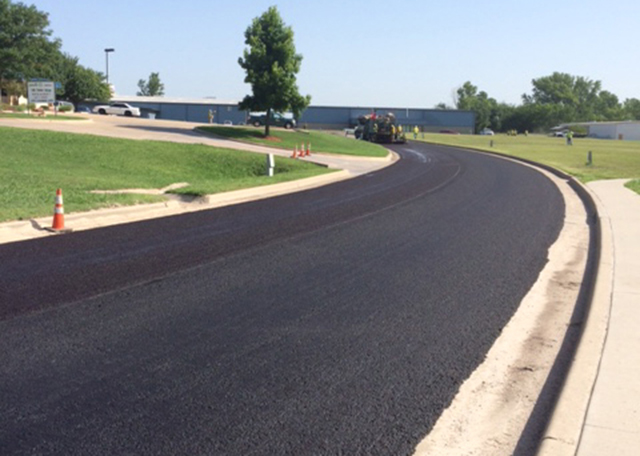
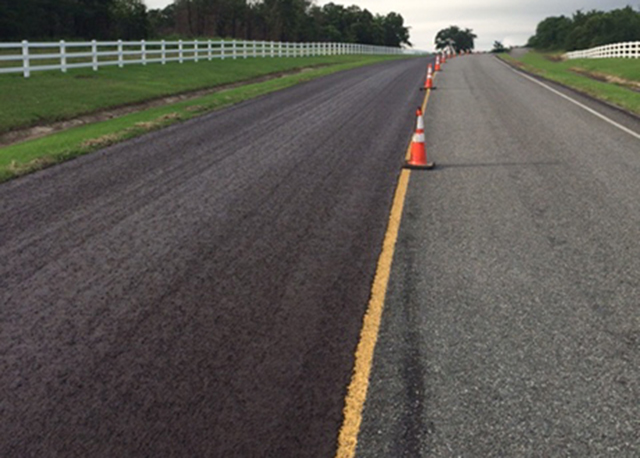
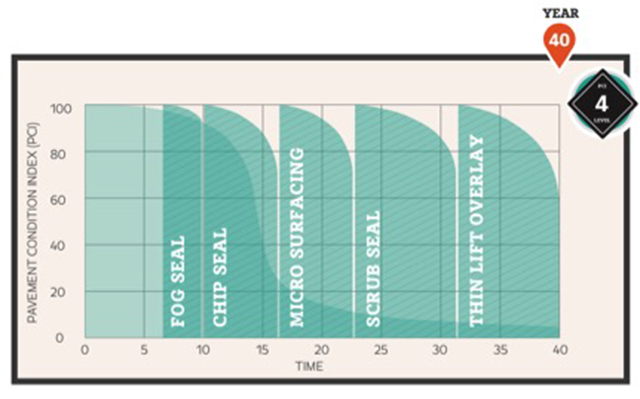
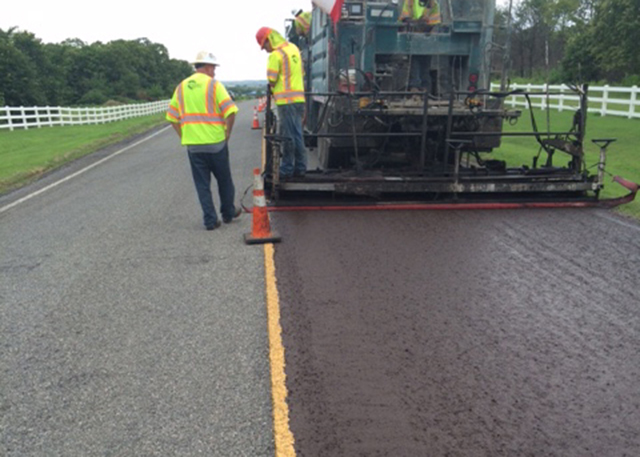
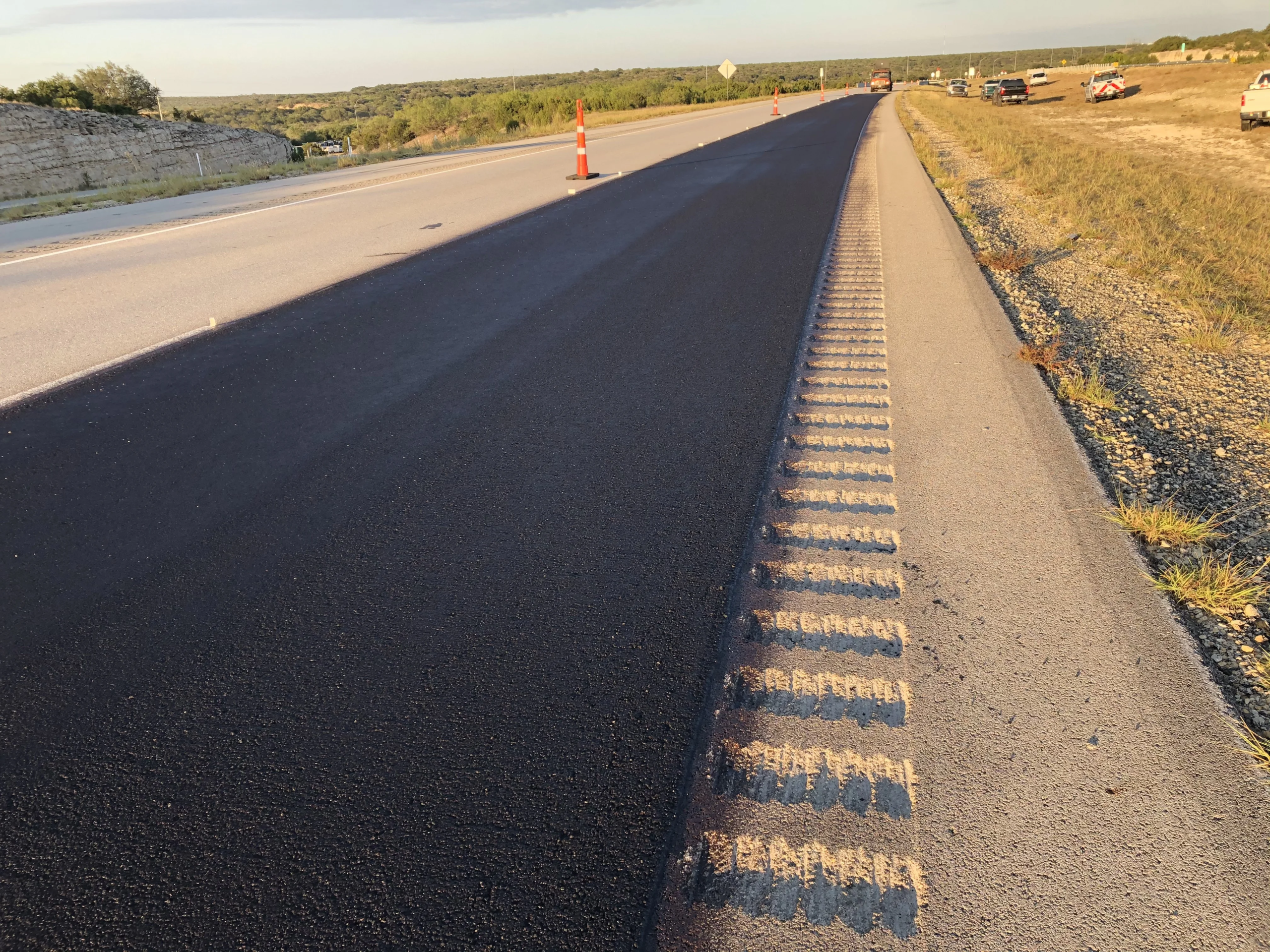
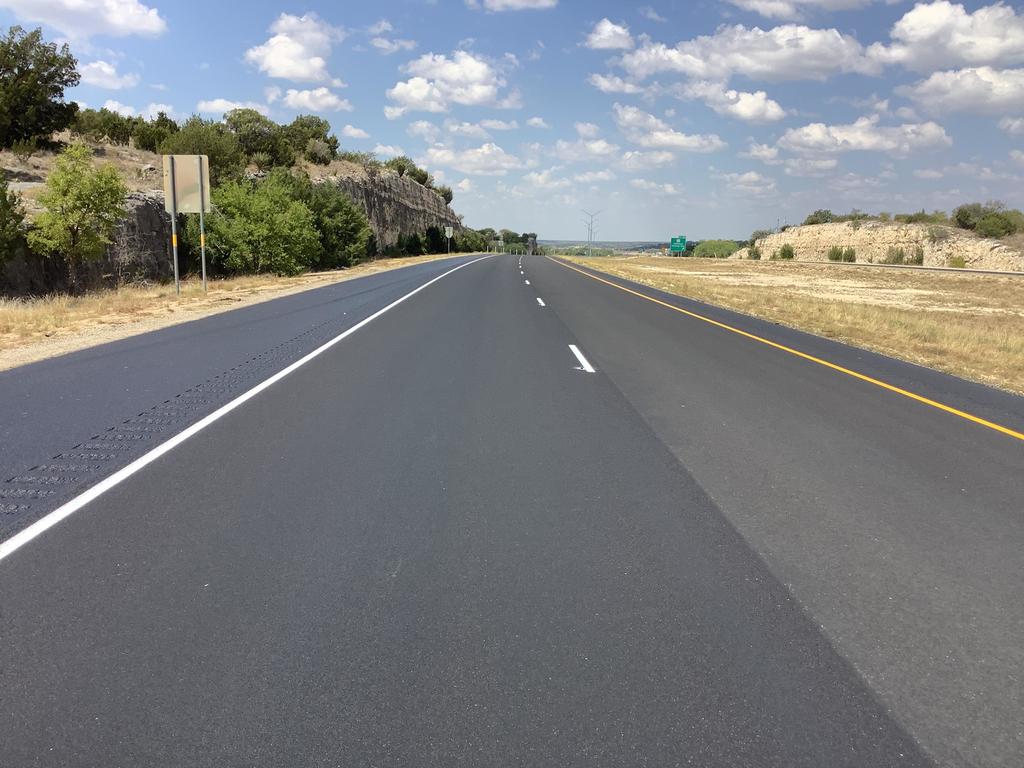
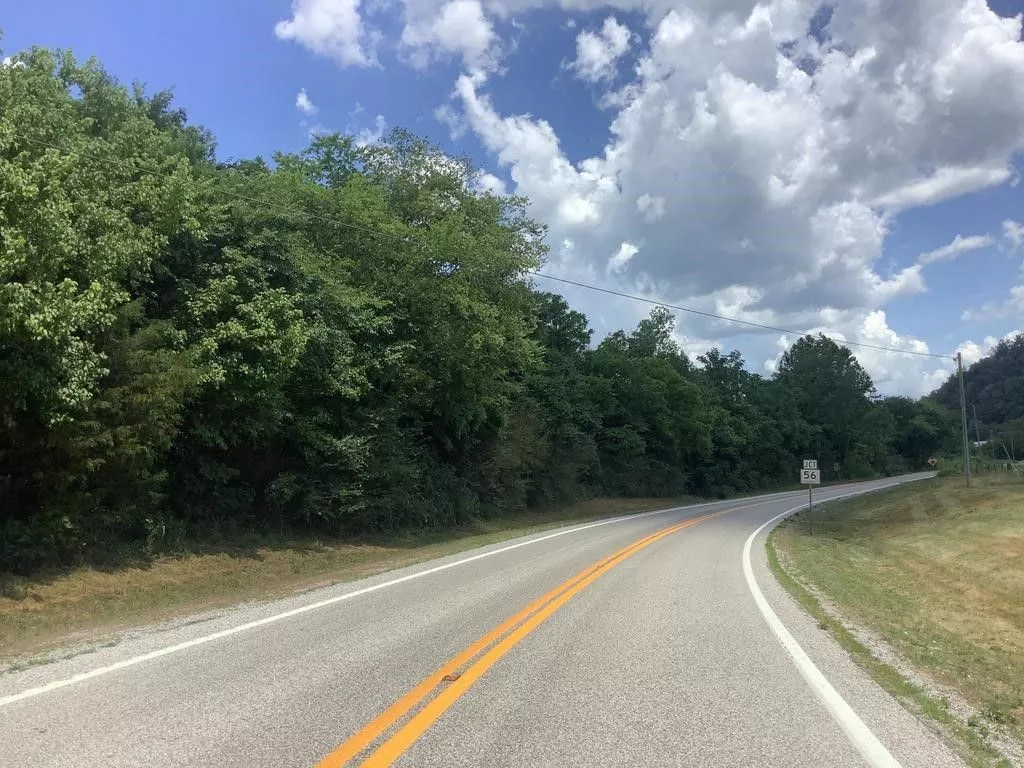
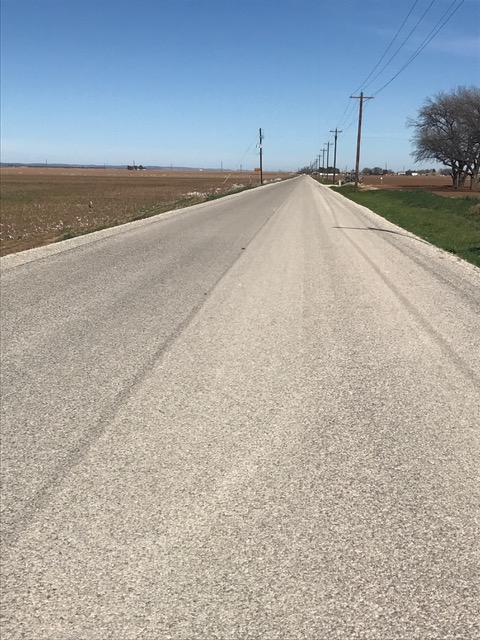
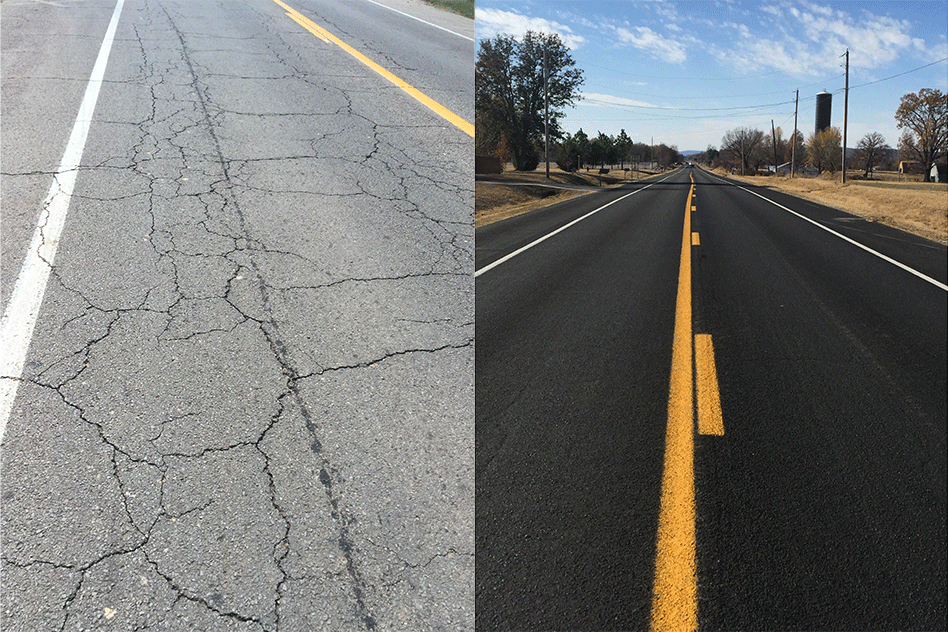
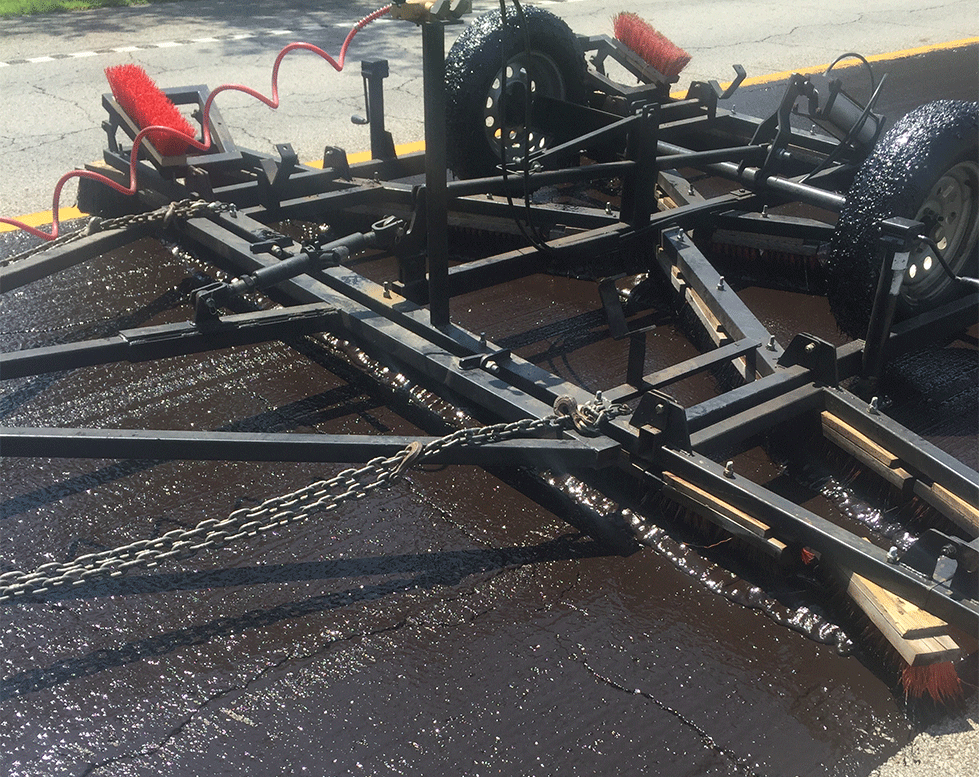
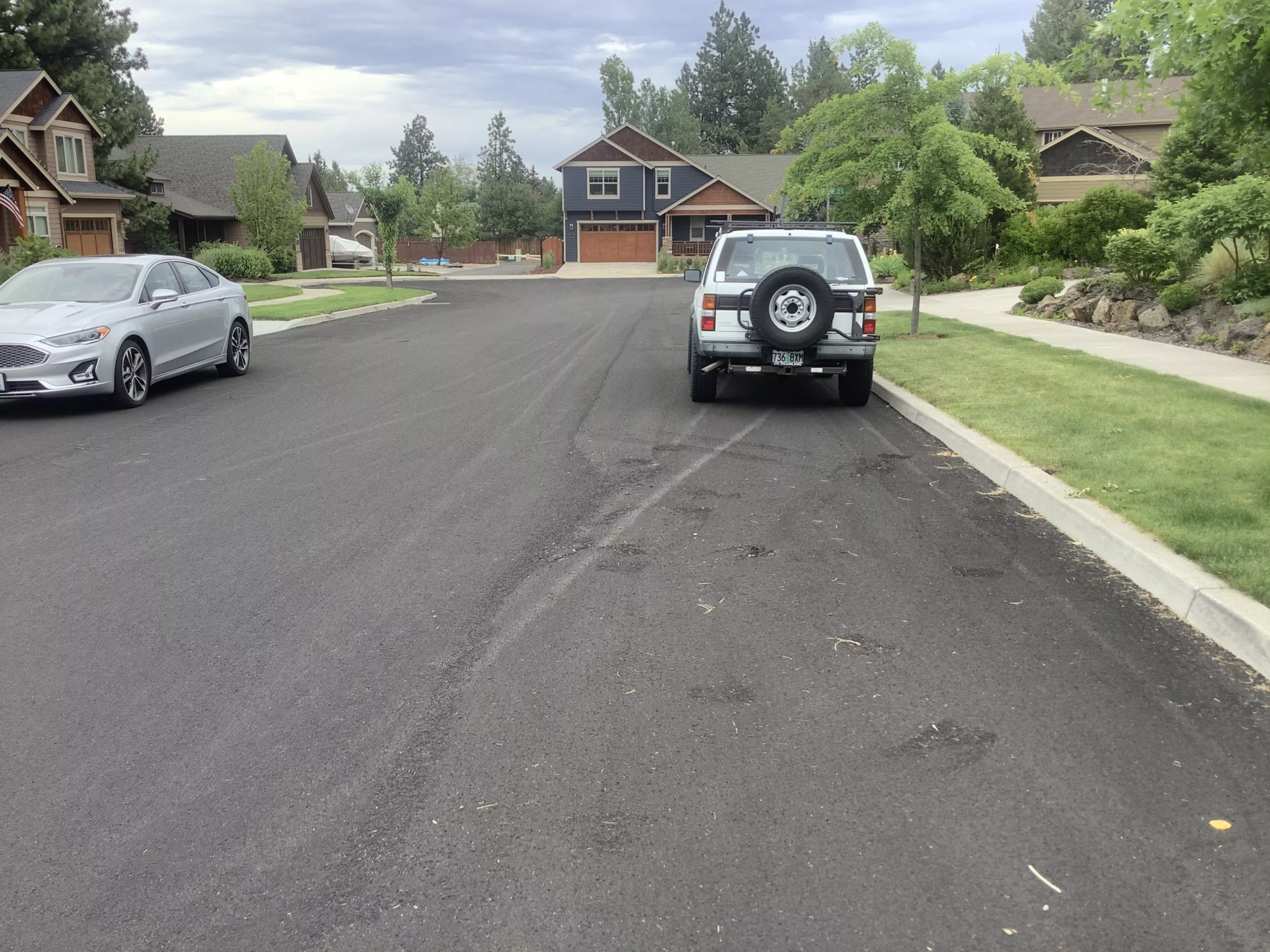
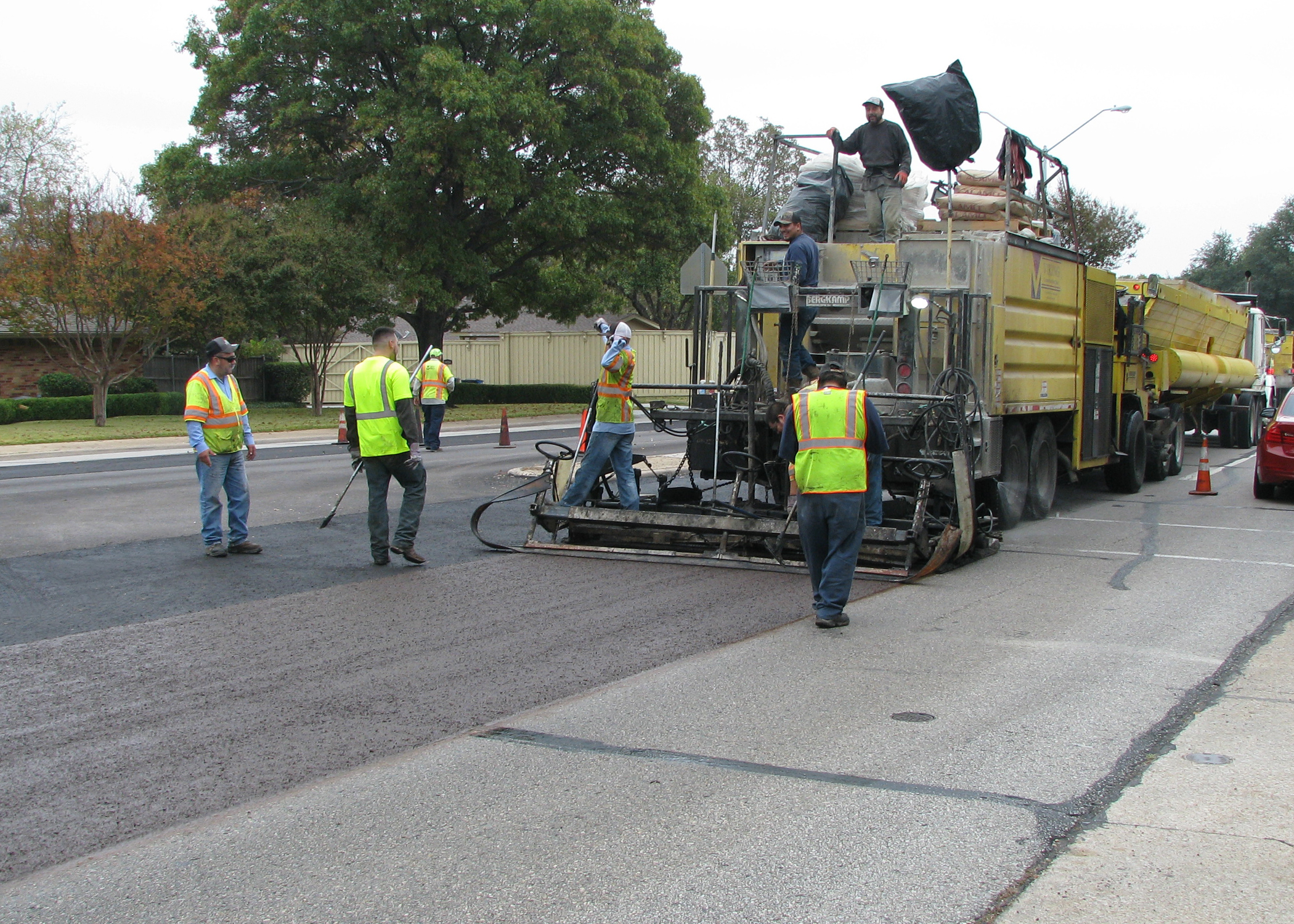
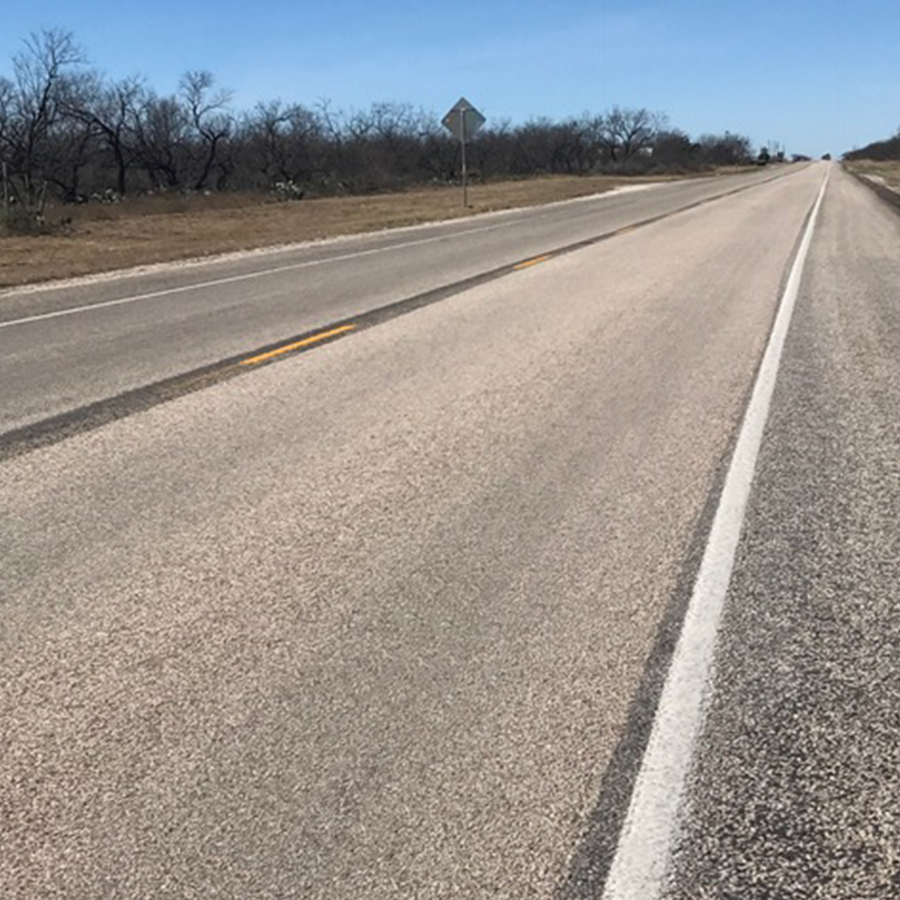
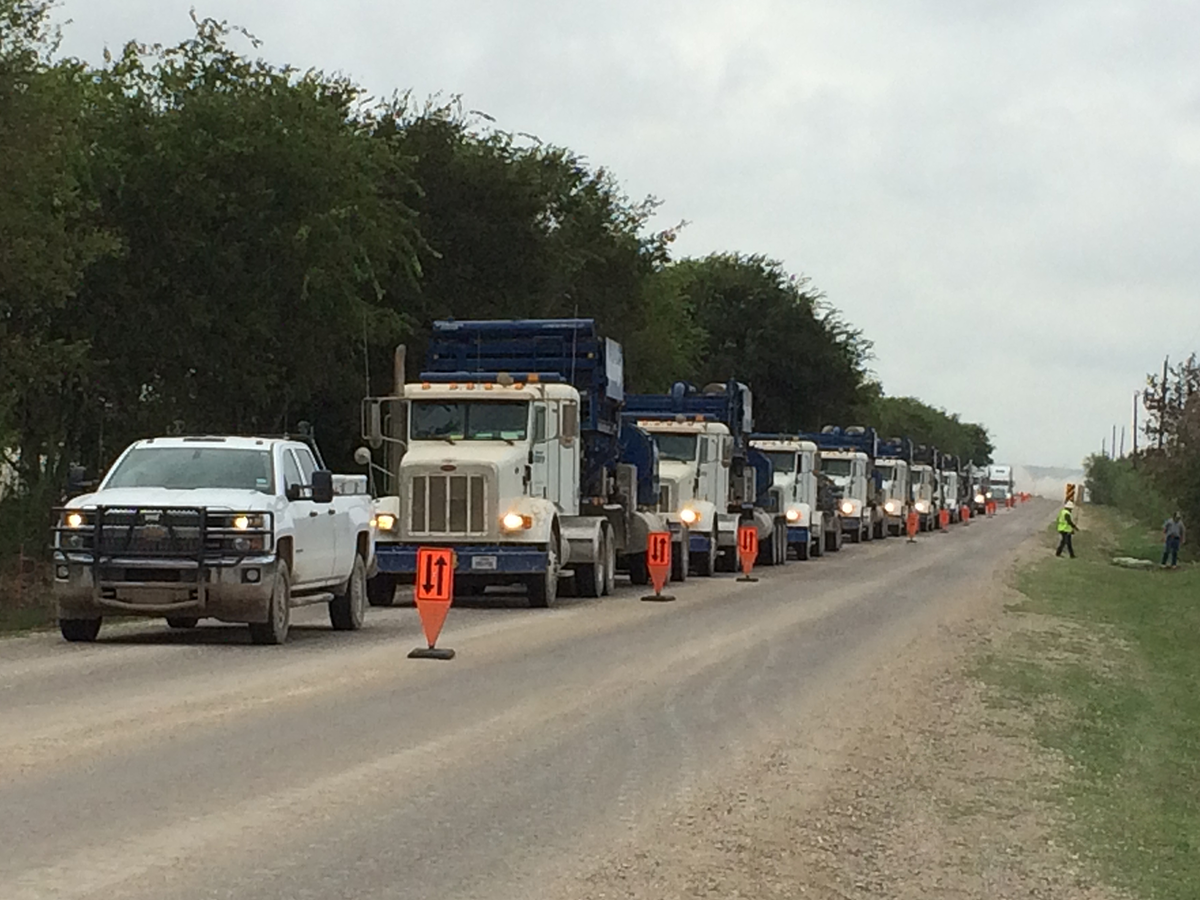
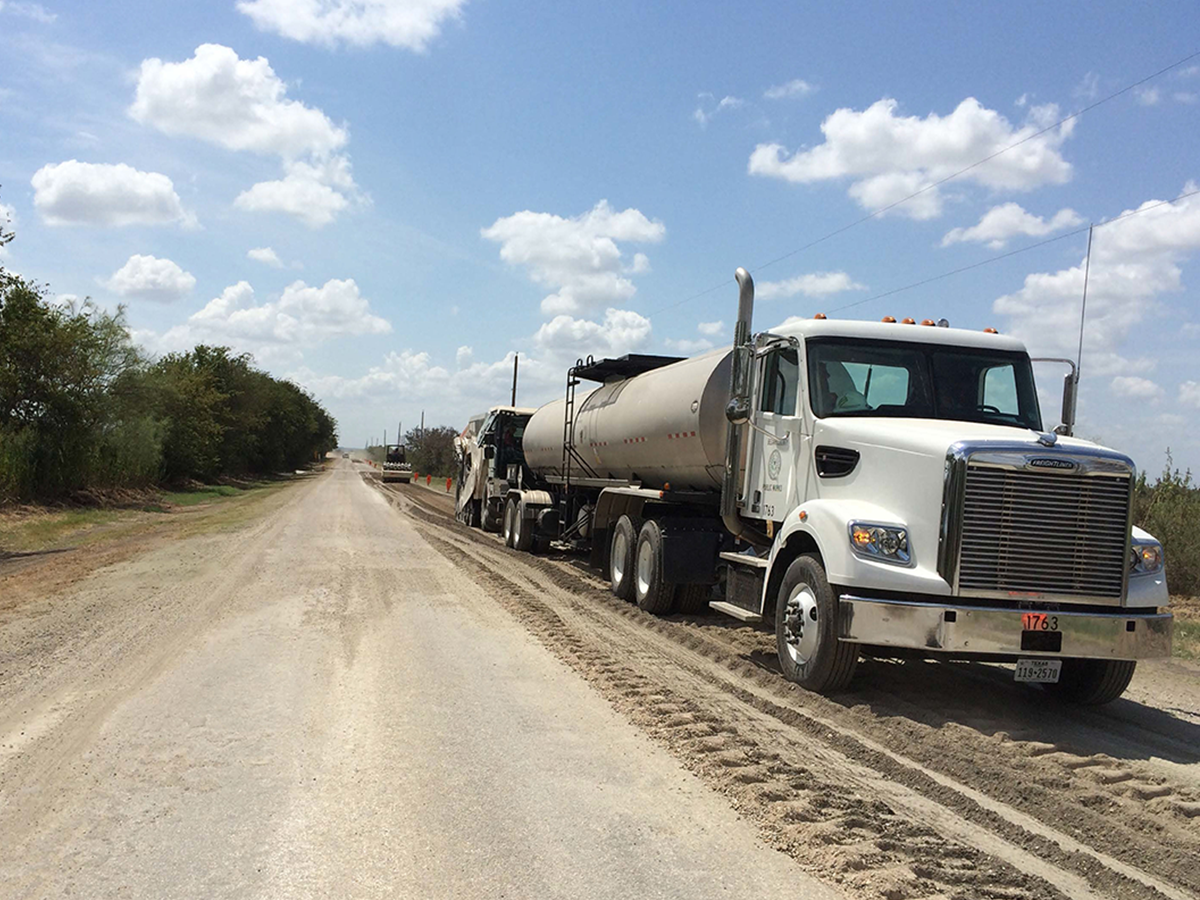
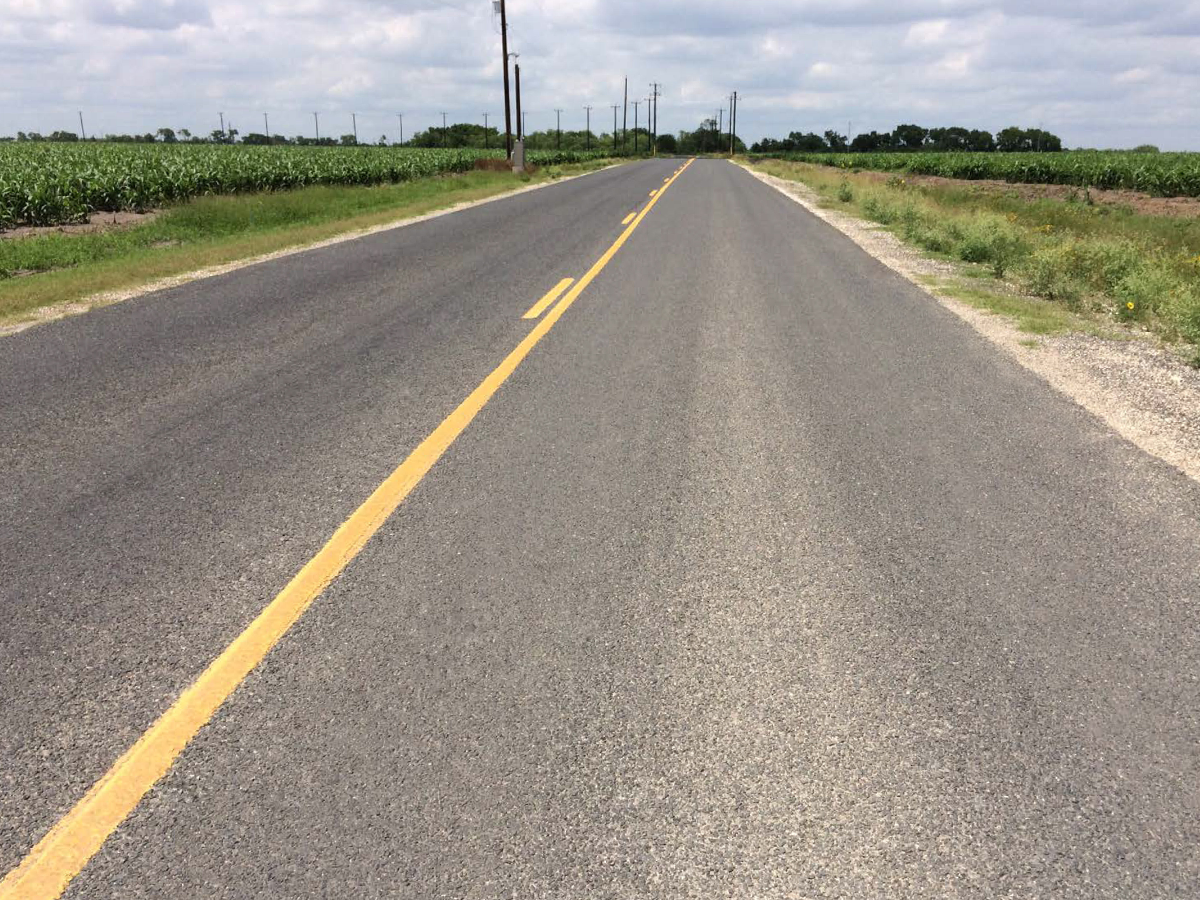 The final product holding up well with no signs of rutting.
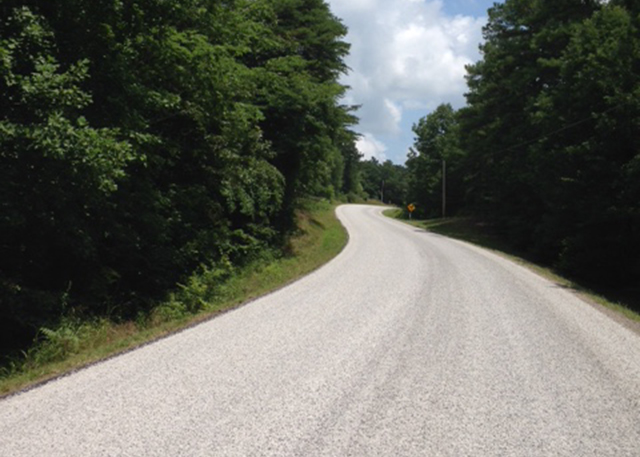
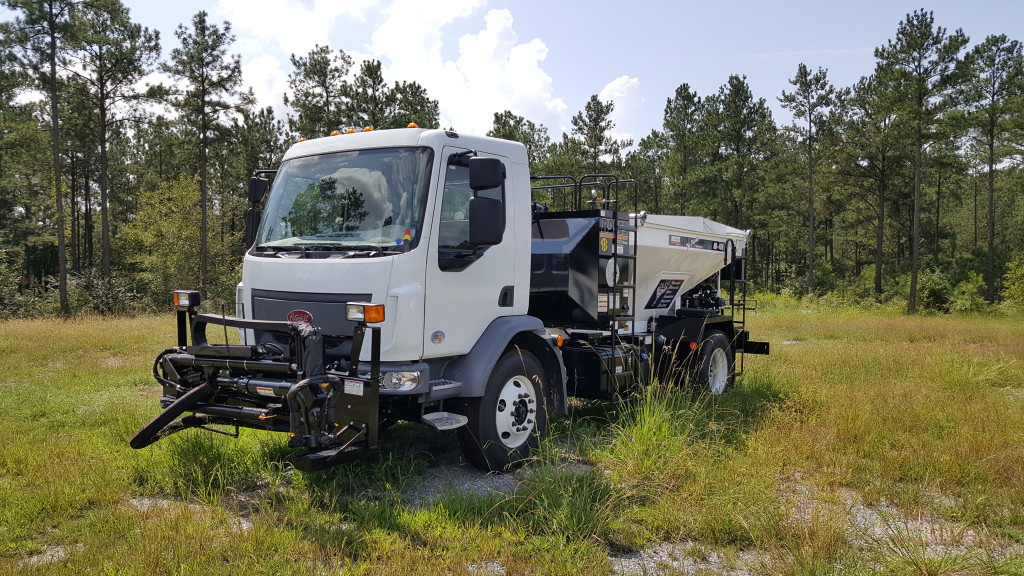
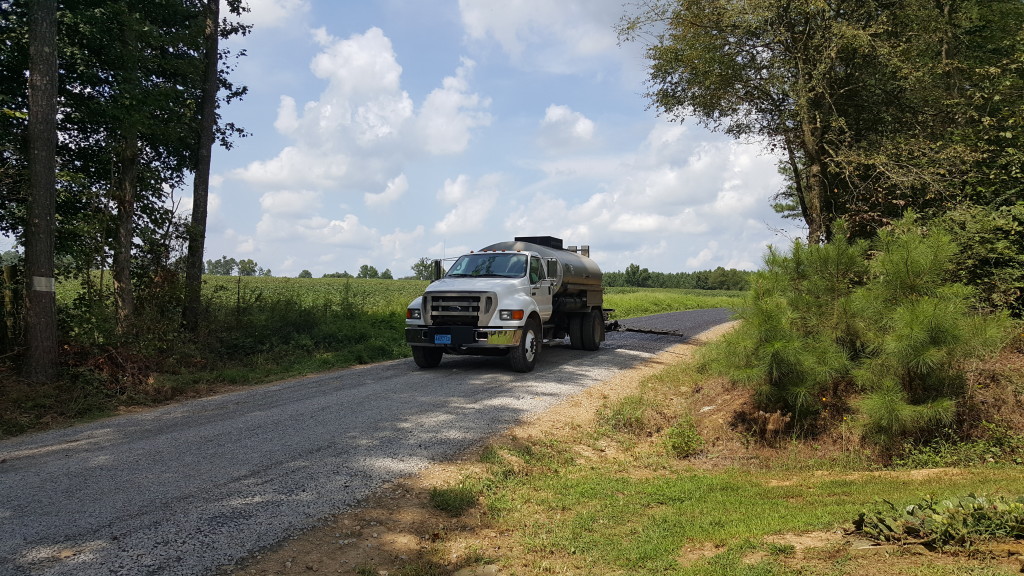
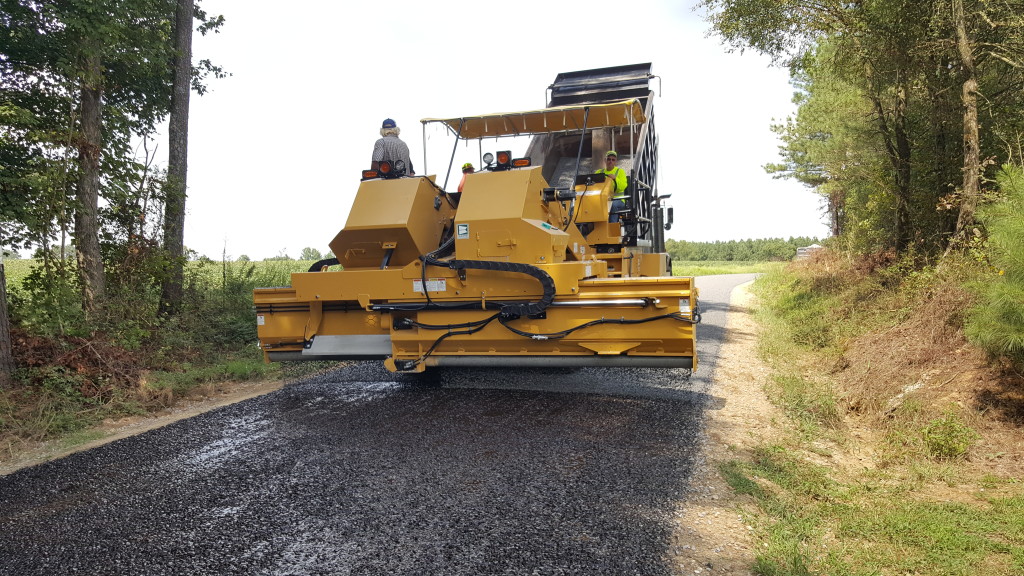

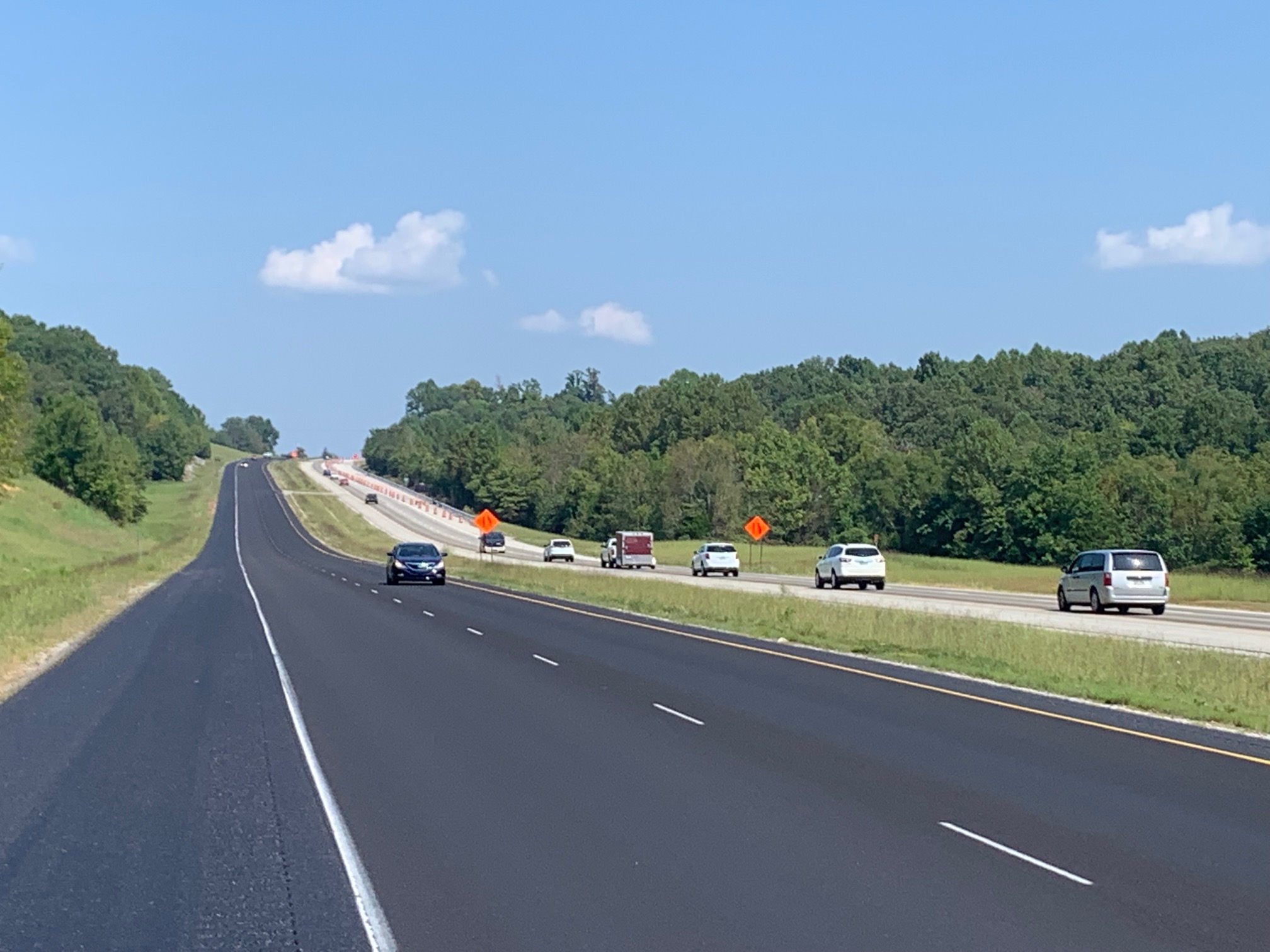
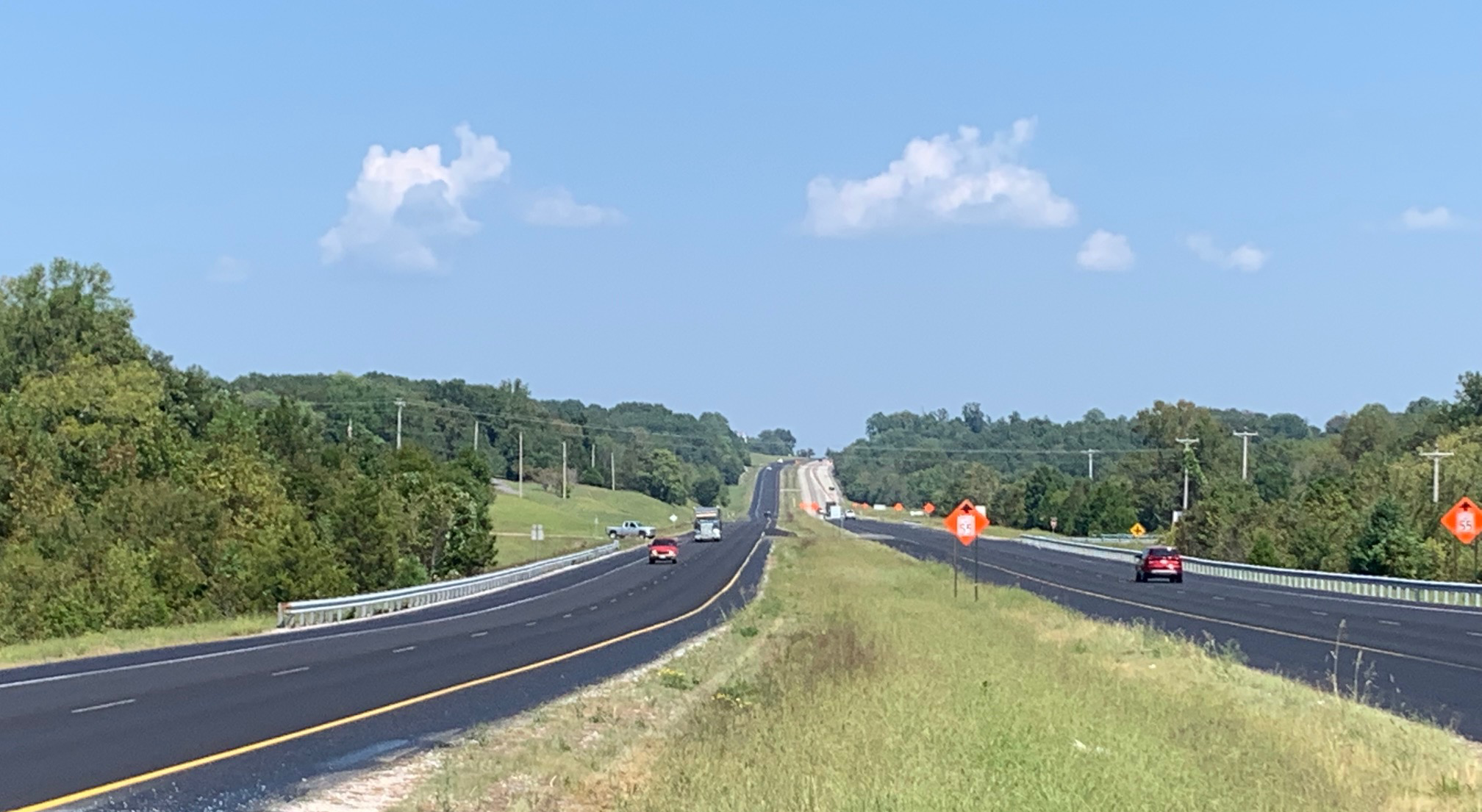
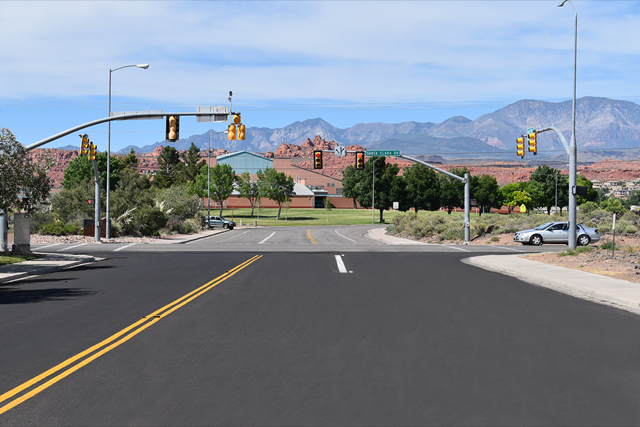
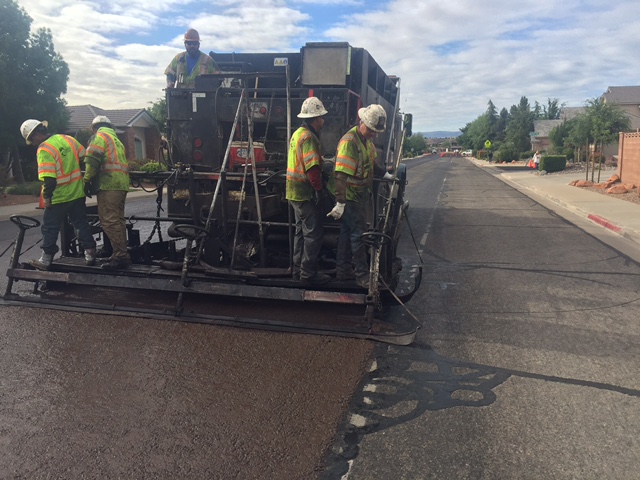
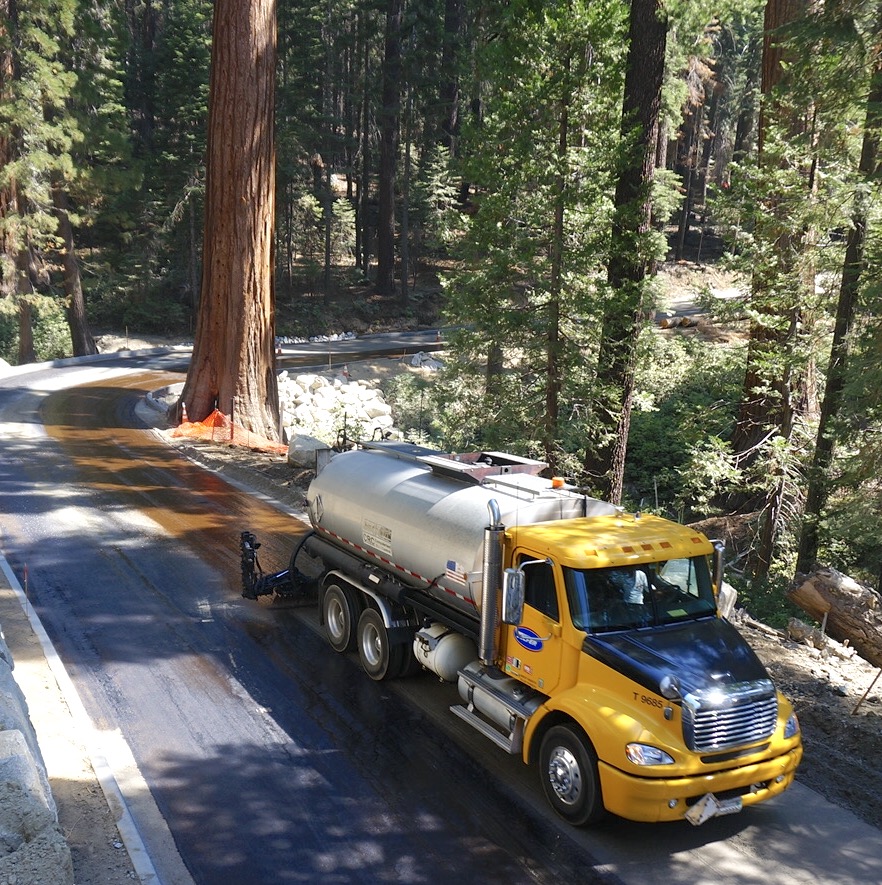
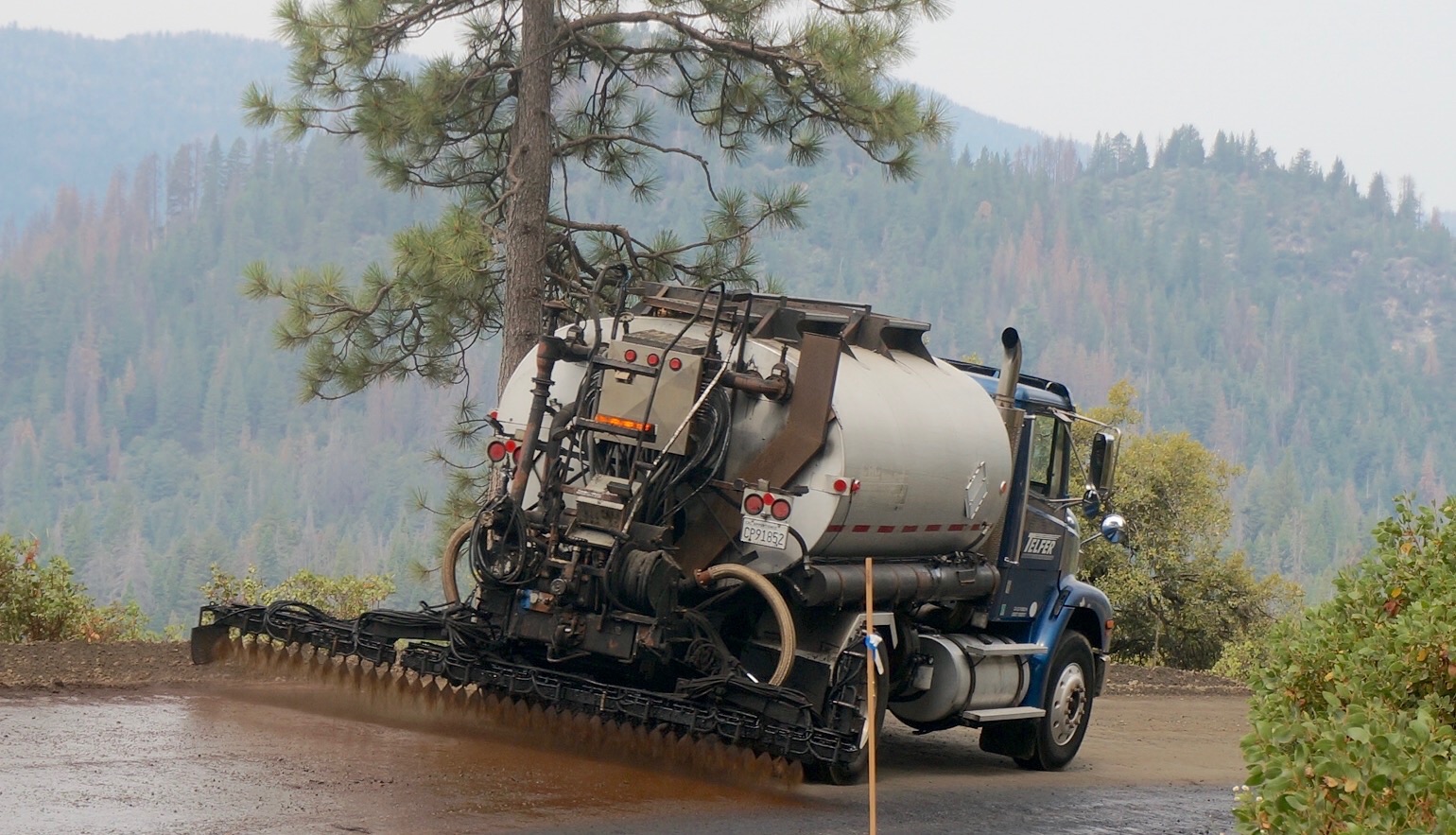
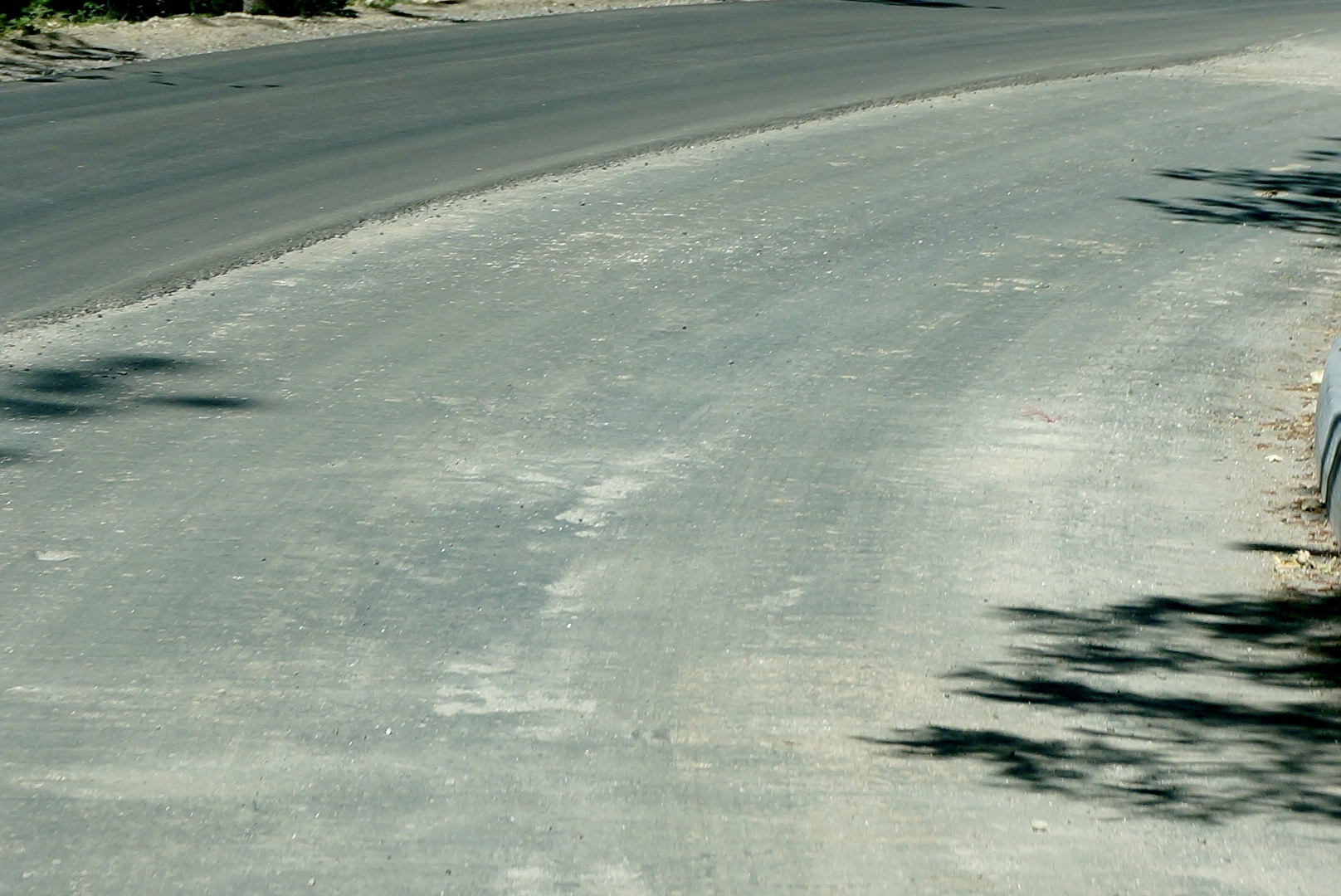

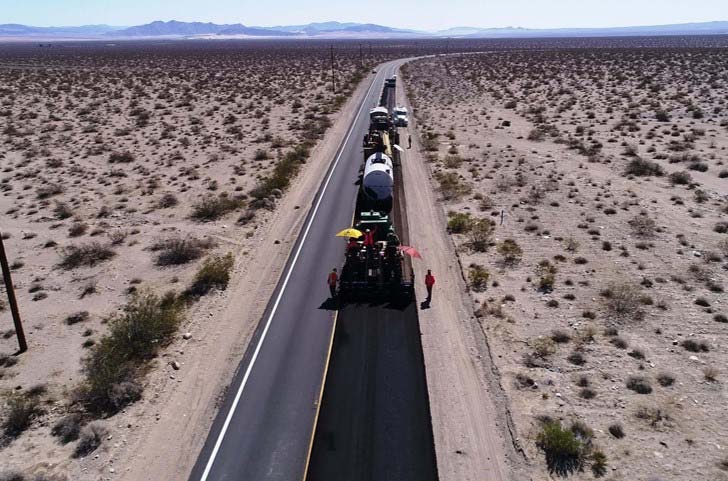
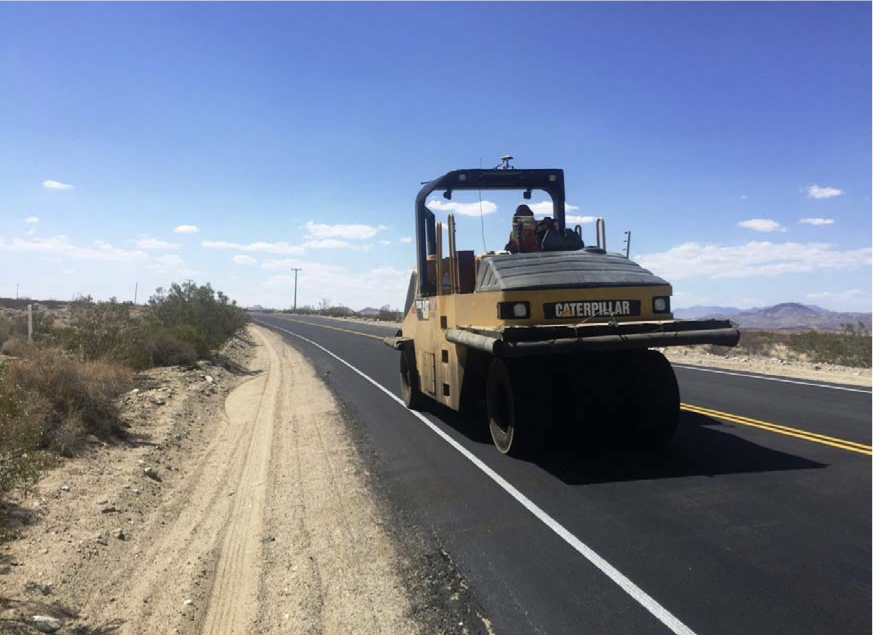
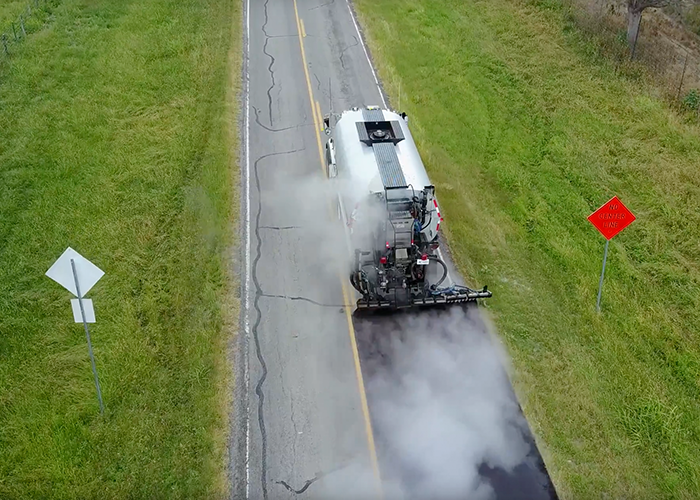
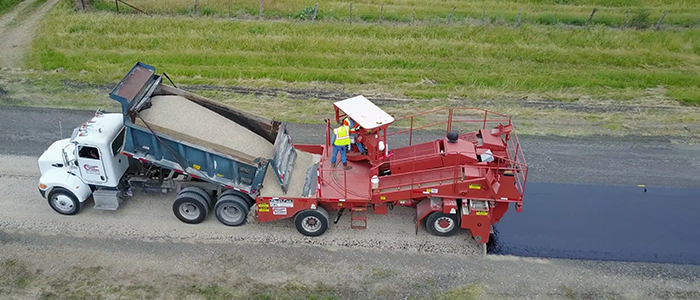
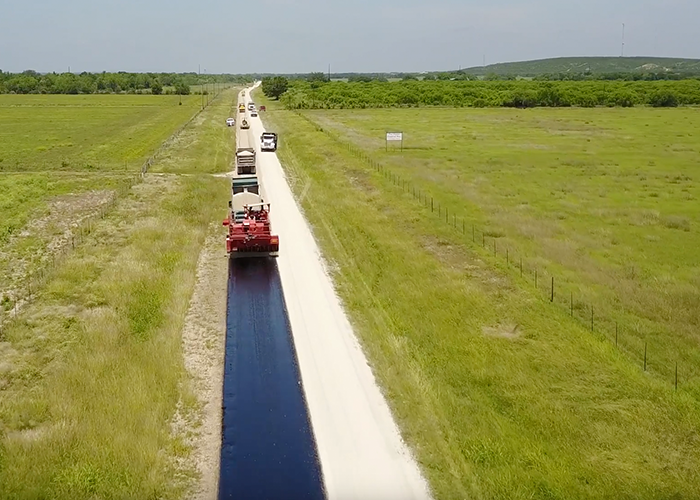
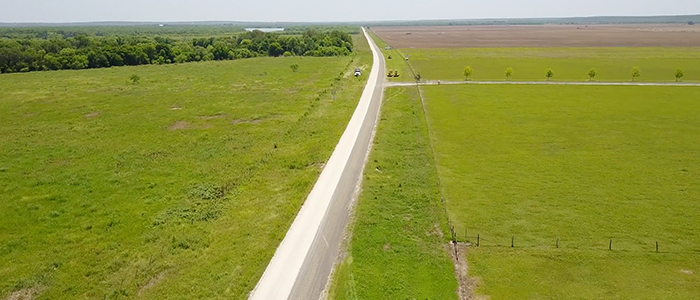
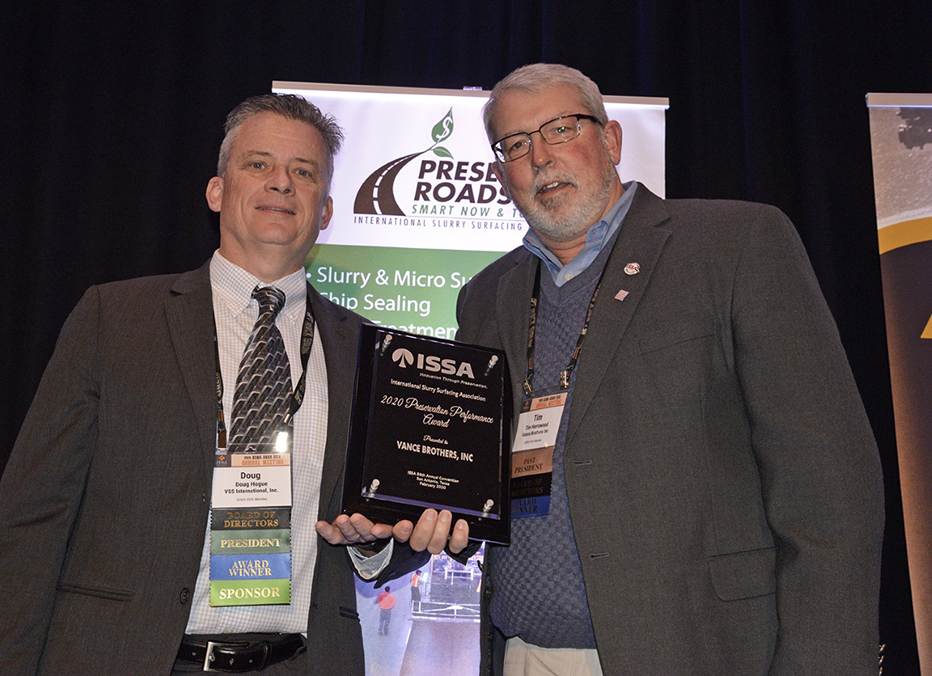
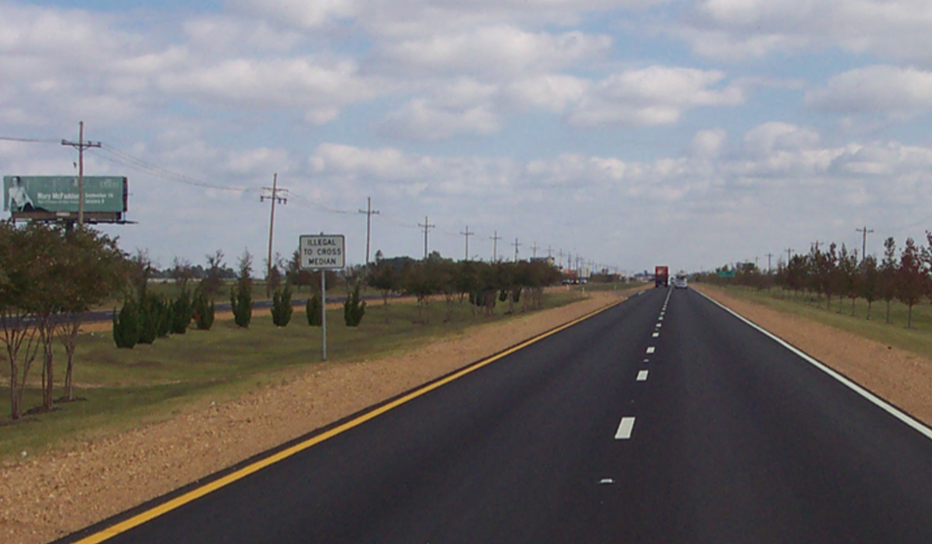
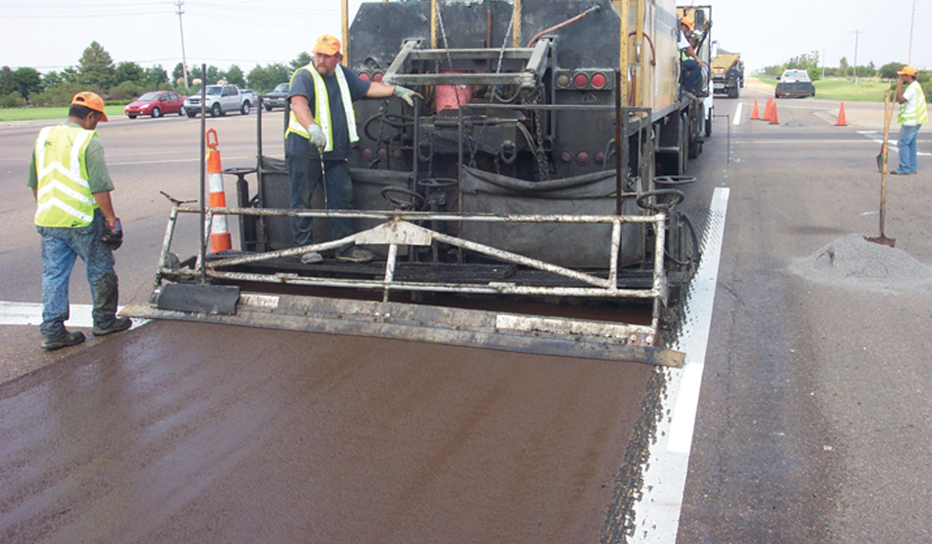
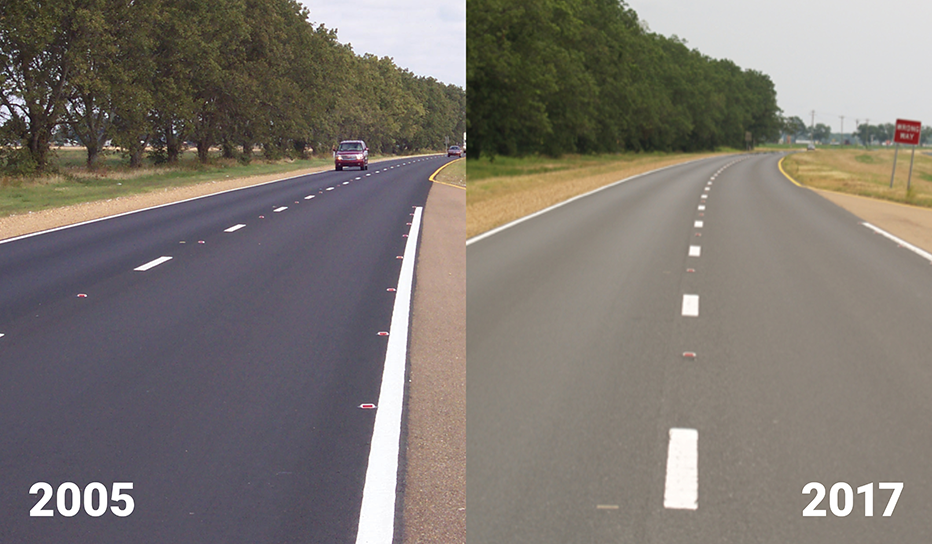
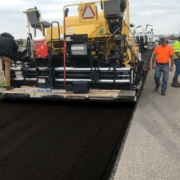
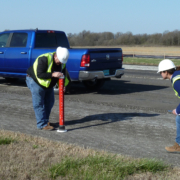
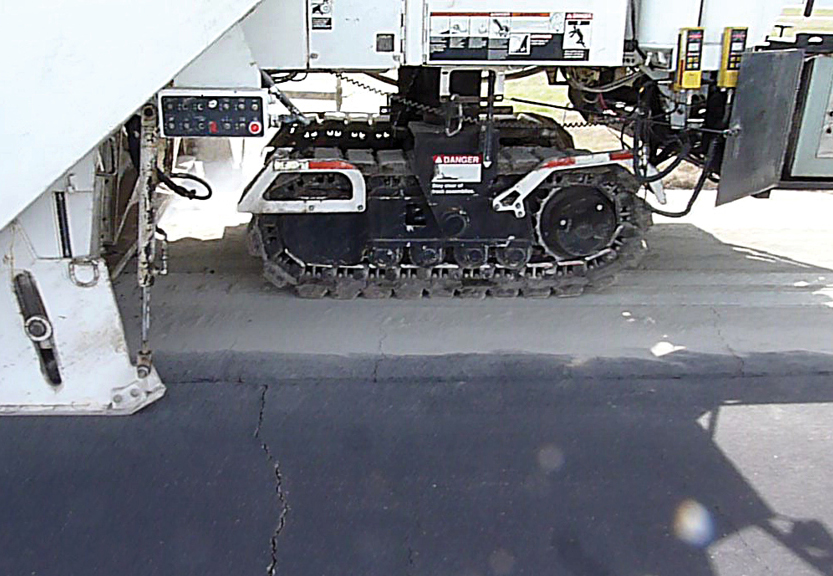
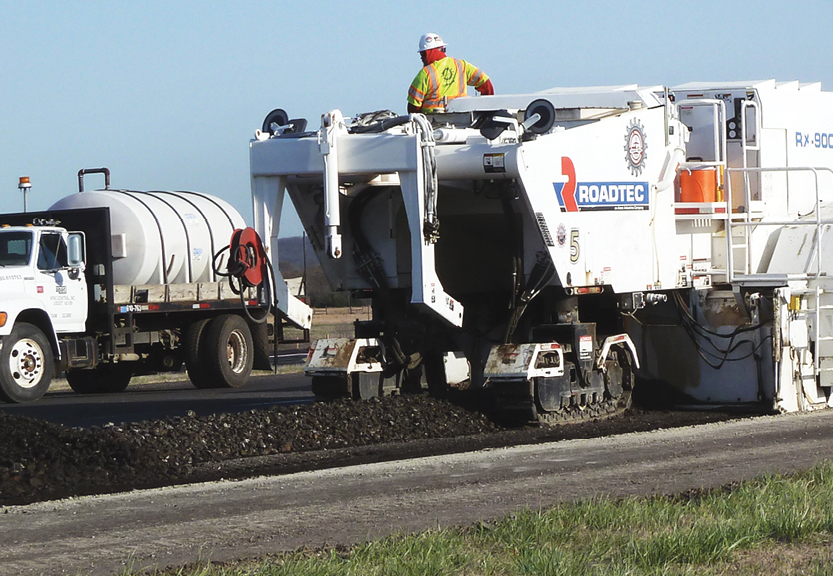
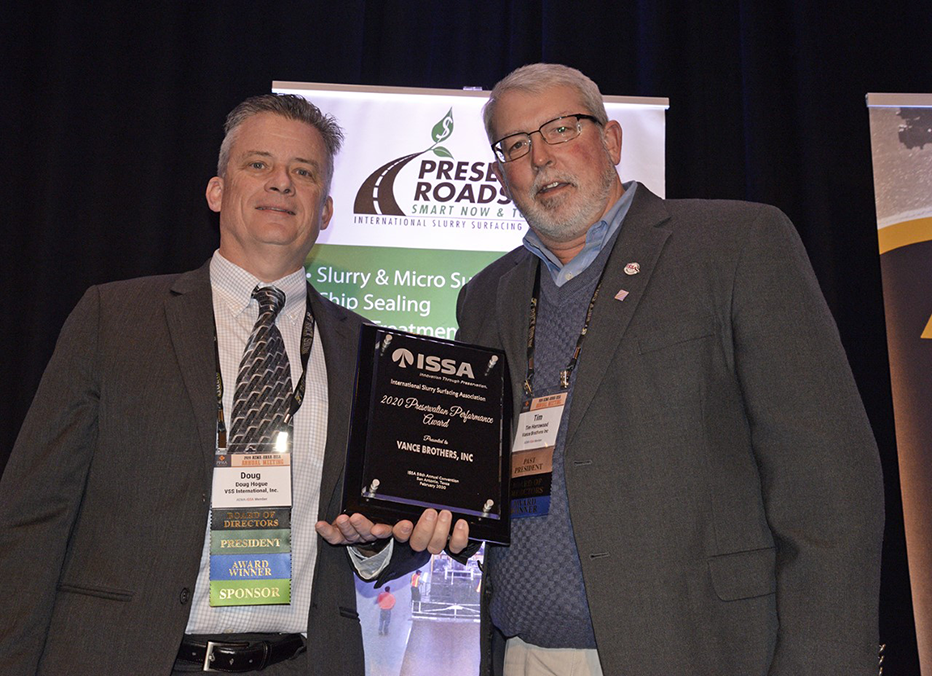
.png?v=ah344x67)
.png?v=xmdfrt9z)
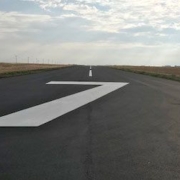
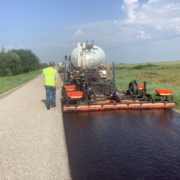
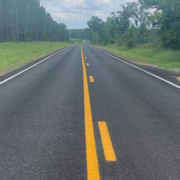
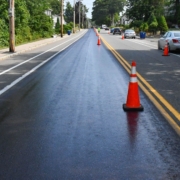
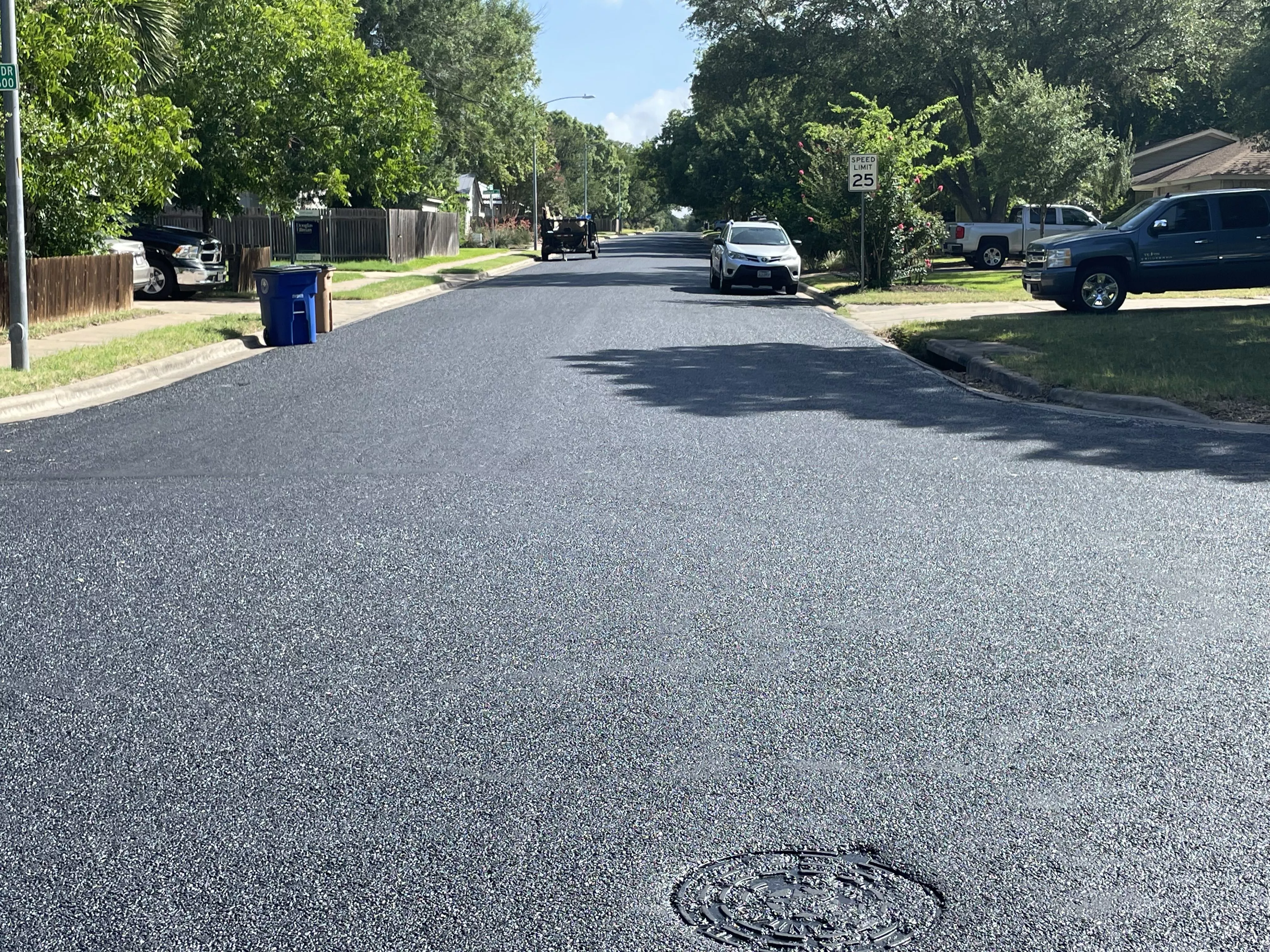
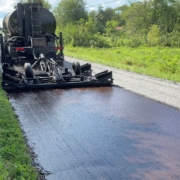

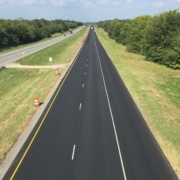
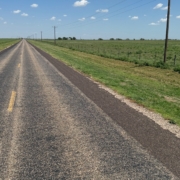
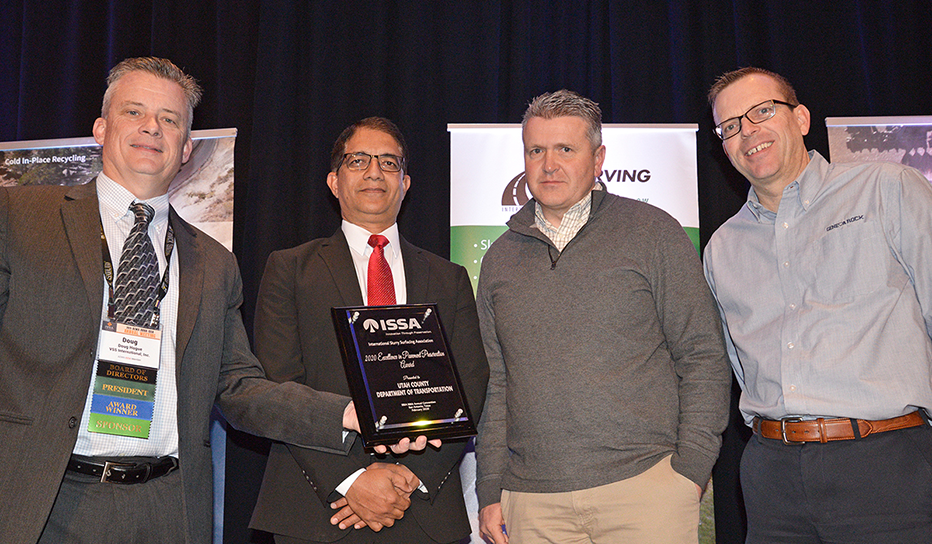
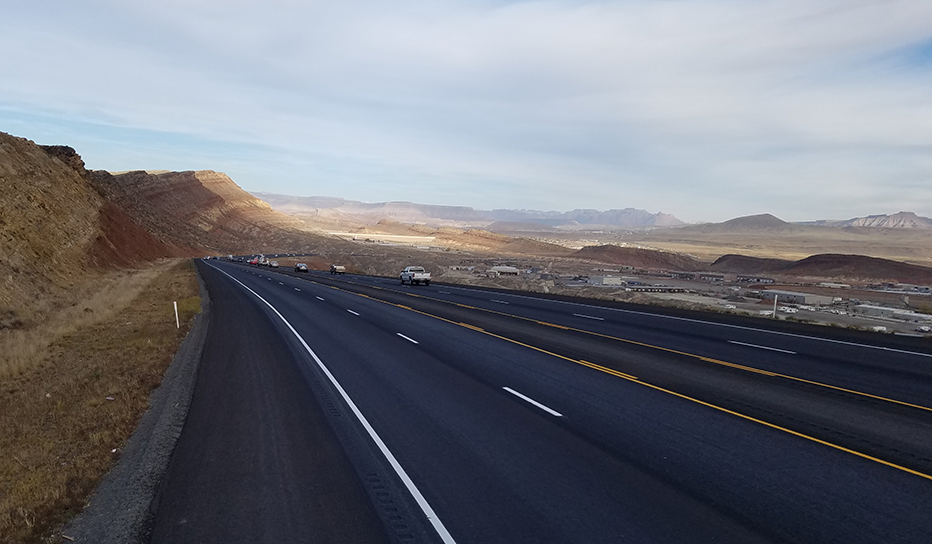
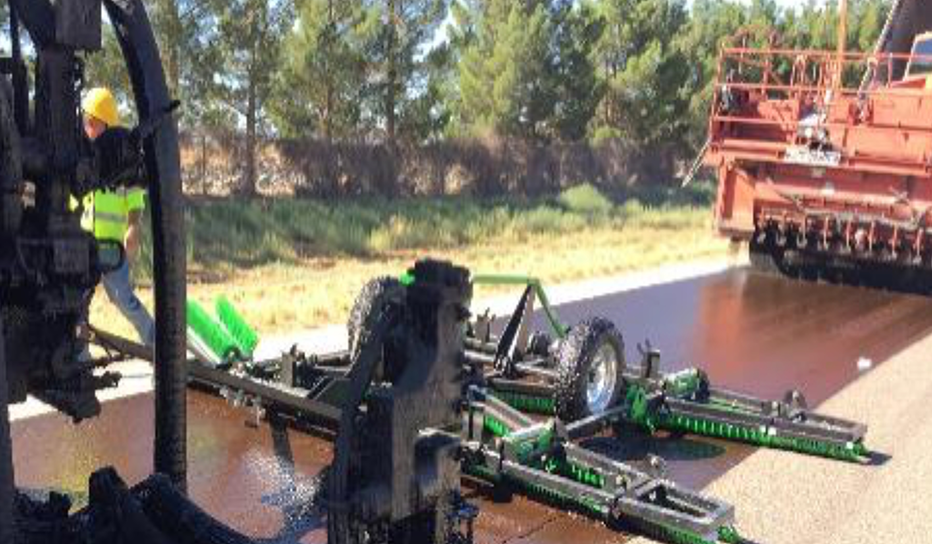
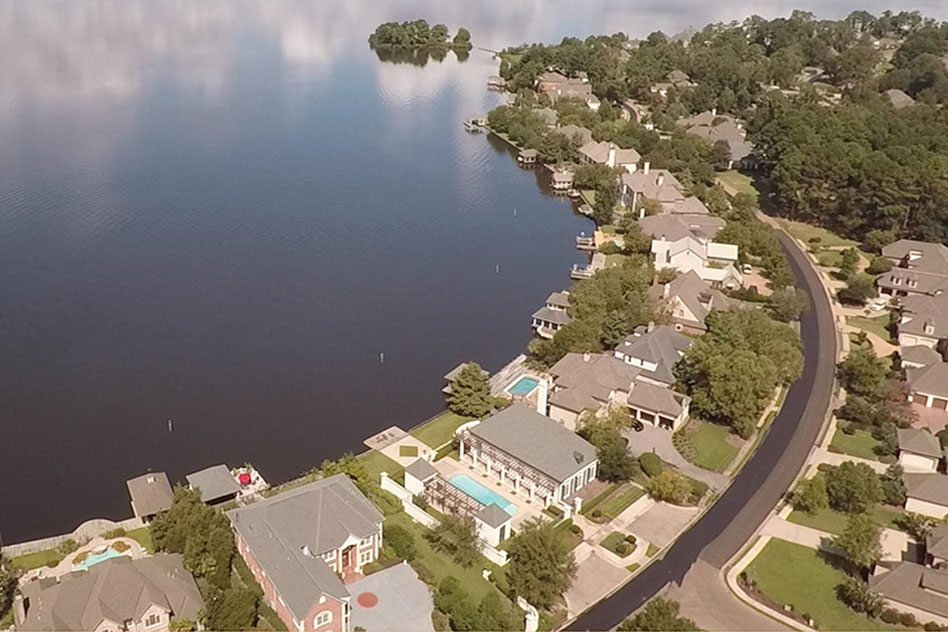
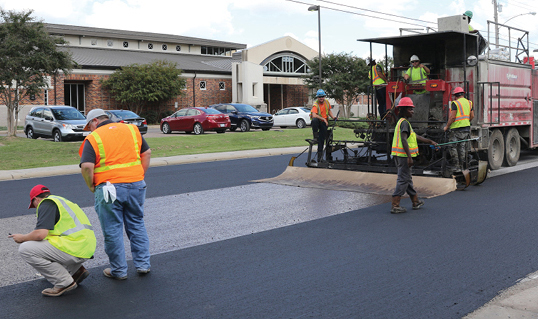
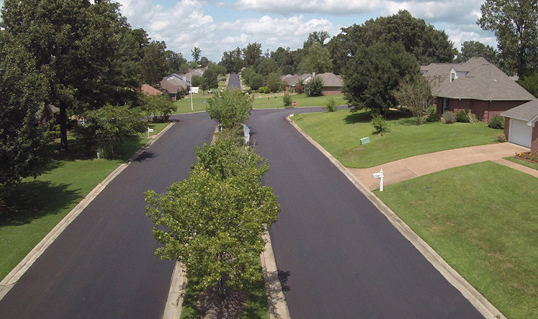
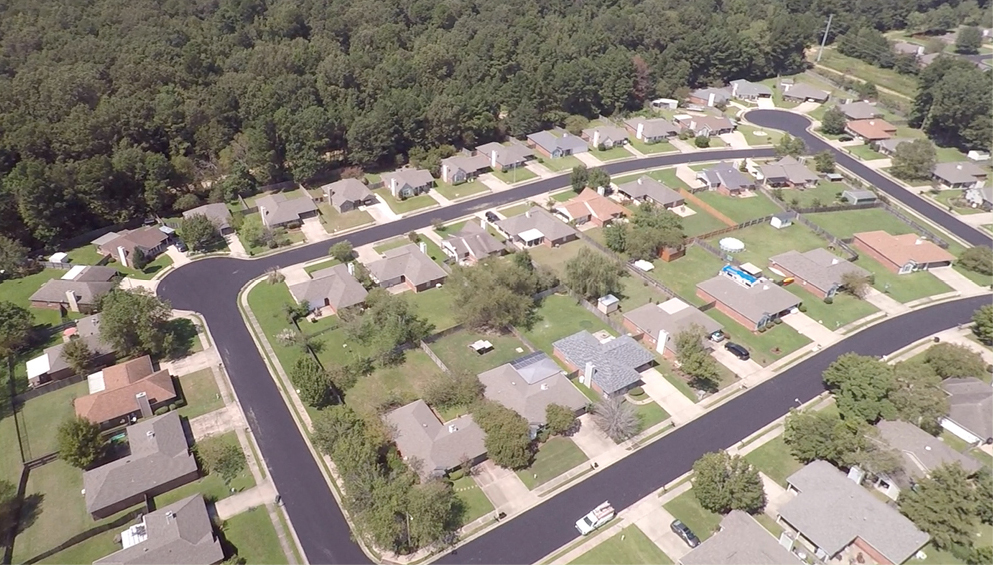 Cape Seal (Rejuvenating Scrub Seal + Micro Surfacing)