In 2019, the ALDOT – Montgomery Division performed an emergency rut fill on a section of U.S. 82. The success of this project caught the attention of the Tuscaloosa Division. Lyndi Blackburn, P.E., ALDOT’s Assistant Region Engineer, West Central Region, consulted with Ergon Asphalt & Emulsions’ (Ergon A&E) Matt Jeffers about using the same method for U.S. 82 in Chilton County.

Following Jeffers’ review of the section of U.S. 82 and his recommendation to move forward with micro surfacing to address the issues, Blackburn determined the treatment would be most suitable and cost effective. In addition to filling ruts, additional lifts of micro surfacing would increase surface friction and also provide a smoother and more durable riding surface able to withstand repeated heavy truck traffic, including log trucks traveling to and from two lumber mills.

In the past, mill-and-fill was ALDOT’s go-to treatment for rut filling. While an effective treatment, mill-and-fill is not always the most cost effective for agencies. By utilizing micro surfacing, ALDOT was able to save millions, allowing them to refurbish a well-used rest area adjacent to the project.

Application Highlights
Whitaker Contracting Corp began treating U.S. 82 on June 27, 2022, and the project was completed the week of August 8, 2022. Ruts were filled with a mixture of CQS-1HP micro surfacing emulsion supplied by Ergon A&E and Type III aggregate, applied at 22 lbs/sy. Because ruts were greater than a half inch, they were filled with a continuous paver using a specialized rut-filling spreader box. Note that ruts less than a half inch can be filled with a continuous paver using a standard spreader box.

Following the rut fill application, micro surfacing was applied in two lifts using the CQS-1HP and Type II aggregate, totaling 38 lbs/sy. The first lift was applied to level the profile of the roadway and the second would serve as a surface course for improved durability, safety and enhanced friction.

Results
ALDOT has been pleased with the initial performance of the 2022 project. They plan to continue rut filling with micro surfacing along sections of U.S. 82 as necessary, with one project already in the works.

“Micro surfacing saved us approximately $2.3 million and allowed us to upgrade the parking in a rest area. We expect to get at least eight or more years of service from this project,” said Blackburn.

_________

The 2019 and 2022 projects have put micro surfacing on the map as a cost-effective rut fill solution for Alabama highways while proving the versatility of preservation and maintenance treatments. The ALDOT – Tuscaloosa Area earned national recognition for their project, receiving the Asphalt Emulsion Manufacturers Association’s 2023 Past Presidents’ Award for Emulsion Excellence.

If you’re interested in finding out how you can apply award-winning micro surfacing solutions to improve the performance of your roadways, contact your local Ergon A&E salesperson today.

A Job for Cape Seal

After careful consideration of treatments to meet ADOT’s desire to extend the service life of 32 lane miles of SR-260, it was decided that a cape seal treatment would be the best solution. Cape seals are combination treatments that help reduce moisture intrusion and provide a durable wearing course.

The SR-260 cape seal project was bid at a cost of approximately $6 per square yard. A hot-applied chip seal would be applied as the first course, followed by either a micro surfacing or slurry seal for the wearing course, depending on access to other routes. Micro surfacing would be designated for use to provide more durability in areas where that access exposes the surface to lateral forces from braking and turning. Conventional slurry seal would be applied in areas that were subjected to less stress. By utilizing both the micro surfacing and slurry seal treatments, ADOT would be able to evaluate the performance of each for future use in similar scenarios.

FHWA Pilot Project

The SR-260 cape seal was selected as the pilot project for the Federal Highway Administration (FHWA) Every Day Counts (EDC4) initiative that “supports preserving highway investments by managing transportation pavements proactively.” The SR-260 cape seal would be observed and evaluated as part of the ongoing mission of the EDC4 program which aims to show agencies across the country how applying the right, cost-effective treatment on the right road at the right time preserves pavements, enhances performance and extends service life for a number of years.

Prep Work Makes the Cape Work

Prior to beginning the cape seal applications, cracks greater than 1/4 inch were sealed, and a few small sections that were badly worn were milled and leveled. “ADOT needed to level the failed sections of SR-260 with the rest of the sections to assure rideability and safety,” said Mo Rahman, P.E., EAE West Region Technical Marketing Manager.

SR-260 Application Highlights

In May 2020, traffic on the four-lane highway was shifted to two lanes as the hot-applied chip seal application began. Following the hot chip seal binder application, 3/8 inch pre-coated aggregate was applied. This process was completed in approximately three weeks, with traffic returned to each newly chip sealed section immediately following application.

Then, in June, micro surfacing applications began. This treatment was applied at 30 pounds per square yard. Although micro surfacing is designed to support straight rolling traffic within one hour, traffic was not returned for three hours, as ADOT wanted to ensure the new surface was cured sufficiently to withstand the variable traffic patterns. Slurry seal applications to designated sections began in July, also at 30 pounds per square yard. Each section cured in approximately two hours and traffic was returned six hours following application. (Note: It is typical for micro surfacing to cure faster than slurry seal systems.)

Exceeding Performance Expectations

ADOT was pleased with the outcome of the project and plans are in the works for additional cape seals in the state. “The cape seal project transformed a deteriorating segment of roadway into a very nice roadway, and the project exceeded all the goals and expectations for ADOT,” said Kevin Robertson, PE, Surface Treatment Engineer & Pavement Condition & Evaluation Manager. The SR-260 cape seal project saved ADOT approximately $3 million over the alternative solution and is expected to extend the service life of this 32 lane mile section of SR-260 for 10 to 12 years.

Environmental Benefit

Along with achieving immediate performance benefits and smoother ride quality, there were environmental benefits to applying this treatment on SR-260. According to Robertson, “The quantity of raw materials and greenhouse gas emissions were also significantly reduced by using a cape seal.” According to roadresource.org, cape seals reduce greenhouse gas emissions by 30% when compared to a hot mix asphalt overlay.

Learn More

If you’re interested in learning how you can strengthen and extend the service life of your road and treat more miles using your existing budget, contact one of our expert team members near you today.

Micro Surfacing Yields Consistently High Friction

High friction (or skid resistance) allows vehicles to move at accelerated speeds while reducing the tendency for slipping and sliding of tires along pavement, thereby decreasing the risk of skid-related accidents. When checking friction numbers within their road network, TxDOT reps found that a 10-year-old micro surfacing treatment produced the best results, which led them to reconsider its use.

“We checked friction numbers on many roadway surfaces including various seal coats (chip seals), hot mixes, LRA (limestone rock asphalt) and micro surfaced roads,” said Lewis Nowlin, P.E., former Area Engineer, TxDOT, San Angelo District, Junction Area Office. “I was surprised to see that a section of I-10 with 10-year-old micro surfacing resulted in the best friction numbers. These results helped our district make the decision to go with micro surfacing to help improve friction on another section of I-10 in Crockett County.”

Benefits

Micro surfacing treatments provide long-term results including a durable and high-friction surface that allows roads to withstand damage from heavy traffic loads as well as extreme weather, which helps to reduce the likelihood of vehicles skidding at accelerated speeds and/or hydroplaning. “When you’re looking to increase friction, the main product that’s going to get you the numbers you need is micro surfacing,” said Cody Chambliss, EAE Area Sales Manager – Texas.

Cost Savings

Typically, treatments such as an ultra thin lift overlay (UTLO) would be used to fix wear and tear and strengthen high-speed roads. This is certainly an exceptional tool to have in your toolbox if your budget allows for continual use of such an application; however, micro surfacing can yield greater long-term friction results throughout its service life than UTLO, and at a lower cost. On average, a UTLO is $6.50 per square yard. That’s almost double the cost of micro surfacing. The sheer volume of miles in need of improved friction numbers within TxDOT’s network called for a more conducive and economical solution.

Pre-Construction Training Offered

TxDOT had used micro surfacing in years past, but with the normal personnel changes in the department, its use began to dwindle. Opportunities for newcomers to learn more about its specific benefits for roads in their network had not been fully realized. “Since it had been 10 years since our last micro surfacing project, I was unaware of all the changes to the design and specifications,” Nowlin added.

Evaluation of surface friction across their network convinced TxDOT that they should give micro surfacing another try. Once the I-10 project was let and awarded, Ergon Asphalt & Emulsions (EAE) proposed a session in which the contractor, Intermountain Slurry Seal, would conduct design, application and inspection training to help TxDOT become better acquainted with best practices for successful micro surfacing treatments. EAE was on hand to provide input and support during the session.

“The training offered was crucial in ensuring a successful project,” said Nowlin. Upon completion of training, TxDOT was ready to move forward with the I-10 micro surfacing project, which was perfect for micro surfacing because of the high-speed traffic in the area.

It was also decided that a fog seal would be applied on shoulders along I-10, which would restore essential properties to the asphalt on these sections that were lost over time due to exposure to high west Texas temperatures.

Application Highlights

On August 3, 2020, Intermountain Slurry Seal began the process of applying the micro surfacing solution, supplied by EAE, at 22 pounds per square yard along the 96 lane mile stretch of I-10. Exit and entrance ramps throughout the project also received micro surfacing. The treatment was applied in two-mile increments, with traffic shifted to one lane during application. The fog seal, using EAE’s eFog rejuvenating fog seal emulsion, was applied on the shoulders at 0.10 gallons per square yard. Section by section, both treatments cured in less than an hour, at which time traffic was returned. The entire project was completed by September 1.

Results

The contractor did not encounter any raw material challenges during application, and TxDOT continues to be pleased with the results. There are plans for 2021 micro surfacing applications on roads where improved friction is necessary to ensure driver safety, including more in the San Angelo district.

Read about more conventional micro surfacing success stories here, and be sure to contact one of our expert team members in your area to learn how this solution can provide lasting benefits to roads in your network.

Application Highlights

Goals of this $1.1 million project included extending pavement life 6-8 years and protecting already oxidized pavement from further oxidation and raveling. Micro surfacing materials were applied in two thin lifts to driving lanes only, with 25 pounds of dry rock per square yard in the first lift and 20 pounds per square yard in the second. The CSS-1HP emulsion (204,500 gallons) was provided by Ergon A&E’s Vicksburg, Mississippi, plant, and applied at 11.0% +/- 1.0%. Paragon Technical Services had a mix design engineer on site who reported that the optimum emulsion content was on the lower side of the specified range for the initial lift, in order to address rutting observed on the roadway. The emulsion content on the final lift was at optimum. Vulcan’s Black 11s aggregate, which passed the Mississippi Type V aggregate specification, was supplied by Vulcan Materials Company in Grand Rivers, Kentucky.

Every job has its challenges, and this one was no exception as Hurricane Katrina made landfall on the coast of Mississippi a couple of weeks after construction got underway. Although the Delta did not suffer the devastation experienced on the Coast, the job was shut down for several days due to weather. Traffic increased as people evacuated southern Mississippi and Louisiana. The hotel where Vance Brothers was boarding their crew even tried to force them to leave, so they could charge higher rates to Katrina evacuees.

Results

We are proud to report that this project has extended the service life of the pavement well beyond expectations – almost double the expected life – and provided a durable wearing surface with a friction value well above acceptable limits. No additional work has been performed on this roadway since 2005.

Cost Savings

By treating Hwy 61 (the right pavement) with the right treatment at the right time, MDOT not only improved the performance and extended the life of the roadway, but they have been able to repurpose millions of dollars that would have been required for reconstruction had this treatment not performed so well.

The annualized cost of this project, completed almost 15 years ago, comes to $1,637 per lane mile, or 24 cents per square yard. Any way you look at it, that’s money well spent.

“This 132-mile section of four-lane highway having a treatment on it that has lasted almost 15 years has allowed MDOT to reallocate that $3 or $4 million that we would typically spend on a mill and fill or something comparable, times 2 or 3, so it’s been well worth it,” said Mitch Turner, MDOT District Engineer. “In my opinion, micro surfacing should be in our toolbox.”

“By taking preventative steps … it protects the road foundation and prevents expensive reconstruction and rehabilitation projects,” added Melinda McGrath, MDOT Executive Director. “This preventative treatment has been very successful.”

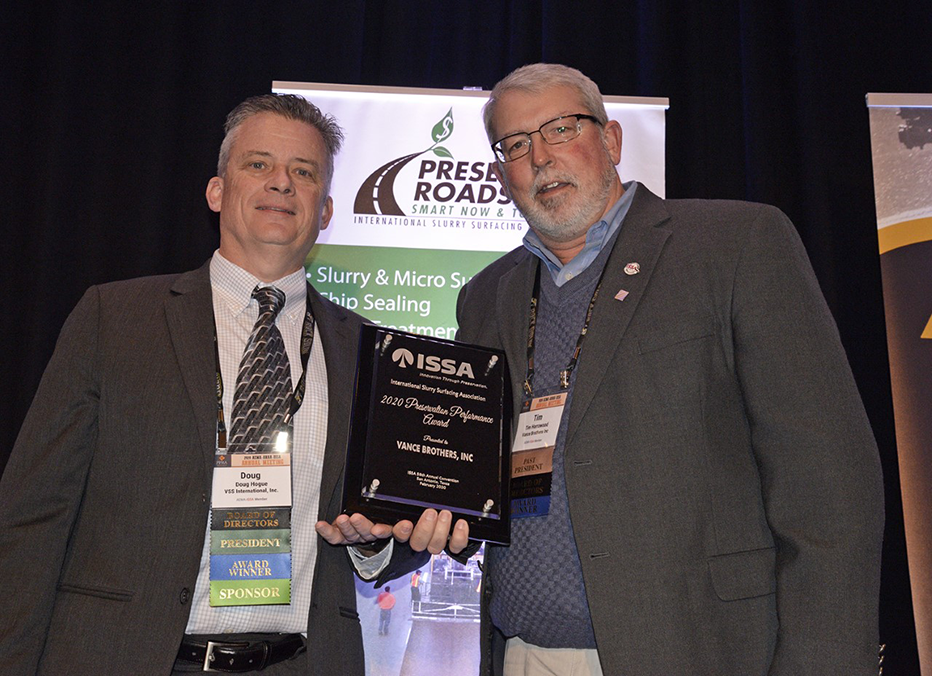
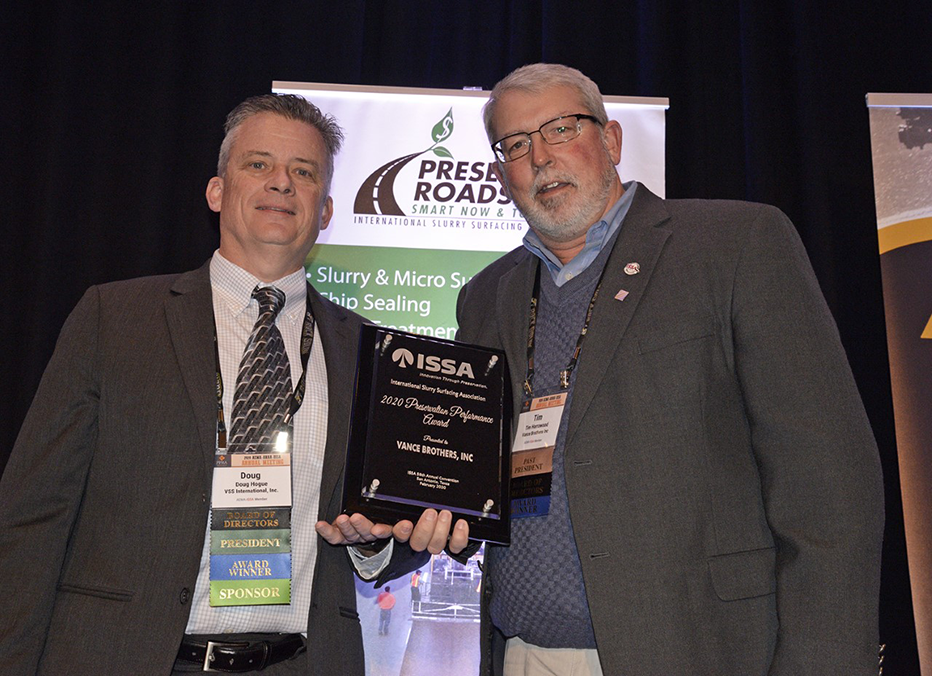
Background: When the International Slurry Surfacing Association (ISSA) announced that they had created a new award in early 2020 for Preservation Performance, Mark Ishee, Ergon Asphalt & Emulsions Vice President – Pavement Preservation, immediately knew he had to nominate the Mississippi Department of Transportation (MDOT) and Vance Brothers for a micro surfacing job done in Tunica County, Mississippi, almost 15 years ago. We are pleased to announce that they were winners!

In 2005, MDOT District 2 chose micro surfacing to treat 12 miles of Highway 61 in Tunica County, a multi-lane divided highway leading from the city limits of Tunica north to the DeSoto County line. At the time, Tunica was one of the nation’s largest gambling meccas, behind only Las Vegas and Atlantic City. MDOT wanted to reprofile the highway, adding a durable wearing course designed for life extension and condition-improving benefits. The project called for treating driving lanes only. Traffic counts at the time of the project were high volume, exceeding 13,000 vehicles per day. The existing pavement was dense graded hot mix with oxidation, light raveling, minor rutting and cracking.

Application Highlights: Goals of this $1.1 million project included extending pavement life 6-8 years and protecting already oxidized pavement from further oxidation and raveling. Micro surfacing materials were applied in two thin lifts to driving lanes only, with 25 pounds of dry rock per square yard in the first lift and 20 pounds per square yard in the second. The CSS-1HP emulsion (204,500 gallons) was provided by Ergon A&E’s Vicksburg, Mississippi, plant, and applied at 11.0% +/- 1.0%. Paragon Technical Services had a mix design engineer on site who reported that the optimum emulsion content was on the lower side of the specified range for the initial lift, in order to address rutting observed on the roadway. The emulsion content on the final lift was at optimum. Vulcan’s Black 11s aggregate, which passed the Mississippi Type V aggregate specification, was supplied by Vulcan Materials Company in Grand Rivers, Kentucky.

Every job has its challenges, and this one was no exception as Hurricane Katrina made landfall on the coast of Mississippi a couple of weeks after construction got underway. Although the Delta did not suffer the devastation experienced on the Coast, the job was shut down for several days due to weather. Traffic increased as people evacuated southern Mississippi and Louisiana. The hotel where Vance Brothers was boarding their crew even tried to force them to leave, so they could charge higher rates to Katrina evacuees.

Results: We are proud to report that this project has extended the service life of the pavement well beyond expectations – almost double the expected life – and provided a durable wearing surface with a friction value well above acceptable limits. No additional work has been performed on this roadway since 2005.

Cost Savings: By treating Hwy 61 (the right pavement) with the right treatment at the right time, MDOT not only improved the performance and extended the life of the roadway, but they have been able to repurpose millions of dollars that would have been required for reconstruction had this treatment not performed so well.

The annualized cost of this project, completed almost 15 years ago, comes to $1,637 per lane mile, or 24 cents per square yard. Any way you look at it, that’s money well spent.

“This 132-mile section of four-lane highway having a treatment on it that has lasted almost 15 years has allowed MDOT to reallocate that $3 or $4 million that we would typically spend on a mill and fill or something comparable, times 2 or 3, so it’s been well worth it,” said Mitch Turner, MDOT District Engineer. “In my opinion, micro surfacing should be in our toolbox.”

“By taking preventative steps … it protects the road foundation and prevents expensive reconstruction and rehabilitation projects,” added Melinda McGrath, MDOT Executive Director. “This preventative treatment has been very successful.”

micro-surfacing-palisades-rankin-county-ms

The Rankin County, Mississippi, Road Department won both the 2019 Asphalt Emulsion Manufacturers Association (AEMA) Past President’s Award and the 2019 International Slurry Surfacing Association (ISSA) Pavement Preservation Excellence Award for their 2018 Pavement Preservation Program which included the application of various treatments on over 100 miles within their roadway network.


Background

A little over two years ago, Rankin County recognized the need to take a more proactive approach to treating their roadways that would also make sense economically. Their goal was to be able to stretch their road dollars to treat more miles per year by using the right treatments on the right roads at the right time.

high-performance-cape-seal-eflex-escrub-rankin-county-ms
High-Performance Cape Seal (eScrub rejuvenating scrub seal +
eFlex high-polymer micro surfacing) on Old Brandon Road in Pearl, MS.
Members of the Road Department, including Road Manager Mike Harrison, attended seminars hosted by Ergon Asphalt & Emulsions (EA&E) and Etnyre and some national conferences to learn about the benefits and best practices of various pavement preservation techniques. From there, Mike, with the approval of the Rankin County Board of Supervisors, decided to move beyond the hot mix and conventional chip seals that had long been the typical go-to solutions for the county and test fog seals. They treated more than 30 miles of chip sealed surfaces throughout the county and, pleased with results, officially made fog sealing following chip seal applications part of their maintenance programs moving forward (when needed).

“The fog seals helped lock down our rocks better so that they weren’t hitting cars,” said Mike. “A plus was that it also gave the roads a nice, darker appearance and made the striping stand out better.”

Branching Out and Exploring New Treatments

Pleased with the success of fog seals, the county decided it was time to try another treatment — micro surfacing. They performed a few demo projects in 2017, including a micro surfacing application on eight miles of LeBourgeois Estates subdivision, and were pleased with the outcome. Following the successful demo, the treatment officially joined fog seals as part of a new pavement preservation era for the county. And with micro, they found they were spending significantly less money per project than with hot mix applications. For the county, it was not about downplaying hot mix, but understanding there were other, less costly options for specific distresses.

In the spirit of trying new things, Harrison also decided to try polymer modified chip seal on a few roads to determine its benefits over the conventional chip seal emulsion that had been used for quite some time. “It just seemed to hold up a lot better,” said Mike. The county has since switched to polymer modified emulsion for all of their chip seal projects.

cape-seal-live-oaks-nankin-county-ms
Cape Seal (Chip Seal + Micro Surfacing) in Live Oaks Subdivision in Brandon, MS.

Program Highlights

“We are taking a more economical approach to enhancing our roads in order to be able to add more miles in our budget without having to sacrifice quality,” said Steve Gaines, Rankin County Road Supervisor, District 4. “In fact, implementing these new products on the right roads has resulted in even better quality than we had before, and feedback we have received from the community post applications has been great.”

Treatments chosen as part of the county’s preservation program included chip seals (single and double), scrub seals, micro surfacing and cape seals, which were applied in the county for the first time during the 2018 program year. “In just two years, they’ve gone from using only chip seals and hot mix, to strategically using almost every pavement preservation tool in the toolbox,” said Amy Walker, EA&E Area Sales Manager and point person for Rankin County. EA&E was selected as the emulsion supplier for these applications, TL Wallace was the micro surfacing contractor, and Rankin County applied all chip and scrub seals in house.

In addition to the 55 miles of stand-alone chip seals (single and double) and the 31 miles of stand-alone micro surfacing, the county applied 12 miles of cape seal combination treatments on curb and gutter roadways in two subdivisions (six miles in Live Oaks and six miles in Barnett Bend) and two miles of a high-performance cape seal on Old Brandon Road, a high-traffic roadway in the center of downtown Pearl — the largest city in Rankin County.

Introducing Cape Seals in Rankin County

The Live Oaks cape seal applications included polymer modified chip seal and conventional micro surfacing while roads in Barnett Bend, with cracks too numerous for a typical chip seal to address, were treated with a cape seal that included a rejuvenating scrub seal and conventional micro surfacing. The scrub broom was necessary there in order to force emulsion deeper into the more widespread cracks.

Old Brandon Road in downtown Pearl was a prime candidate for the high-performance cape seal including rejuvenating scrub seal (eScrub) and high-polymer micro surfacing (eFlex), as the heavily trafficked area would require an even more durable surface than conventional treatments could provide.

“When it comes to maintaining our roads, it’s always our goal to utilize practices that allow us to extend our budget and make the most effective use of taxpayer dollars,” Mike added. “Learning about and applying the right preservation and maintenance treatments actually resulted in us having more money to spend in other areas. This was a learning curve for us, and we are still learning, but we will keep pushing forward knowing we have a winning strategy with the pavement preservation and maintenance concept.”

cape-seal-barnet-bend-rankin-county-msCape Seal (Rejuvenating Scrub Seal + Micro Surfacing)
in Barnett Bend Subdivision
The county noted that using these various treatments at the right time on the right road did in fact result in them being able to treat more miles than in previous years. Having a plan for what they would do also helped them better communicate with homeowners on the front end about everything that would be taking place, which soothed potential tensions throughout the life of the projects.

Homeowners Note Appreciation for Treatments

Homeowners were pleased with the treated roads and were appreciative of the county’s efforts to keep them informed of applications to take place in their respective areas.

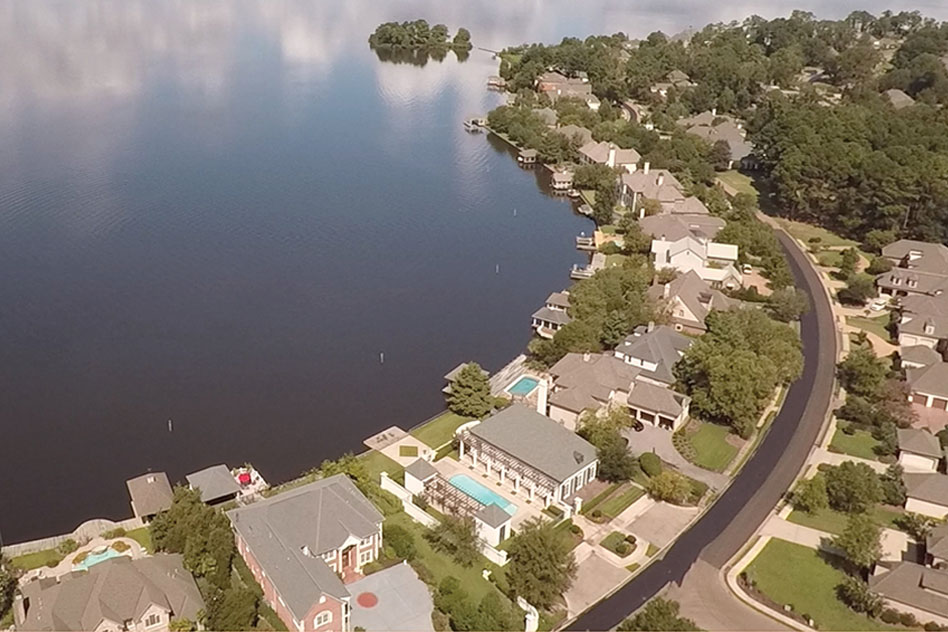
Edwin Sallis, Secretary-Treasurer of the Palisades Homeowner’s Association said, “Palisades community appreciates Rankin County’s dedication to ensuring well-maintained roads in a timely manner, and we are pleased with the maintenance work performed on roads in our subdivision. They are smooth and they have a nice appearance, which increases the value of the homes in the area. Rankin County did an excellent job informing us of the details of the project to take place, the expected time frame of the project and how homeowners would be impacted. A plus was that the micro surfacing applications provided minimal inconvenience because traffic was allowed back on the treated sections soon after application.”

Mapping Out a Plan

Appeasing stakeholders and ensuring full transparency was a major impetus for the county’s development of a pavement management plan, which included the logging and assessing of current roadway conditions in order to help make proper judgment calls regarding roads next in line for certain recommended treatments based on solid evidence.

As part of their management plan, the 2018 treatments have been logged and performance will be monitored, along with other roads scheduled for treatment. The plan will serve as an ongoing formula for improving the county’s road network while also serving as a testament to the benefit of pavement preservation treatments.

“I’m really proud that our willingness to try new products and strategies to improve our roads has paid off and has been recognized by the AEMA and ISSA organizations,” said Mike. “We look forward to continuing with our new strategy, learning about new products and processes, and keeping taxpayers happy with how their money is being spent and the quality of their roads.”

Quality Smooth Road Micro Surfacing

Background

St. Louis Road in Plaquemine, LA, was beginning to experience cracking after five years of service due to general wear and tear, while 3 ½ miles away, Evergreen Road was faced with cracks and potholes due to heavy traffic loads. Both roads were due for maintenance in order to retain good quality and performance while extending their remaining service years.

Area Sales Managers Mark Hartman and Jerry Walley with Ergon Asphalt & Emulsions, Inc., (Ergon A&E), along with Ryan Casto with Material Resources, Inc., all recognized an opportunity to introduce the benefits of pavement preservation treatments in the area. The Iberville Parish Public Works Division (Iberville Parish) was familiar with the idea of pavement preservation, but had not taken full advantage of its benefits.

In the past, to correct minor distresses like those on St. Louis and Evergreen Roads, they would apply a crack seal treatment. Crack sealing is an excellent start, but there are other destructive distresses that crack sealing is not designed to address. The only other option they were aware of was to apply a hot mix asphalt overlay, which is a more expensive maintenance route better suited for a road with more severe distresses. The parish would have lost money applying another overlay so early in the roads’ service lives. Hartman and Walley suggested a micro surfacing treatment as the best solution to repair, restore and preserve both roads, before they became bigger, more costly problems. Compared to a 1” overlay, treating the two distressed roads with micro surfacing would save Iberville Parish approximately $188,000 dollars in repair costs, allowing these funds to be used on other streets.

Micro surfacing is designed to correct rutting and minor distresses, while increasing surface friction, enabling the road to withstand moisture and heavy traffic loads. Iberville Parish agreed to try the treatment and selected Ergon A&E to supply CSS-1HP micro surfacing emulsion for the applications.

micro surfacing in Iberville Parish

A Competent Solution

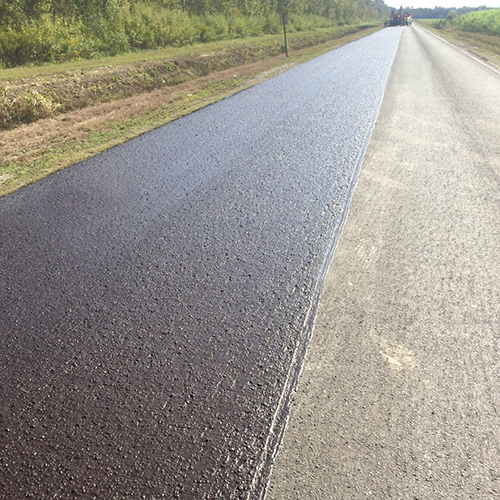
Micro surfacing is an engineered cold mix surface treatment that has been successfully applied in the U.S. for over 30 years. The polymer modified emulsion is chemically tailored to the specific aggregate selected in order to deliver the desired cure properties for specific project conditions. The result is a new road surface that can be readily released to return traffic, minimizing delay and inconvenience for the traveling public.

Note: It is recommended that cracks ¼” or larger be sealed prior to micro surfacing for best results.

With this being the parish’s first micro surfacing project, the outcome would be crucial in establishing micro surfacing as a dependable solution and Ergon A&E as a reliable resource for advice on future road projects. The results of the treatments would also allow Iberville Parish to understand the scope of micro surfacing benefits on varying road types, as St. Louis Road is moderately trafficked, and Evergreen Road is subject to heavier industrial traffic leading to and from various plants in the area.

Application Highlights: Off to a Good Start

With temperatures in the 90s, the contractor, T.L. Wallace Construction, Inc., began construction on 1.5 miles of St. Louis Road. On the first day, they treated the road with a single lift of micro surfacing from east to west, with traffic shifted to one lane. The next day, they treated the road from west to east. Each section was opened to general traffic approximately one hour following application.

Three days after completing St. Louis Road, a double lift of micro surfacing was applied to 2 ½ miles of Evergreen Road. Potholes were repaired prior to application using a conventional cold patch. The road was returned to traffic one hour after treatment.

Engineers followed state specifications to determine the micro surfacing application rates.

To Be Continued…

Micro surfacing provided a more stable and better-looking wearing course on both roads and is projected to extend the service lives of these roads for 6-8 years.

surfacing smooth road

Background: Getting on the Right Path

Hot mix asphalt (HMA) surfaces are ideal pavement options for highways, residential and local roadways. Their unique properties allow for timely application and speedy return to traffic, while providing lasting durability against heavy traffic and harsh weather conditions. HMA surfaces are known for smooth ride quality meaning better fuel efficiency, higher safety and less wear-and-tear on motor vehicles for the driving public; with so many benefits, it’s no wonder this is the pavement of choice for the Chickasaw Nation in Oklahoma. However, the driving surface of HMA pavement can degrade over time from cracking, rutting and other major distresses. This can prove costly as conventional methods of repair include mill and fill where the upper one to two inches of old pavement are removed and a new HMA overlay is applied. While this is a widely accepted and utilized method of repair that can provide lasting results, such measures are expensive and can quickly overwhelm a maintenance budget. More progressive methods utilize responsible innovative treatments to help ease the cost burden of conventional measures and effectively maintain roadways. Chickasaw leaders sought to learn about these proactive methods of addressing roadway maintenance, ultimately leading them to pavement preservation.

The goal of pavement preservation is to extend the maximum service life of a roadway network in the most cost-effective means possible while meeting road user expectations. Contrary to what some believe, preservation treatments cost less per square yard to maintain than a road that is neglected and must be replaced every 15-20 years. Knowing which treatment to use, at the right time, on the right road, is pivotal in making pavement preservation work for you. Putting these practices in place early can allow agencies to receive up to 40 years of service life from their roads and save taxpayers thousands.

Determining which preservation treatment to use depends largely on a road’s Pavement Condition Index (PCI), which measures the condition of your pavement from 0-100, with 100 being the most adequate roadway in excellent condition. Any road with a PCI under 60 needs immediate attention, but those ranging from 0-24 indicate a failed roadway in need of full reconstruction. Key point, the lower the PCI rating, the greater the distress, and the more expensive the remediation treatment will most likely be. The good news is you can introduce preservation practices at most any point in a life cycle and reap the rewards of extended service and overall cost savings. That’s the beauty of pavement preservation.

Micro surfacing treatment applied to half of Village Road

Making Strides Towards Progress

The Chickasaw Nation’s road maintenance crew had faced a recurring problem with rutting on some of their HMA roads. In the past, they had tried applying chip seals over the distressed surfaces; however, chip seals are not designed as a long-term treatment for this type of damage and the costs began to pile up. Determined to find an effective solution, tribal leaders attended a seminar on pavement preservation and maintenance solutions where they were introduced to micro surfacing. Following the seminar, Nick Woodward, Chickasaw Nation Special Project Manager, met with Area Sales Manager Johnny Roe, with Ergon Asphalt & Emulsions, Inc., (Ergon A&E) to discuss how micro surfacing could become a useful tool in maintaining Chickasaw roads.

Micro Surfacing is a pavement preservation treatment designed to correct and provide longer-term relief from rutting and other minor distresses, as well as inhibit oxidation and raveling. Less expensive than a mill and fill HMA resurfacing application, it improves skid resistance by increasing surface friction, thus, enhancing safety for motorists, especially during hazardous weather conditions. This emulsion is also polymer modified, providing a more durable surface pavement and extending a road’s service life by six to eight years. An added benefit of micro surfacing is this application provides an adequate foundation for future treatments to easily build upon through the pavement preservation process.

Developing A Plan

Following the initial meeting between Woodward and Roe, a plan was devised to test micro surfacing on three local roadways. Ergon A&E’s CSS-1HLM micro surfacing emulsion was the chosen product for each of these applications. One of the roads selected for treatment was Village Road in Kingston, Oklahoma. This road was previously repaired with product treatments supplied by Ergon A&E—crack seal, chip seal and fog seal—in July 2013. While there was no evident distress to Village Road, micro surfacing treatment was the next proactive step in the best practices of pavement preservation to help maintain the road’s exceptional PCI.

Micro surfacing is one step in the best practices of pavement preservation


This illustration outlines a plan to get the best performance and maximum number of service years out of your roadways, while stretching your budget. The year and time to apply any combination of these treatments may be tailored to the current needs of your roadway.
PCI Chart showing the various stages of pavement preservation treatments used over time, including micro surfacing, which help maximize and extend the service life of a roadway.

Micro surfacing would also be applied to two roads in Ada, Oklahoma—Chamber Loop and Seabrook Road—where chip seals and double fog seals were applied shortly after the Village Road project. Seabrook Road leads to the Chickasaw Nation wellness center. Chamber Loop Road is located two miles from Seabrook Road and leads directly to the Governor’s office.

Application Highlights

Roe and Technical Marketing Manager Ron Matteson, were available during construction, answering technical questions about the process and ensuring necessary amounts of CSS-1HLM micro surfacing emulsion from Ergon A&E’s emulsion plant in Waco, Texas were on-hand. Representatives from the City of Ada, Oklahoma, the City Ardmore, Oklahoma, and the Chickasaw Nation Department of Commerce were in attendance to observe during the application process.

On June 21, 2015, Intermountain Slurry Seal, Inc., began work on Village Road, which was expected to be a one-day project. The plan was to treat one side of the road at a time, applying the micro surfacing treatment at 25 pounds per square yard across the road surface. Inclement weather delayed completion of the application, but the already treated area was able to cure in just under two hours, despite heavy rainfall. In an effort to avoid extended traffic delays, the crew suspended construction on the remaining half of the project until conditions were more suited for a timely application. The next day, construction resumed and the second half of the one-mile stretch was completed, curing and allowing traffic to return to the road surface in approximately 45 minutes.

The micro surfacing applications on Seabrook Road and Chamber Loop began on June 23, 2015. The micro surfacing mixture was applied to a combined length of one-mile at 25 pounds per square yard. The weather was mostly hot, sunny and humid throughout this phase of construction allowing the treatment to cure and the road to reopen to traffic in 45 minutes; both projects were completed in one day.

Long-Term Strategy

The Chickasaw Nation, cities of Ada and Ardmore, and surrounding agencies will monitor the micro surfaced roadways throughout the winter months. A positive evaluation will likely lead to much higher demand for micro surfacing treatments throughout Oklahoma and surrounding markets. Meanwhile, Roe and the Ergon A&E team will continue to serve as a resource to the Chickasaw Nation for new and innovative asphalt technologies as they proceed down the path of best pavement preservation practices.

You can learn more about the best of pavement preservation practices at www.savemyroad.com.