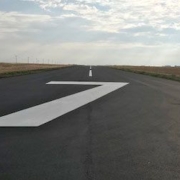
When faced with the task of deciding which rehabilitation method was best for the City of Lamesa and Dawson County, Garver, the lead engineering/design firm for this project, identified full depth reclamation (FDR) as a cost-efficient method that would help strengthen LUV Runway 7-25 at the structural level while also improving durability and extending its service life.

Garver discovered the FDR process while attending a workshop coordinated by representatives from Ergon Asphalt & Emulsions along with other industry partners. The firm compared the FDR benefits they learned during the workshop to the structural needs of Runway 7-25 and determined the treatment would be a good candidate for roadway rehabilitation.

First Airport FDR in Texas
The $1.8 million Runway 7-25 project marked the first time FDR was applied at an airport in Texas following the addition of liquid asphalt FDR to the Federal Aviation Administration’s airport construction specifications in December 2018 under item P-207. “Adding liquid AC to the construction specifications opened the door for a wider range of treatment options with fast return-to-traffic times that are also cost effective and better for the environment,” said Tom Flowers, Technical Marketing Manager for Ergon Asphalt & Emulsions.

Benefits of FDR
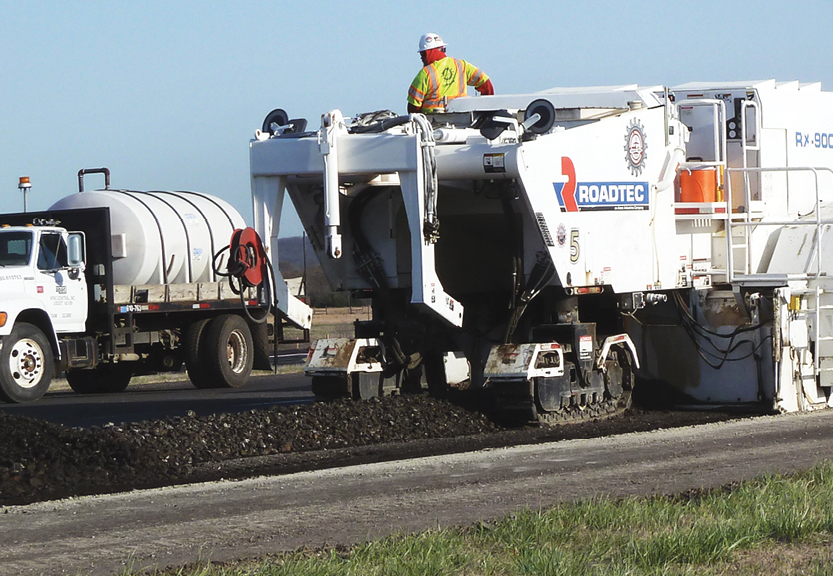
During the FDR process, a typical depth of 6” – 12” of existing pavement and aggregate base are typically reclaimed, mixed with a binder and compacted, resulting in a strong, durable road base.

Cuts Cost
With FDR, agencies can save up to 40% when compared to the alternative method of total reconstruction.

Eco-Friendly
Additionally, because FDR is a recycled asphalt treatment, truck traffic and resulting emissions are significantly reduced, as the existing road material does not have to be processed, hauled to a hot mix plant and mixed with a binder and then hauled back to the project site. Everything is done on-site.

Quick Return to Traffic
One of the most important benefits of FDR for airport roadways in particular is its fast return to traffic. With FDR, airport traffic can be returned to the surface just weeks following application. Using standard reconstruction methods, traffic is typically not returned for months.

Application Highlights
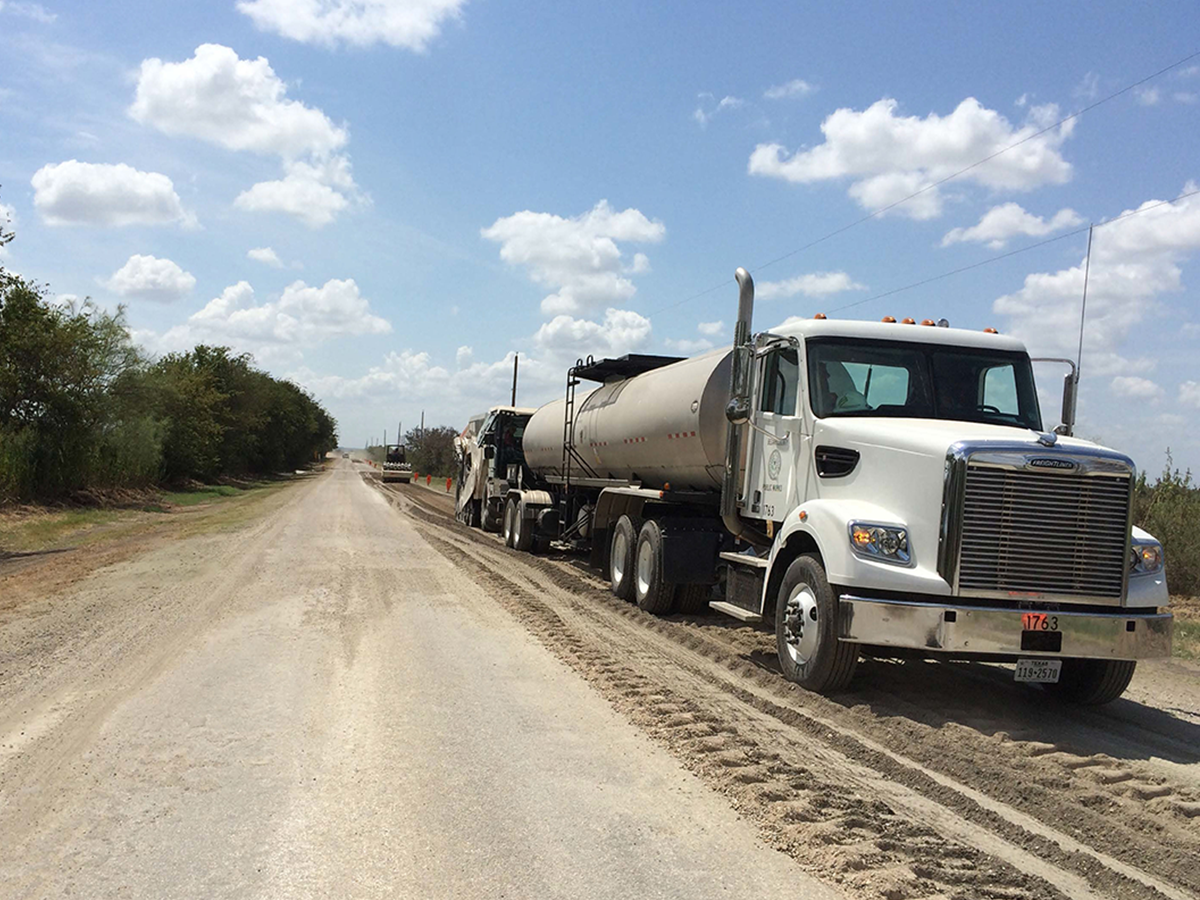
From mid-June 2019 to early August 2019, the contractor, Duininck Inc., performed the FDR application at a depth of eight inches to 4,006’ x 60’ of Runway 7-25, or nearly four lane miles. A high-yield emulsion was chosen as the binder for this application due to its proven effectiveness in the West Texas region for restoring highway pavement sections long-term, resulting in reduced maintenance costs over time.

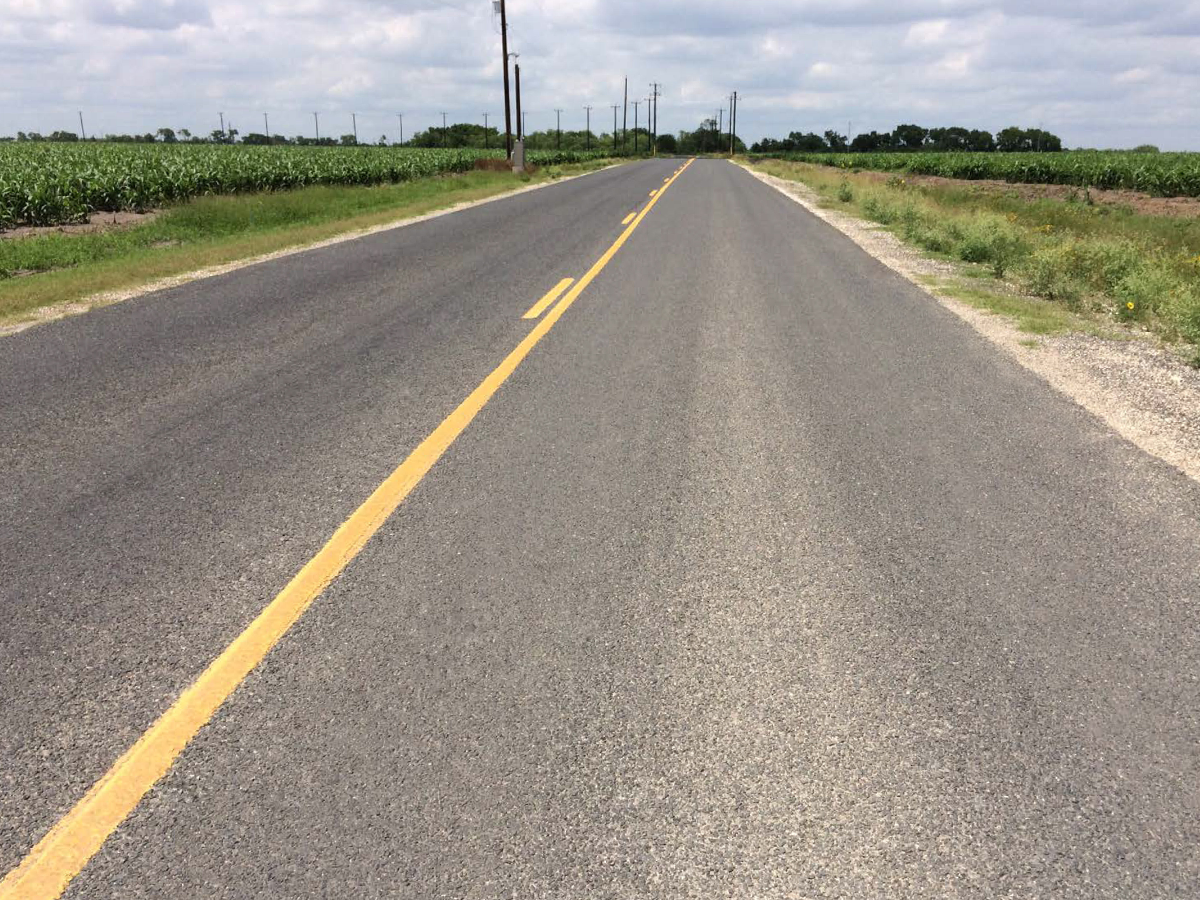
Aircraft traffic was returned to the runway 57 calendar days following the FDR application and placement of a new asphalt surface course. The project was phased such that the adjacent runway was not impacted during construction, which helped keep the airport operational.

Post Application
The City of Lamesa and Dawson County were pleased with the application and fast return to traffic. Since 2019, there have been two more airport FDR projects in Texas utilizing this same method, with more expected in the future. “Airport runway rehabilitation is a growing market,” said Tom Flowers. “We’re excited for agencies to see the benefits of this treatment on runways in Texas, and we look forward to being a resource in best practices for runway maintenance.”

Contact one of Ergon A&E’s expert Technical Marketing Managers here to find out if FDR or other rehabilitation solutions are the right fit for your airport runways today.

Helpful Links
Learn more about Garver’s award-winning Aviation design services here.

More on FDR benefits can be found here.

Treatment Plan

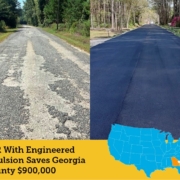
This would be the first time FDR would be used to treat a fly ash road. Ergon’s engineered emulsion — FDR-EE — was the selected binder for this process. This emulsion would help facilitate a stable base able to resist moisture damage while also serving as a strong bonding agent for fly ash particles. The FDR application would be followed by a prime coat to prepare and protect the newly constructed road base, and then a chip seal to facilitate return traffic and further seal out moisture, keeping the ground water from rising to the surface. A 1.5-inch hot mix asphalt overlay would be applied as the final wearing course for increased structural value and durability as well as a smooth, dust-free driving surface.

Application Highlights

The County decided to move forward with a winter start date for the one-mile project in early January 2020. FDR, like other asphalt-based treatments, is not typically applied during winter months, as warmer temperatures and drier conditions are more suitable  for both performance and production. However, Indigo Road needed immediate attention and the County was eager to see how the FDR-EE would perform. The FDR contractor, Ranger Construction, pulverized six inches of Indigo Road. The pulverized material was then mixed in place with Ergon’s FDR-EE, reshaped and compacted.

FDR-EE Mixture Stands Up to Traffic/Weather: Truck traffic was allowed back on the road immediately following application, as there was simply no other option. While it took one week for the mixture to reach optimal water content under consistently heavy rainfall, the FDR-EE mixture held up and withstood the same destructive truck traffic that had so badly deteriorated the previous road structure.

Once the FDR-EE had cured, Hudson Construction applied a prime coat using Ergon’s MC-70 at a shot rate of 0.10 gallons per square yard. Again, trucks traveling to and from the sand pit were back on the road immediately following application. Even under pressure from traffic and subjected again to heavy rainfall, the prime coat held up.

Cold and wet weather forced Hudson to wait a month before applying the chip seal using one of Ergon’s conventional chip seal emulsion products (CRS-2H) along with size 89 aggregate as the cover stone. The final stage of the project was completed the second week of March, when Preferred Materials Inc. applied the 1.5-inch asphalt overlay.

“This has been a huge success for the community and will be a great opportunity going forward for all involved,” said Neal Howard of UHK. “This could not have been accomplished without the efforts of Ergon Asphalt & Emulsions and Paragon Technical Services.”

Results

Effingham County Road Department was impressed with how well Indigo Road held up under constant pressure, cold and extremely wet weather. Even though the treatments were placed outside the recommended seasonal application time and were subjected to heavy traffic immediately following application, the Board Members of Effingham County were very pleased with how well they performed. Note: When applied according to seasonal recommendations and without consistently heavy rainfall, this same treatment can be completed in weeks instead of a span of three months. Additionally, FDR applications using Ergon’s engineered emulsion are suitable for all types of roadways in need of rehabilitation.

Cost Savings

The County was able to save big with the FDR process. At a centerline mile cost of around $560,000, the FDR treatment plan, including the subsequent treatments for additional durability and resistance, was less than half of that required to remove, transport and then reconstruct the road. If this same process could be used to treat all 900 miles of fly ash roads in southeast Georgia, state, county and city agencies would recognize a potential combined savings of over $800 million.

Long-Term Strategy: Realizing the success of the Indigo Road project, Effingham County plans to continue FDR-EE applications on other fly ash roads within their network.

Adjusting the Plan

The group decided to make the project 9” (instead of the originally scheduled 10”) in order to stay out of the clay. The reasoning was there would be no diminishing or detrimental effects by reducing the FDR material by 1” as compared to either incorporating the clay instead of granular base, or having to bring in the granular base and do a whole new design. Two days following the shutdown, it was time to get back to work.

FDR-Oklahoma-Airport-Application-1

Application Highlights

The Coughlin Company chose an engineered emulsion supplied by Ergon A&E for the FDR binder, as a commodity emulsion would not be adequate for this particular project. The additional benefit of using an engineered emulsion over commodity is increased durability and resistance to heavy traffic early on, which is critical for airports as there is constant high and heavy traffic.

The mix design, conducted by PTSi utilized millings of the reclaimed asphalt pavement (RAP) along with high-quality surfactants and cement. The targeted amounts of 2.9% asphalt emulsion to 0.75% cement were finalized by adjusting mix parameters within tolerances of the design. FDR was performed along the entire length and width of the runway. The existing asphalt material was pulverized and graded, then stabilized before being compacted from the bottom up to form a new and improved roadbed. The work was completed in short order while takeoffs and landings were temporarily moved to a taxiway so that the airport could remain open. Ergon A&E support personnel spent two days on site, a fraction of the project’s total two-week timeline — but an important two days to be sure.

FDR-Oklahoma-Airport-In-Place-Application

Thanks in part to Ergon A&E, the project was a technical success, winning various awards for the quality of the work and, in particular, the smoothness of the wearing course.

“All emulsions aren’t created equal,” said Darren Coughlin, president of the Coughlin Company. “We know we can always count on Ergon A&E for quality, outstanding service and expert technical support throughout every project. Ergon works with us on jobs from California to Kansas, and everywhere in between. From construction to follow-up, there’s nobody better — they lead the way in promoting excellence in our industry.”

Congratulations are due to APAC and the Coughlin Company for completing such a difficult project.

Students and faculty from the University of Arkansas visited the Claremore site regularly during construction to study the efficacy and environmental impact of the work as part of a joint research project between the University and Ergon A&E.

Public Works officials in Tom Green County, Texas, discovered a cost-effective approach to strengthening their road base using an 80% water to 20% CSS-1H emulsion mixture, which can extend the service life of a road for up to 10 to 15 years.
Tom Green County FDR2

Background

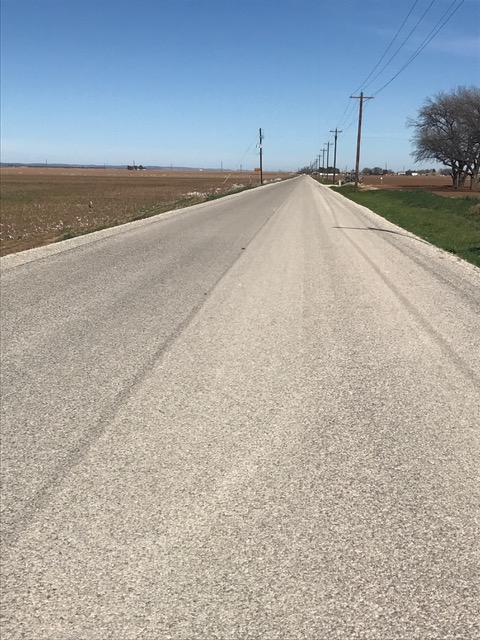
One mile of Hawk Avenue in Tom Green County, Texas, had experienced rutting due to consistently heavy farm traffic. The County needed a cost-effective solution to repair and also strengthen the road so that it would be able to withstand the heavy traffic without cracking, rutting and giving in under pressure.

The County would typically apply cement-stabilization treatments to roads with similar distress and in need of stronger road bases. An alternative to cement stabilization is full depth reclamation (FDR) with asphalt emulsion, but the County’s budget would not allow for this application. The FDR would not only have provided the strong base the County desired but also a more flexible base (thanks to the asphalt emulsion binder) that would be able to better resist distress. The flexibility characteristics of emulsions are greater than cement, and are therefore, less susceptible to longitudinal cracks, which is a common distress as cement hardens.

Emulsion + Water = One Good Mix

Cody Chambliss, Area Sales Manager for Ergon asphalt & Emulsions (Ergon A&E) became aware of the issue on Hawk Avenue and suggested the County consider adding a small percentage of CSS-1H emulsion (used in FDR applications) to the water sprayed during compaction of the base following cement stabilization. By adding CSS-1H to the water, the County would be able to achieve the benefits of a stronger base, similar to an FDR, without the full expense of such an application. This mixture would also provide flexibility not achieved with cement applications and would seal the road base, preventing moisture penetration. The County had not heard of this method prior to consulting with Ergon A&E but decided it would be worth a try.

Application Highlights

During the application, nearly 12 inches of the existing road were pulverized. Cement was added to this material, which was then placed back into the grade. Typically, at this point, water is added for compaction. For every pass made with the maintainer, a water truck sprays the base to make sure it has the proper moisture content for maximum compaction. During this particular application, water was mixed with CSS-1H emulsion at a 4:1 ratio (80% water/20% CSS-1H) and then sprayed over the base with each pass until the road base reached the specified level. After the base course was completed, a two-course surface treatment using CRS-2 chip seal emulsion and grade 4 aggregate was applied over the base to serve as the driving surface.

Results

The County was pleased with the outcome of this project, noting that they were impressed with how hard the base set up and the fact that the emulsion helped seal the base layer, protecting it from water penetration. They have since continued to use this method in applicable areas within their network.

Contact your local Ergon A&E salesperson to find out the best treatment and the most cost-effective method for achieving exceptional road performance.
strong moisture resistant roads

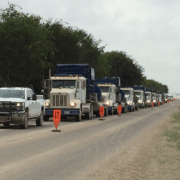
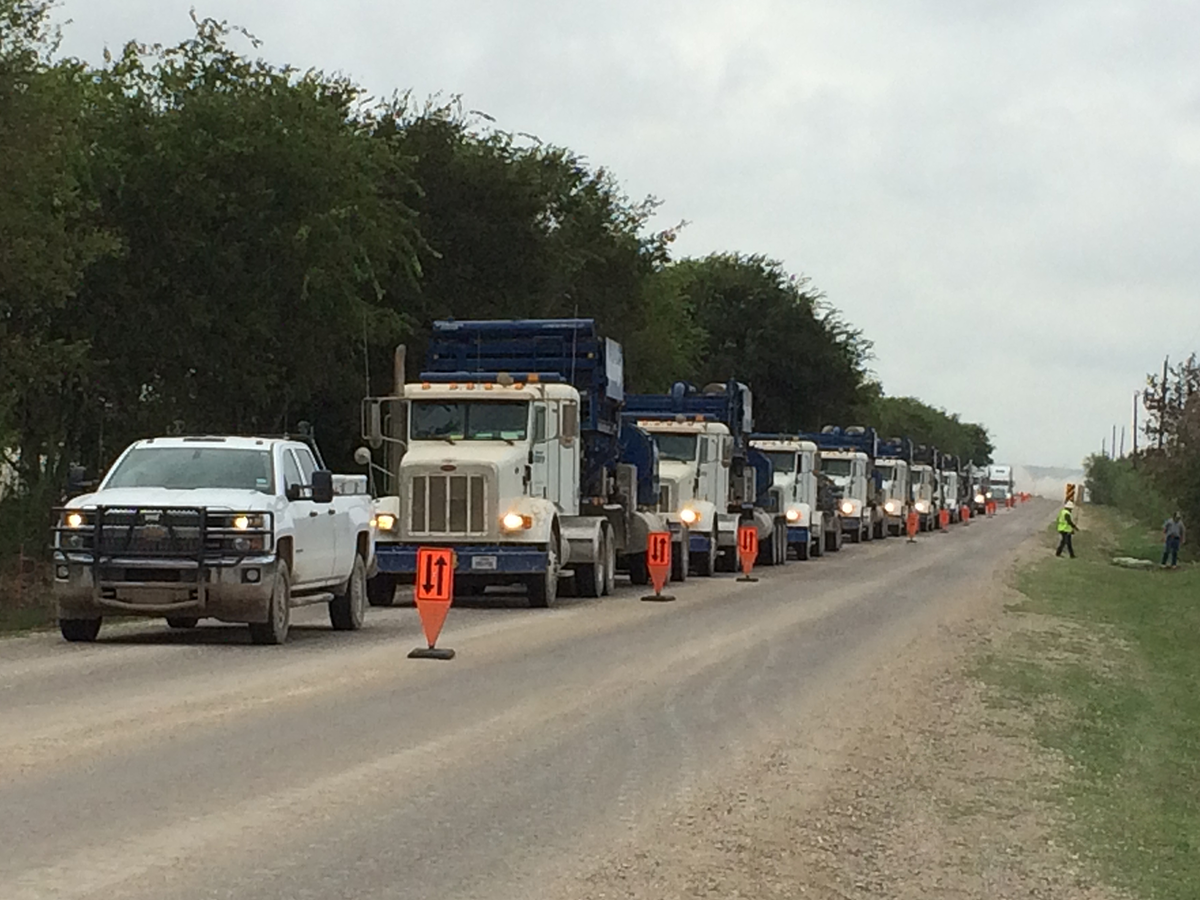
Typical heavy traffic loads on Watson Road in south San Antonio, TX.

Background

Watson Road, located in south San Antonio, Texas, (Bexar County) began to show cracking and ruts nearly six inches deep due to heavy traffic loads, poor drainage capabilities and a restricted outfall. The Bexar County maintenance crew graded ditches surrounding the road as much as possible, to allow excess water to flow from the pavement surface, but flat topography and lack of drainage easements prevented progress. This was becoming a continual maintenance headache for the county. With few options for alternative solutions, Bexar County Public Works Division Chief Tony Vasquez determined Full Depth Reclamation (FDR) would be the best solution to fully address moisture issues, restore and strengthen the road.

The process of FDR involves the recycling of a road’s existing wearing surface and base course mixed with a stabilizing agent. The mixture is then compacted to create a more durable road base and resistance to moisture damage. The stabilizing agent used in an FDR treatment depends on the severity of distress on the road receiving the treatment and can be either, or a combination of, asphalt emulsion, cement, lime or other chemical agents.

The county decided the asphalt emulsion CSS-1H, supplied by Ergon Asphalt & Emulsions, Inc., (Ergon A&E) was the best choice to meet the structural needs of Watson Road. This product consists of a hard form of base asphalt, and is a high quality, cost-effective solution specifically designed to promote strong bonds with existing road materials for a more resilient base course. The Texas Department of Transportation’s (TxDOT) specification for the FDR process requires a minimum unconfined compressive strength of 150psi (pounds per square inch) while a normal flexible base material only has to meet 45psi. The FDR treatment with asphalt emulsion would result in a much stronger base along with providing moisture resistance.

Application Highlights

The county construction crew used a Wirtgen reclaimer provided by Ramming Paving, Inc., to mix the 1.8-miles of Watson Road. The mix design provided by PaveTex Engineering and Testing called for an emulsion rate of 4.5% to meet agency specifications for strength. The emulsion was applied at a depth of 8 inches.

After mixing, the crew compacted the treated area using a vibratory padfoot roller followed by a maintainer or grader to level the surface. Additional compaction was achieved by using a pneumatic roller and finally a steel wheel roller in order to ensure an adequately shaped road able to withstand heavy traffic loads.

Pic in Progress
Full Depth Reclamation in progress. This treatment, with asphalt emulsion, results in a much stronger base and provides moisture resistance.

A Bump in the Road

Three days into application, the construction crew noticed 3″- 4″ ruts on portions of the 0.9 miles of treated area. This was attributed to the emergence of unforeseen subsurface moisture brought to the surface by vibration from rollers during compaction. Halting operation, Ergon A&E’s Technical Marketing Manager Tom Flowers and Bexar County Assistant Superintendent John Jordan devised a plan to correct these ruts and address the subsurface moisture.

Adjust the Concept

Excess moisture present in the existing roadway during an FDR application usually calls for the addition of a drying agent in order to achieve proper moisture levels for a successful application. It is not uncommon for cement or lime to be used as drying agents in FDR projects in conjunction with asphalt emulsion. In fact, mixing too much water with emulsion can prove to be a deterrent to its performance.

The county decided to re-treat the rutted section of Watson Road at a depth of 3 – 4” with 2% cement, as well as an additional 1% of CSS-1H, which would actually correct the ruts and reform bonds that were broken in the process of re-mixing an already treated and compacted section. Without additional CSS-1H, the treated area would have still been vulnerable to moisture penetration whether cement was added or not, as its original design was disturbed. The addition of cement facilitated a drier surface, enabling the asphalt emulsion to provide optimum strength for the long haul.

The construction crew completed the remainder of the project course with 4.5% emulsion and 2% cement, the design adjusted to meet the new requirements of the roadway.

A two-course double chip seal surface treatment was applied to Watson Road following the FDR to protect the new base course.

Pic Finished
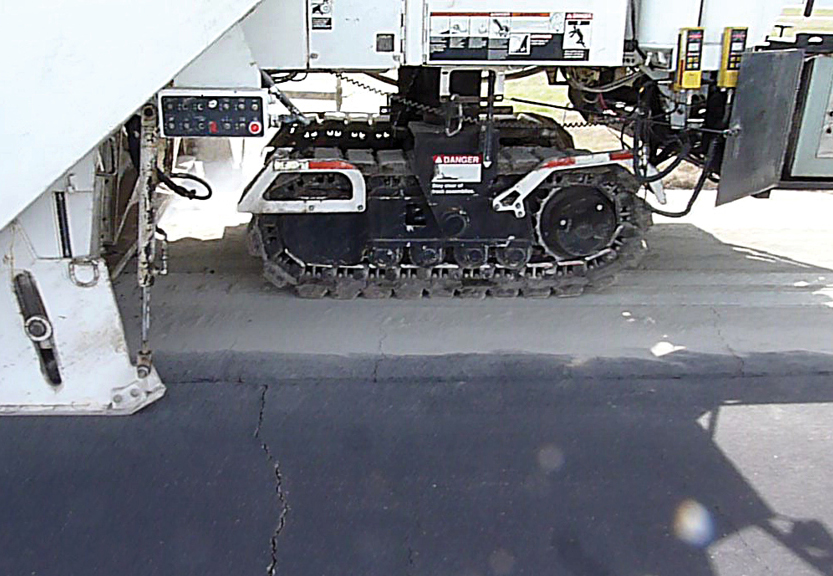
The final product holding up well with no signs of rutting.
Stay the Course

The damage to Watson Road could have gotten much worse had the county not been proactive in finding a solution to 1) combat excess moisture and 2) steer the FDR treatment back on the right path mid-application. Furthermore, the decision to use asphalt emulsion as the main component in the FDR application, over cement, lime and other stabilizing agents, proved the best choice as it is the only solution designed to provide long-term strength and durability while also providing moisture resistance for the treated base.

Long-Term Strategy

Watson Road is now holding up well with a stronger road base and has not shown any signs of rutting. The county expects the FDR will meet expectations of serving as a long-lasting solution, extending the service life of this road for years to come.