Ergon Inc.
Background
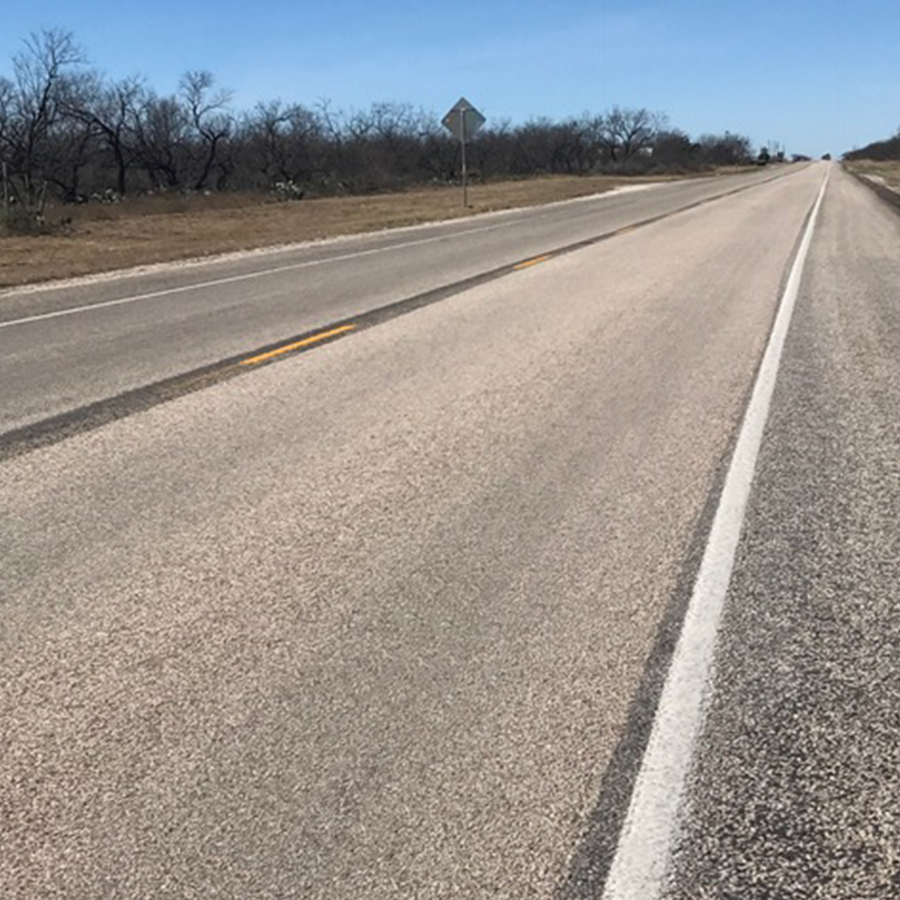
Three miles of FM 2105 along the west side of San Angelo, Texas, had base failures and displayed alligator cracking due to consistently large volumes of heavy traffic.
The only way to truly correct base failure is to dig up the road, replace with new material and resurface. In the case of FM 2105, completely reconstructing the base and resurfacing would cost hundreds of thousands of dollars. The Texas Department of Transportation (TxDOT) needed an inexpensive treatment that would mitigate damage to FM 2105 and prevent the road from completely giving out, until funds became available for reconstruction and resurfacing.
Due to its unique curing properties, it was determined that a chip seal application using a cationic high float for the binder would be the best and most affordable option. Ergon Asphalt & Emulsions, Inc., would supply the emulsion, CHFRS-2P, for the project and be onsite to provide assistance when needed.
How Chip Seals Work
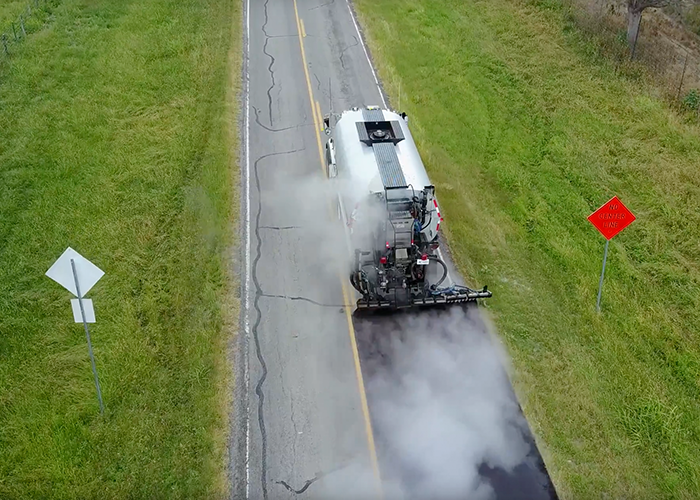
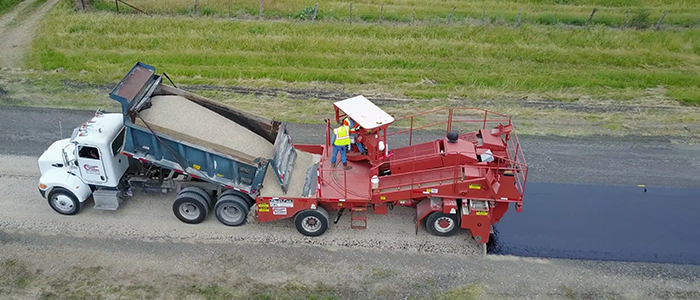
In a chip seal application, emulsion is sprayed on the road to fill crevices or cracks ideally less than 1/4 in size. This helps prevent water penetration into the vulnerable base material, which ultimately keeps cracks from widening and load-related damage from occurring. A layer of aggregate is then applied. A pneumatic roller is used to compact the material (or set the aggregate into the emulsion) and finally, a rotary broom is used to remove excess aggregate, creating a smooth riding surface. For cracks 1/4 and larger, a high-quality hot melt crack sealer should be applied.
FM 2105 Application Highlights
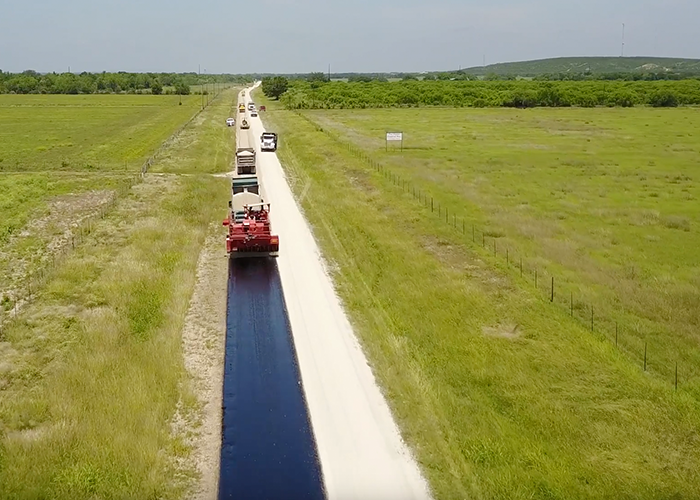
The three-mile section of FM 2105 was chip sealed in one day, with temperatures around 90°F. The CHFRS-2P emulsion was sprayed onto the surface at a rate of 0.35 gallons per square yard followed by the application of Grade 5 aggregate, which is sized 1/8.
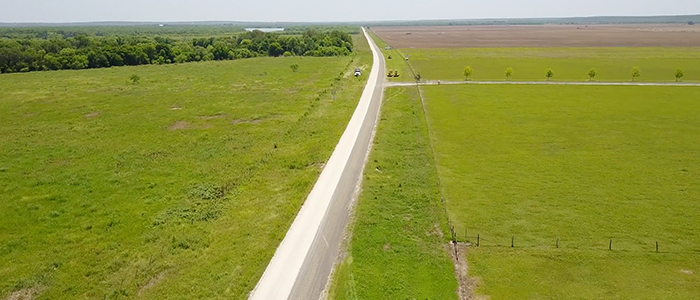
The chip seal was applied one lane at a time, first in a two-mile section, then followed by application to the remaining mile. Traffic was able to return to the road within two hours following the chip seal, and there was no bleeding or abnormal aggregate loss.
Project personnel were pleased with the outcome and noted the application as a fast and simple process for sealing badly distressed pavement.
Thanks to the chip seal application, TxDOT was able to meet the immediate needs of the road at a cost that fit their budget, while extending the service life of the road for nearly two years. Approaching one year since application, FM 2105 is still holding up well.