What is Cape Seal?
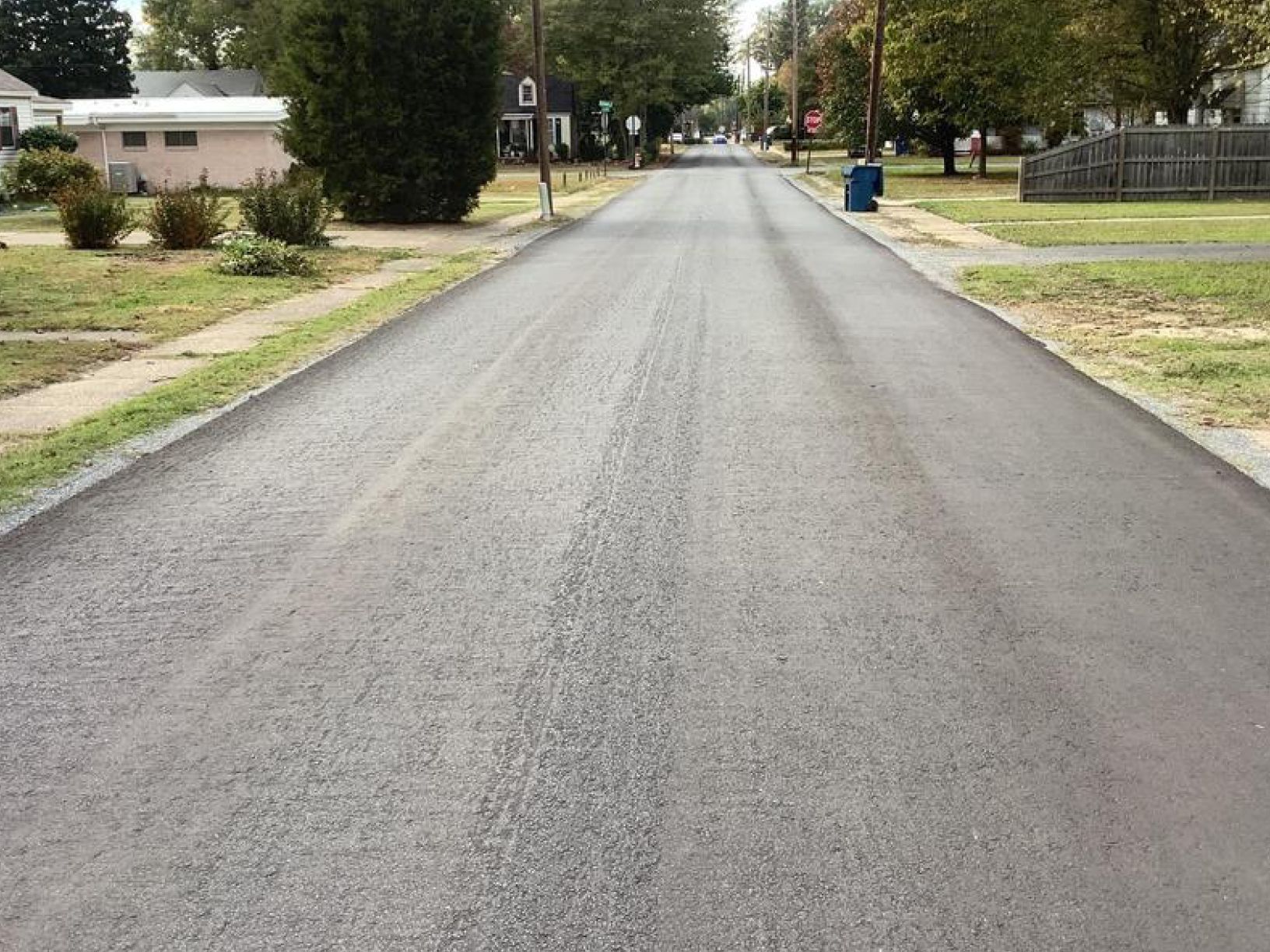
A cape seal is a combination of treatments used to provide long-term protection of underlying road layers and a tougher, more durable wearing surface. Cape seal combinations include chip seal and slurry surfacing systems, and, for roads exhibiting more severe mass cracking, rejuvenating scrub seal and high-polymer micro surfacing. A cape seal can extend a road’s life span up to 10 years and reduce maintenance costs by 25 percent or more compared to asphalt concrete hot mix, making it a cost-effective investment to proactively manage pavement.

2022 Road Improvement Project Details

The road improvement project, which was funded by saving unused road and bridge funds, focused on the preservation of the County’s hot mix asphalt (HMA) roads and began with equipment calibration on August 1, 2022. Ergon Asphalt & Emulsions (EAE) supplied both eScrub rejuvenating scrub seal and eFlex premium micro surfacing products that were used for the project. eScrub repairs mass cracking and revitalizes pavement by returning maltenes to the original asphalt binder. eFlex inhibits oxidation and provides an extremely durable wearing surface.

Project-level designs for both eFlex and eScrub applications were performed. As part of pre- treatment preparation, pavement edge issues were addressed, and any structural issues present were repaired with full-depth patches. The County’s in-house crew and Intermountain Slurry Seal, the contractor on the project, cleaned cracks and swept road surfaces free of trash and other debris. Leading up to the cape seal application, portable road barriers and road closure signs were placed in and around work areas to ensure public safety. eScrub was applied at the prescribed application shot rate range of 0.28 to 0.30 gallons per square yard. Class 4 mineral aggregate was spread uniformly over treated pavement at an average rate of 20 pounds per square yard. The County performed another round of sweeping to remove excess aggregate before applying eFlex at a shot rate of 25 pounds per square yard.

Altogether, the County resurfaced 121 miles of road in just a year, an achievement the RBD credits to the innovative cape seal treatment applied.

Results
The 2022 Road Improvement Project resulted in significant impacts for the County, their constituents and the state. Pulaski County loses approximately 1,300 lane-mile-years of service life annually, one lane-mile-year of life for every lane mile in its network. The same ratio of annual loss of pavement service life is true for counties across the country without a treatment plan in place to reverse the trend of a deteriorating road network. The 2022 project, in conjunction with the County’s existing in-house chip seal program and hot mix overlay program for 2023, is expected to add a total of 3,740 lane miles of service, nearly tripling the amount of annual service life extension needed to maintain their paved roads. Since the project, the County’s overall network PCI rating has increased nearly 10 points, from 75.3 to 83.7 — one of the highest county ratings in the state today. “Investing in our roads and making data-driven decisions has been a main focus, and it’s paying off,” said Pulaski County Judge Barry Hyde.

Cost Savings
Pulaski County manages approximately 800 lane miles of rural chip seal roads and 500 lane miles of HMA roads. The County’s cape seal bid was approximately $80,000 — less than half the cost of a hot mix overlay which averaged between $185,000 and $200,000 per mile at the time.

A New Standard for the State
Prior to the 2022 Road Improvement Project, Pulaski County worked with the Arkansas Department of Transportation’s (ARDOT’s) State-Aid Division to qualify for funds that the state allocates to counties to assist in improving their roads. Due to the County’s pioneering work with ARDOT, a cape seal is now an acceptable treatment for state funding that other counties can utilize to improve their roads.

Future Goals
The County plans to apply cape seal combination treatments on an annual basis to help maintain and improve their roads. In addition, the County plans to focus attention on fractionating the reclaimed asphalt pavement it receives from the state and hopes to reach a point where a significant portion of chip and scrub seal aggregate will be recycled material from ARDOT.

A Final Note On Pavement Preservation Excellence
Pulaski County focused on moving from improving distressed pavements to preserving good pavements and was awarded for their achievements in the process. Nominated by EAE for outstanding efforts in pavement preservation, Pulaski County was the recipient of the 2023 James B. Sorenson Award for Excellence in Pavement Preservation. The prestigious award is presented by FP2 Inc. to recognize superior pavement preservation practice of a state agency, county, city or township.

Contact your local Ergon representative for more information on how your roads can benefit from a cape seal treatment.

Cape seals combine the benefits of two treatments for increased protection of underlying road layers by preventing water intrusion and providing a durable wearing course.

Project Details
In preparation for the cape seal project, the City, along with the selected contractor, Missouri Petroleum, proactively communicated with impacted citizens and businesses using door hangers and social media, as well as the official City of Malvern webpage. To ensure public safety in and around work areas, Missouri Petroleum also provided wooden road barriers and road closure signs.

Application Highlights
In 2020, the City was approved for a bond issue to meet the necessary investment to address isolated structural distresses before the cape seal project. In 2021, Missouri Petroleum applied a rejuvenating scrub seal using eScrub as the first layer of the cape seal to 12.3 miles of road.

During this process, eScrub, a polymer modified and rejuvenated asphalt binder, was applied over existing pavement at a shot rate of 0.30 gallons per square yard and then covered with a layer of Class 4 aggregate that was rolled and embedded into the modified binder. The use of a scrub broom forces the binder deep into the cracks, repairing mass cracking and revitalizing the pavement by returning asphaltenes into the original asphalt. The scrub seal was followed by the application of highly polymerized eFlex micro surfacing at 25 pounds per square yard. eFlex works to inhibit oxidation and provides an extremely durable wearing surface. Together, these treatments are expected to provide a minimum of 7-10 years of life extension for the treated streets.

The performance of treatments applied in 2021 and the public’s positive response thereafter led to the City cape sealing another 17.7 miles of network streets in 2022.

Results
The City of Malvern and the driving public are enjoying the finished result, including the look of freshly laid pavement and enhanced durability. “The applied combination of rejuvenating scrub seal and high-polymer micro surfacing has addressed the serious distresses our streets were experiencing and has held up well under snowplowing,” said Jacob Wright, City of Malvern Street Department Superintendent. “The treatment has greatly improved the overall ride quality and has provided a surface capable of being maintained for the next 10 years. The City is extremely pleased with the finished product and now has another tool in its pavement maintenance toolbox.”

Cost Savings
The City was able to save millions of tax dollars using cape seal as opposed to the traditional mill-and-fill approach. In addition, by sealing the high level of cracking, the treatment is expected to perform much better than a mill and overlay, where reflective cracking would have returned in 2-5 years, incurring more expense.

Long-Term Strategy
The City plans to continue to improve the overall health and safety of its streets by tracking the lane-mile-years of service life extension and documenting data within its pavement management program.

Oklahoma DOT Evaluates New Pavement Preservation Treatment
While the Oklahoma Department of Transportation (ODOT) had experience with pavement preservation, they were interested in additional treatment options for roads in their network. Hwy 32, which was experiencing longitudinal and transverse cracking, provided an opportunity for ODOT to consider a new treatment to add to their preservation toolbox that was less costly and less time consuming than the previous method used to address these common distresses .


Right Treatment, Right Road, Right Time
Pavement preservation using asphalt emulsions has proven to keep roads in good condition longer and provide significant savings over the alternative “fix the worst first” and/or hot mix only approaches to road maintenance. As reported in the Federal Lands Transportation Fact Sheet on Pavement Preservation: “An FHWA pavement preservation study found that a dollar spent on pavement preservation can halve the cost of maintaining a road through its life cycle.”

ODOT’s Traditional Approach – Blade-Laid Hot Mix + Chip Seal
To address cracking on Hwy 32 in times past, ODOT would apply a blade-laid hot mix, placing asphalt mix at various depths (typically no greater than one inch) to level the profile of the roadway. This was followed by a chip seal that served as a wearing course and helped prevent moisture intrusion.

This was the only method ODOT was aware of at the time that would yield the results they desired at the low price point allotted for low volume roadways like Hwy 32. While an effective method for meeting immediate road needs, the blade-laid hot mix + chip seal would not create the result ODOT desired, which was to keep roads in good condition for a longer period of time.

Introducing the Scrub Seal Treatment — A Lasting Mass Crack Sealant
At Ergon A&E, we strive to not only provide quality products, but also to guide agencies in the direction of best practices for their network needs while offering technical support along the way. Ergon A&E’s western Oklahoma Area Sales Manager Johnny Roe and Technical Marketing Manager BJ Cottman had been in talks with Tracy Terrill, ODOT District 7 Maintenance Engineer, about a solution that would not only address mass cracking, but provide a longer-lasting seal and improve durability at a lower price than the blade-laid + chip seal process. That solution was a scrub seal.

How Scrub Seal is Applied
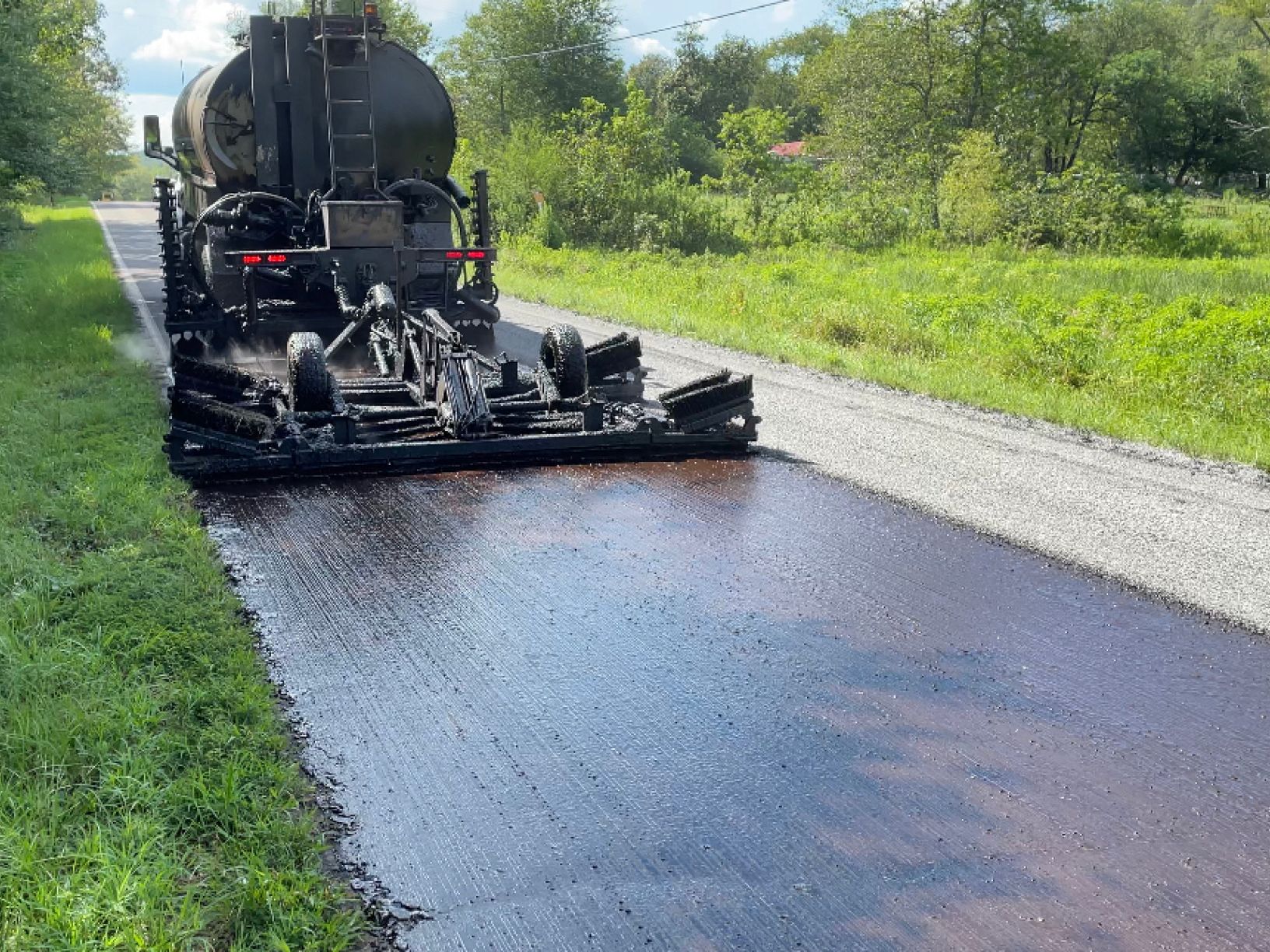
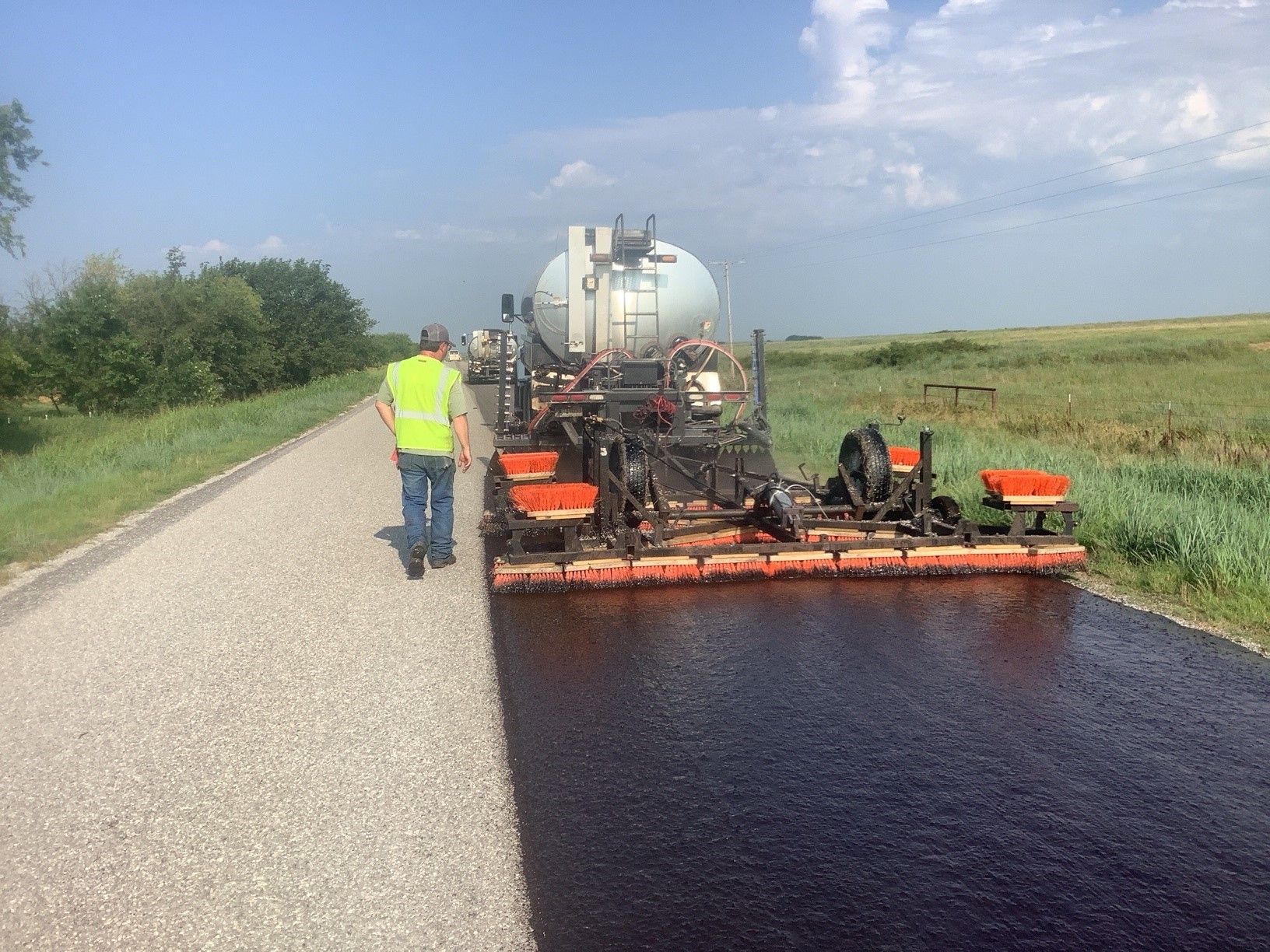
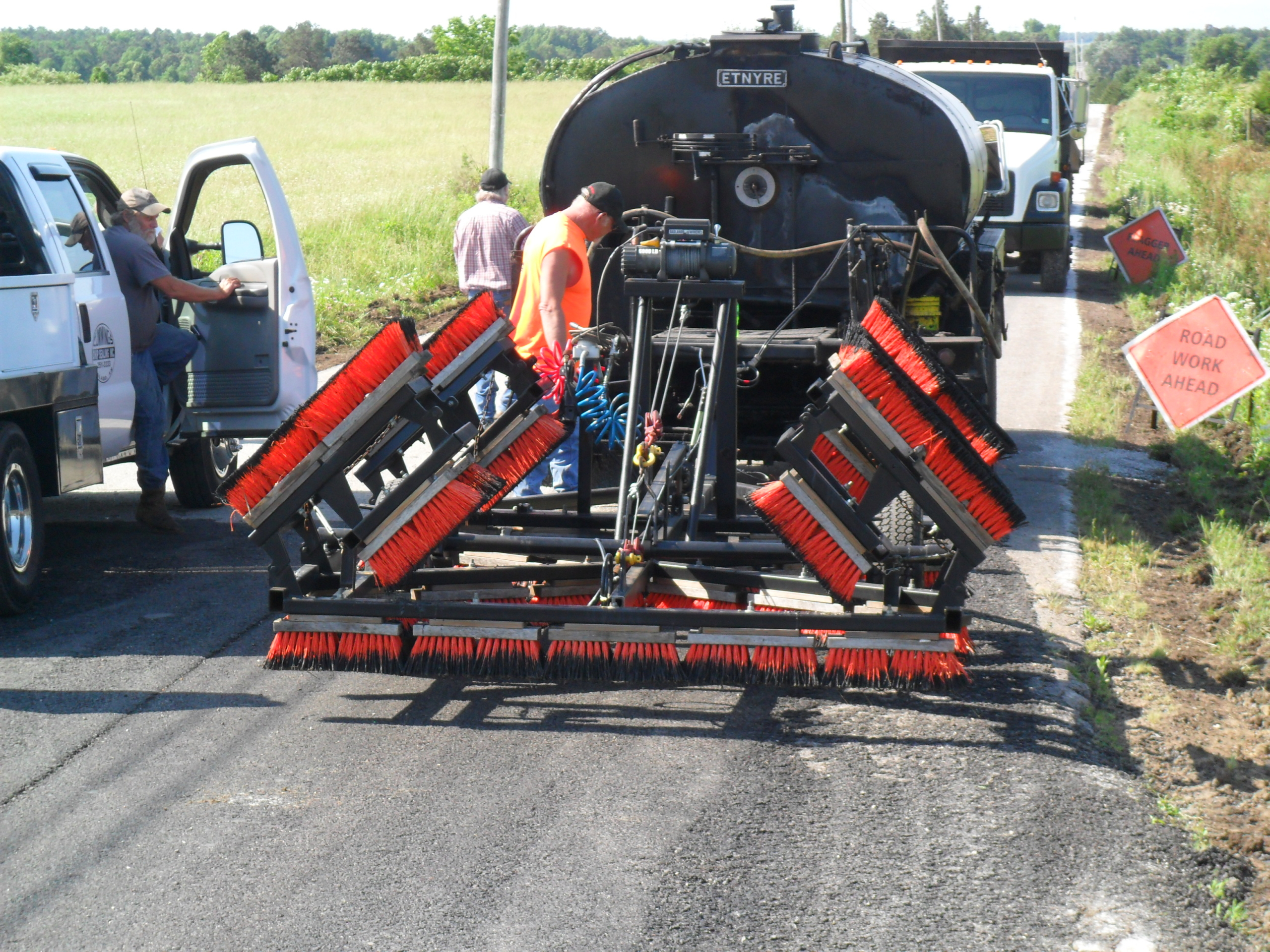
During the scrub seal process, emulsion is sprayed at a specified rate onto the road surface. The emulsion is then immediately forced deep into voids and cracks using a mechanized broom sled attached to the distributor truck. This method ensures emulsion reaches cracks at a greater depth than traditional chip seals to yield a longer-lasting seal. Aggregate is then applied onto the emulsion, and the new surface is rolled, swept and can be returned to traffic typically within 1-1.5 hours of the application.

Scrub Seal on Highway 32
Upon surveying distresses and evaluating the benefits of scrub seal, ODOT decided to apply the treatment along 17 centerline miles of Hwy 32 that were experiencing mass cracking. Following the application, ODOT planned to monitor the new surface to determine if scrub seal was a suitable solution to add to their preservation toolbox.

Ergon A&E’s eScrub was the selected emulsion for the scrub seal application.

eScrub Rejuvenating Scrub Seal
eScrub is a polymer modified rejuvenating emulsion used to repair pavements exhibiting mass cracking, friction loss, oxidation and raveling, enhancing the quality and durability of asphalt pavements long term.

Rejuvenating Scrub Seal Performance and Cost Benefits
When applying a scrub seal using eScrub, agencies see typical life cycle extensions of five to seven years. And using a project-specific cost of $2.05 per sq yd, this treatment is less expensive than the average cost of blade-laid hot mix + chip seal at $3.73 per sq yd.

Application Highlights
The scrub seal project began on June 22, 2021, and was completed in five days. eScrub was applied at 0.38 gallons per sq yd, and 3/8” chips were used for the surface aggregate.

The ODOT District 7 Maintenance Division utilized a pilot car throughout the project so traffic could continue to flow during construction. Traffic was returned following final rolling over newly scrub sealed sections. The day following application, ODOT Maintenance forces used a rotary broom to remove excess chips.

Scrub Seal Cost Savings
Moving forward, by using the scrub seal technique, ODOT will see a cost savings of 45% in lieu of their typical treatment.

Bryce Lawson, P.E., ODOT District 7 Assistant Maintenance Engineer, said: “To date, the project is performing as expected, and we are looking forward to monitoring the long-term success of the scrub seal. We are grateful for our partnership with Ergon, as they explained the scrub seal process and worked alongside our maintenance crews throughout the duration of the project. We learned a new tool to put in our toolbox as we continue in our search for ways to better maintain Oklahoma’s highway system.”

Long-Term Strategy
Realizing the success of the Hwy 32 scrub seal, the ODOT District 7 Maintenance Division plans to continue to use the scrub seal technique on other roads in their network.


Contact one of our expert team members to learn how you can seal mass cracking and improve durability with eScrub rejuvenating scrub seal today.

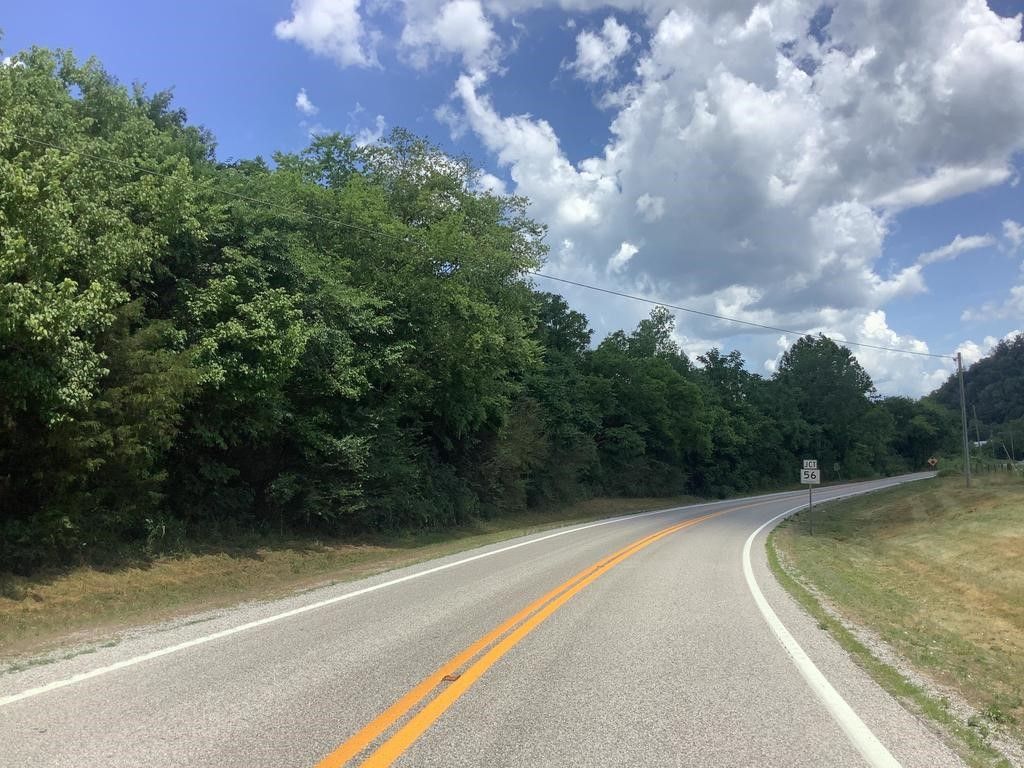
The Tennessee Department of Transportation (TDOT) decided a scrub seal would be the best option to address cracking along State Route 56. TDOT is no stranger to applying scrub seal, having used the treatment on roads throughout their network for 10+ years.

At less than half the cost of a mill and fill, a scrub seal allows agencies to seal cracks long term while also providing friction and enhanced durability. During the scrub seal process, emulsion is sprayed onto the road surface. A broom sled attached to the distributor forces the emulsion deep into voids and cracks. Aggregate is spread on top of the emulsion and then compacted. The roadway is then swept, which is a common practice following a scrub seal in order to remove excess aggregate from the road surface prior to return to traffic.

SR 56 Application

In May 2021, the contractor, Hudson Construction, applied a scrub seal treatment to five miles of SR 56. Ergon Asphalt & Emulsions’ eScrub rejuvenating scrub seal was Hudson’s emulsion of choice for this project. The emulsion was shot at 0.32 gallons per square yard and the spread rate for the aggregate (# 8 stone) was 18 pounds per square yard. Traffic was returned to the surface one hour after application.

The economical eScrub application is expected to extend the service life of the treated section of SR 56 by up to seven years.

Additional Use

In addition to serving as a stand-alone treatment, a scrub seal can also be applied as a stress absorbing interlayer or as the first course of a cape seal. Learn how other agencies are using eScrub here: eScrub Success Stories. Then, contact your local salesperson to find out if scrub sealing with eScrub is the right solution for your roads.

test

Background

With many well-traveled thoroughfares in critical shape and in need of serious maintenance, the Arkansas Department of Transportation (ARDOT) was in need of a solution that would not drain their limited highway budget.

Sometimes, selecting a road maintenance solution based on budget restrictions can mean sacrificing some degree of life extension. But that wasn’t an option for ARDOT District 4 in 2016, when the agency embarked on a much-needed initiative to preserve many of their aging and distressed roadways. While they found success using hot rubber sealants on roads with minimal cracking, roadways with mass cracking were becoming more and more of a maintenance problem. Safety of the traveling public would soon become an issue as crack development was quickly outpacing repair crews. This prompted a diligent look at diversifying their pavement preservation strategy.

Click Here to Download PDF >>

______________________________________

Challenge

Due to the sheer volume of cracking, the department could not afford to mill and fill all of the highly cracked highways in their network. Such comprehensive solutions would simply put too much strain on budgets, schedules, crews, traffic and more. It was clear that something significant had to be done to preserve the existing roads, but mill and fill was simply not viable.

Ergon Asphalt & Emulsions (Ergon A&E) worked with ARDOT Maintenance Engineer Chad Davis to explore more effective solutions, including the pros and cons of each. One effective treatment option was a manual crack seal treatment program. While this would provide on average another three to five years of service to Arkansas’ roads, manual crack seal treatments are just that — manual.

Although manual crack sealing is cost effective for projects with a relatively low percentage of cracks, this method wouldn’t be optimal for successfully treating mass cracking. Both cost and estimated completion times would increase as the percentage of cracks increased, and some projects would not be feasible at all. ARDOT needed a solution that was less costly and timelier.

The answer came in the form of Ergon A&E’s innovative eScrub rejuvenating scrub seal and high-performance fog seal solutions. eScrub employs a simultaneous apply-and-scrub method to quickly address mass cracking in asphalt pavements. At an industry average of 25% of the cost for a mill and fill, eScrub is among the most cost-efficient solutions for repairing pavements exhibiting medium- to high-density fatigue or block cracking, loss of friction, oxidation and raveling.

Ergon’s high-performance fog seal is suitable for application on many surfaces, including chip seal and scrub seal treatments. The quick-breaking, trackless fog seal helps lock down aggregate, improving chip retention; it enhances new stripe visibility for safety; and it extends the expected service life of the chip/scrub treatment by two to four years. Once the fog seal has cured, traffic can usually return to the pavement within 1 1/2 hours.

test

Application Highlights

To test the efficacy of the new strategy, ARDOT District 4 crews scrubbed and fogged a 3.5-mile stretch of Highway 162 in Crawford County. eScrub was originally specified for a shot rate of 0.26 gallons per square yard; however, ARDOT made on-site shot rate adjustments in some sections, as necessary. “It’s not uncommon to make these kinds of adjustments on site,” said Ergon’s Darryl Gardner. “It’s simply best practice and shows that you are really paying attention to changes in the pavement condition during application.” Class 4 mineral aggregate (a mixture of aggregates less than 3/8 inch in diameter) was the specified aggregate type for this project.

Traffic was allowed back on the road immediately following the eScrub application, which is typical. ARDOT applied the fog seal a week later at a specified rate of 0.10 gallons per square yard, with adjustments as needed.

Thanks to the overall ease of application and fast ready times of these treatments, the project was completed in just two weeks — significantly less time than it would have taken to complete manual crack sealing on this same highway.

This fast application saved ARDOT a great deal of man-hours and allowed traffic to return far sooner than anticipated. After this 2016 combination treatment, the pavement condition increased from the point of needing to be replaced to a maintenance level. New cracks in the area treated along Highway 162 have remained minimal over the past four years.

This was the first main line scrub seal project for ARDOT District 4. They have since applied more than 88 lane miles of scrub seal and have fog sealed approximately 50-60 lane miles in the last three years.

Arkansas’ highways can be tough to maintain, but scrub seal and fog seal solutions have given these highways an extra five to seven years of service life. They have helped ARDOT move towards better roadway conditions across their network, while helping to ensure the safety of drivers and road maintenance crews.

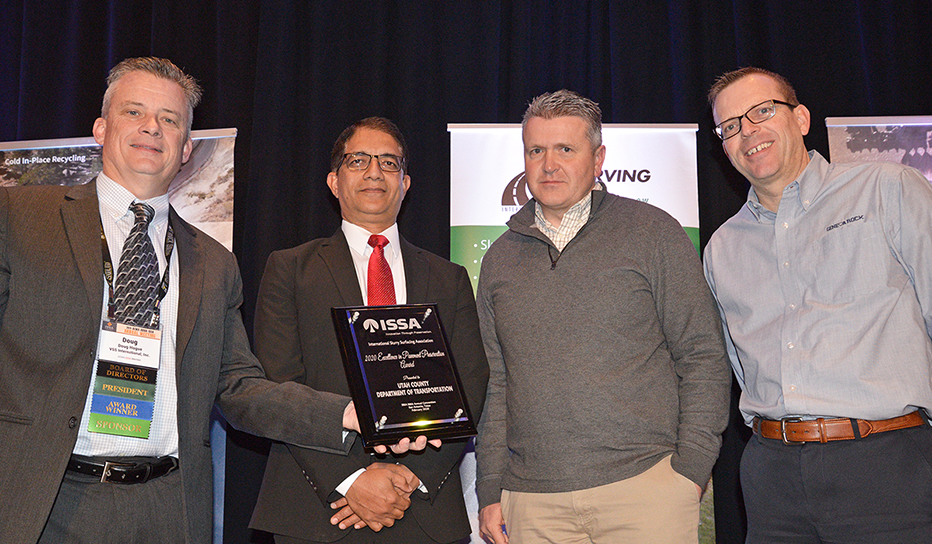
Background: Congratulations to the Utah Department of Transportation (UDOT) and contractor Geneva Rock, winners of the International Slurry Surfacing Association (ISSA) 2020 Excellence in Pavement Preservation Award.  This $2.6 million high-volume preservation project on 10 miles of SR-9, leading from the City of Hurricane to Zion National Park, was part of UDOT’s pavement preservation plan.

Distresses to the existing hot mix asphalt included block cracking, thermal cracking and raveling. Oxidation was prevalent, but the pavement was structurally sound. The long-term goals for the project included long-lasting mass crack treatment, restoration of oxidized pavement, and extended service life of 6-10 years.

Although UDOT has practiced the concept of pavement preservation for over 30 years – utilizing micro surfacing and chip seals – with the state of SR-9 at the time, they would have called for either a hot mix mill and fill or overlay. While both methods can be beneficial, neither was the most cost-effective method of treatment in this instance, since they wanted to restore and extend the life of the existing hot mix before reapplication was necessary.

Application Highlights: They decided to go with an innovative scrub/micro combination, or a cape seal. The area with more significant distress was treated first with 460,000 square yards of scrub seal, followed by 515,500 square yards of micro surfacing over the entire project. Incidentals included pedestrian ramps, signs, striping, HMA patching and rumble strips. Work was done during the day and at night. At least a single lane in each direction had to be maintained at all times due to the heavy traffic volumes experienced on SR-9.

This was the first scrub seal completed for UDOT, and they used the SR-9 project as a test to determine if this treatment would be suitable to rehabilitate oxidized and cracked asphalt surfaces in high-volume areas.

The scrub seal emulsion, CMS-1PC, was applied at 0.31 gallons per square yard, followed by a scrub seal broom (Greensbroom) and aggregate which was applied at 16-18 pounds per square yard. The micro surfacing was applied at 25.5 pounds per square yard using CQS-1HP emulsion at a rate of 12.5% with a Type III aggregate  at 25.5 pounds per square yard. All aggregates were provided by Interstate Rock Products, and emulsions came from Ergon’s Las Vegas, Nevada, facility.

With a focus on quality control, UDOT sampled emulsions twice per load. Aggregates were sampled every 500 tons for both scrub and micro. The contractor and the aggregate producer also tested aggregate during production for consistent gradation. Emulsion was tested by Ergon per the quality control plan and formulated for optimum field performance.

Cost Savings: Not only was UDOT able to save 35% over the typical cost of a mill and fill, which has allowed them to treat even more miles within their network – but the products and treatments used had a positive environmental impact as well, with less energy and less material needed for a cape seal than would have been required for a mill and fill.

Results: SR-9 has a fresh, new look and is now more durable and able to withstand pressure from repeat and heavy traffic.

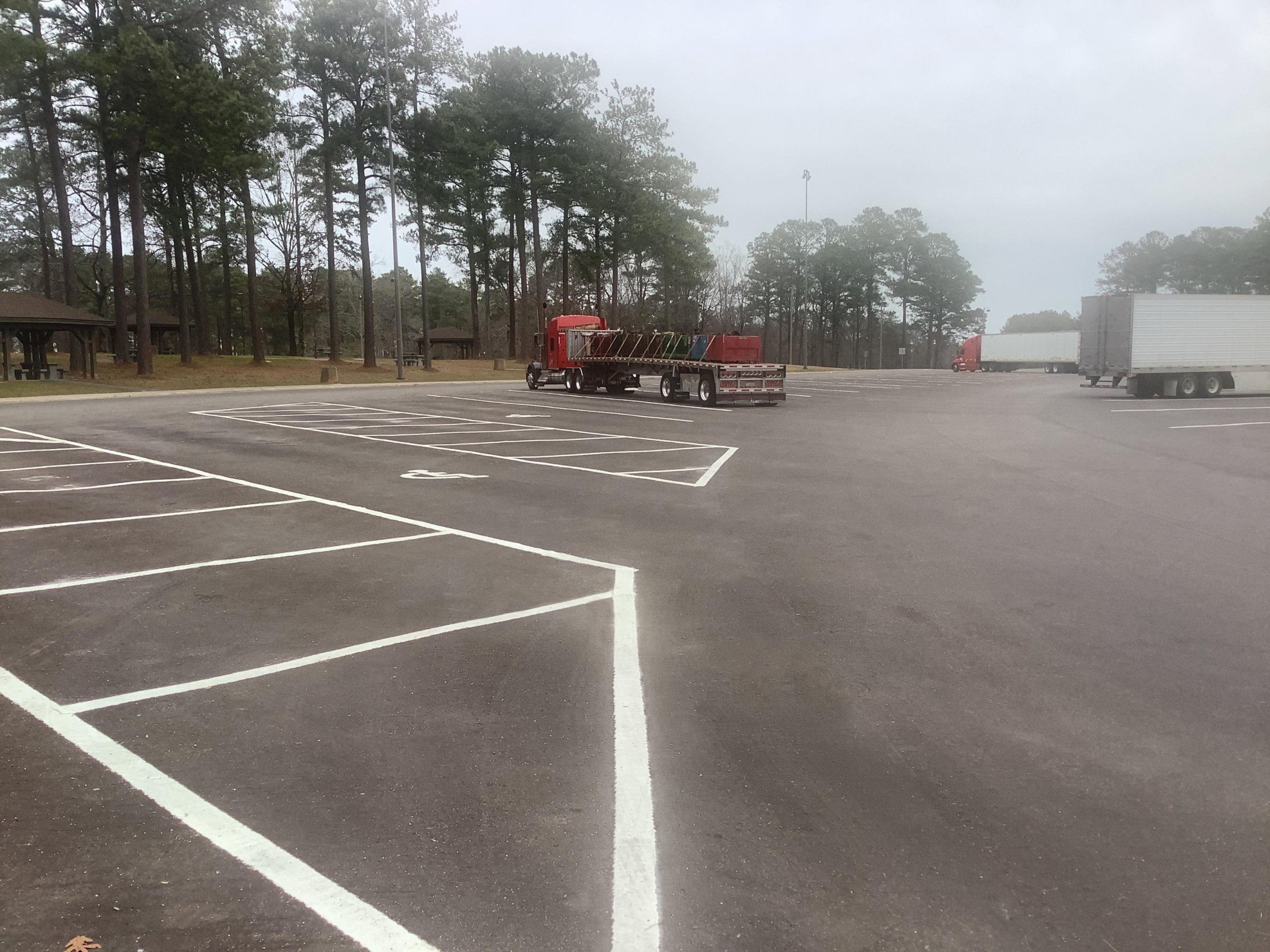
Background: The pavement on the rest area along I-20 (near Mile Marker 85) in Tuscaloosa, Alabama, was oxidized and raveling. In addition to constant passenger vehicle traffic, the area was wrought with distresses caused by the heavily- loaded semi-trucks frequently turning into and throughout the area and parking for extended periods of time. In 2016, ALDOT’s Mark Waites asked Ergon A&E reps Matt Jeffers and Anthony Quattlebaum if there was a cost-effective, long-term solution to this issue. They suggested a cape seal using Ergon’s eScrub rejuvenating scrub seal and eFlex premium micro surfacing. Cape seals involve the combination of two or more treatments that allow for increased protection of underlying road layers by preventing water intrusion and providing a durable wearing course. This would be the first cape seal treatment applied in a rest area in Alabama.

Click Here to Download PDF

Application Highlights: In August 2019, funds were allotted for the cape seal project to begin as part of a larger project on I-20. Charles E. Watts was selected as the scrub seal contractor and Whitaker Contracting was awarded the bid for the micro surfacing application. The rest area was closed to traffic during application.

eScrub was applied as the first layer of the cape seal. eScrub’s apply-and-scrub method forces emulsion deep into voids and cracks for a long lasting seal while its rejuvenating agent revitalizes the pavement. Next came the application of the highly polymerized eFlex for a tough wearing surface able to withstand heavy passenger and utility truck traffic, resulting in less scuffing, power steering burns and raveling. Together, these treatments are expected to extend pavement life by 8 – 10 years.

eScrub was applied at a shot rate of 0.30 gallons per square yard and covered with size 89 aggregate, which was applied at an average of 19 pounds per square yard. Traffic was returned to the pavement within a few hours following this application. Nearly two weeks later, eFlex was applied over the scrub seal — to finalize the cape seal process — at 17 pounds per square yard (single lift). While the surface would accept a typical return to traffic within one hour, Whitaker Contracting decided to wait 12 hours before turning traffic onto the pavement to ensure it was ready to withstand the heavy trucks rolling in.

Results: ALDOT, Contractors and EAE were pleased with the initial results, noting excellent color and no power steering burns, raveling, pavement deformation or cracking five months after application. ALDOT will continue to monitor the area over the next few years to get a full scope of the impact of cape seals in highly trafficked rest areas.

Cost Savings: At approximately $5 per square yard for eScrub and eFlex combined, ALDOT achieved significant cost savings, spending less than they would had they applied the only other alternative — a mill and fill at $8 – $12 per square yard.

Long-Term Strategy:  Monitor the area at 1, 5, 8 and 10 years for a more complete picture of the impact of cape seal treatments in highly trafficked rest areas.

micro-surfacing-palisades-rankin-county-ms

The Rankin County, Mississippi, Road Department won both the 2019 Asphalt Emulsion Manufacturers Association (AEMA) Past President’s Award and the 2019 International Slurry Surfacing Association (ISSA) Pavement Preservation Excellence Award for their 2018 Pavement Preservation Program which included the application of various treatments on over 100 miles within their roadway network.


Background

A little over two years ago, Rankin County recognized the need to take a more proactive approach to treating their roadways that would also make sense economically. Their goal was to be able to stretch their road dollars to treat more miles per year by using the right treatments on the right roads at the right time.

high-performance-cape-seal-eflex-escrub-rankin-county-ms
High-Performance Cape Seal (eScrub rejuvenating scrub seal +
eFlex high-polymer micro surfacing) on Old Brandon Road in Pearl, MS.
Members of the Road Department, including Road Manager Mike Harrison, attended seminars hosted by Ergon Asphalt & Emulsions (EA&E) and Etnyre and some national conferences to learn about the benefits and best practices of various pavement preservation techniques. From there, Mike, with the approval of the Rankin County Board of Supervisors, decided to move beyond the hot mix and conventional chip seals that had long been the typical go-to solutions for the county and test fog seals. They treated more than 30 miles of chip sealed surfaces throughout the county and, pleased with results, officially made fog sealing following chip seal applications part of their maintenance programs moving forward (when needed).

“The fog seals helped lock down our rocks better so that they weren’t hitting cars,” said Mike. “A plus was that it also gave the roads a nice, darker appearance and made the striping stand out better.”

Branching Out and Exploring New Treatments

Pleased with the success of fog seals, the county decided it was time to try another treatment — micro surfacing. They performed a few demo projects in 2017, including a micro surfacing application on eight miles of LeBourgeois Estates subdivision, and were pleased with the outcome. Following the successful demo, the treatment officially joined fog seals as part of a new pavement preservation era for the county. And with micro, they found they were spending significantly less money per project than with hot mix applications. For the county, it was not about downplaying hot mix, but understanding there were other, less costly options for specific distresses.

In the spirit of trying new things, Harrison also decided to try polymer modified chip seal on a few roads to determine its benefits over the conventional chip seal emulsion that had been used for quite some time. “It just seemed to hold up a lot better,” said Mike. The county has since switched to polymer modified emulsion for all of their chip seal projects.

cape-seal-live-oaks-nankin-county-ms
Cape Seal (Chip Seal + Micro Surfacing) in Live Oaks Subdivision in Brandon, MS.

Program Highlights

“We are taking a more economical approach to enhancing our roads in order to be able to add more miles in our budget without having to sacrifice quality,” said Steve Gaines, Rankin County Road Supervisor, District 4. “In fact, implementing these new products on the right roads has resulted in even better quality than we had before, and feedback we have received from the community post applications has been great.”

Treatments chosen as part of the county’s preservation program included chip seals (single and double), scrub seals, micro surfacing and cape seals, which were applied in the county for the first time during the 2018 program year. “In just two years, they’ve gone from using only chip seals and hot mix, to strategically using almost every pavement preservation tool in the toolbox,” said Amy Walker, EA&E Area Sales Manager and point person for Rankin County. EA&E was selected as the emulsion supplier for these applications, TL Wallace was the micro surfacing contractor, and Rankin County applied all chip and scrub seals in house.

In addition to the 55 miles of stand-alone chip seals (single and double) and the 31 miles of stand-alone micro surfacing, the county applied 12 miles of cape seal combination treatments on curb and gutter roadways in two subdivisions (six miles in Live Oaks and six miles in Barnett Bend) and two miles of a high-performance cape seal on Old Brandon Road, a high-traffic roadway in the center of downtown Pearl — the largest city in Rankin County.

Introducing Cape Seals in Rankin County

The Live Oaks cape seal applications included polymer modified chip seal and conventional micro surfacing while roads in Barnett Bend, with cracks too numerous for a typical chip seal to address, were treated with a cape seal that included a rejuvenating scrub seal and conventional micro surfacing. The scrub broom was necessary there in order to force emulsion deeper into the more widespread cracks.

Old Brandon Road in downtown Pearl was a prime candidate for the high-performance cape seal including rejuvenating scrub seal (eScrub) and high-polymer micro surfacing (eFlex), as the heavily trafficked area would require an even more durable surface than conventional treatments could provide.

“When it comes to maintaining our roads, it’s always our goal to utilize practices that allow us to extend our budget and make the most effective use of taxpayer dollars,” Mike added. “Learning about and applying the right preservation and maintenance treatments actually resulted in us having more money to spend in other areas. This was a learning curve for us, and we are still learning, but we will keep pushing forward knowing we have a winning strategy with the pavement preservation and maintenance concept.”

cape-seal-barnet-bend-rankin-county-msCape Seal (Rejuvenating Scrub Seal + Micro Surfacing)
in Barnett Bend Subdivision
The county noted that using these various treatments at the right time on the right road did in fact result in them being able to treat more miles than in previous years. Having a plan for what they would do also helped them better communicate with homeowners on the front end about everything that would be taking place, which soothed potential tensions throughout the life of the projects.

Homeowners Note Appreciation for Treatments

Homeowners were pleased with the treated roads and were appreciative of the county’s efforts to keep them informed of applications to take place in their respective areas.

Edwin Sallis, Secretary-Treasurer of the Palisades Homeowner’s Association said, “Palisades community appreciates Rankin County’s dedication to ensuring well-maintained roads in a timely manner, and we are pleased with the maintenance work performed on roads in our subdivision. They are smooth and they have a nice appearance, which increases the value of the homes in the area. Rankin County did an excellent job informing us of the details of the project to take place, the expected time frame of the project and how homeowners would be impacted. A plus was that the micro surfacing applications provided minimal inconvenience because traffic was allowed back on the treated sections soon after application.”

Mapping Out a Plan

Appeasing stakeholders and ensuring full transparency was a major impetus for the county’s development of a pavement management plan, which included the logging and assessing of current roadway conditions in order to help make proper judgment calls regarding roads next in line for certain recommended treatments based on solid evidence.

As part of their management plan, the 2018 treatments have been logged and performance will be monitored, along with other roads scheduled for treatment. The plan will serve as an ongoing formula for improving the county’s road network while also serving as a testament to the benefit of pavement preservation treatments.

“I’m really proud that our willingness to try new products and strategies to improve our roads has paid off and has been recognized by the AEMA and ISSA organizations,” said Mike. “We look forward to continuing with our new strategy, learning about new products and processes, and keeping taxpayers happy with how their money is being spent and the quality of their roads.”

Jackson County Scrub Seal Smooth Road

Cracks in the road can lead to big problems like water penetration into the base, which can lead to more costly distresses and worse case, total section loss.

Background: Cracked Under Pressure

State Route 82 (SR 82) is a heavily trafficked road in Jackson County, Georgia, that leads to and from a number of commercial warehouses for companies such as Kubota and HomeGoods. Its Hot Mix Asphalt (HMA) Superpave surface was nearly 20 years old and overdue for maintenance. The Georgia Department of Transportation (GDOT) originally intended to treat four miles of SR 82, which suffered from heavy block, load and fatigue cracking, with a mill and fill application. Ergon Asphalt & Emulsions, Inc., (Ergon A&E) suggested applying a rejuvenating scrub seal using eScrub emulsion to seal the cracks rather than just bridge them with a mill and fill, which is twice the cost of a scrub seal.

Cracking on SR 82 in GA
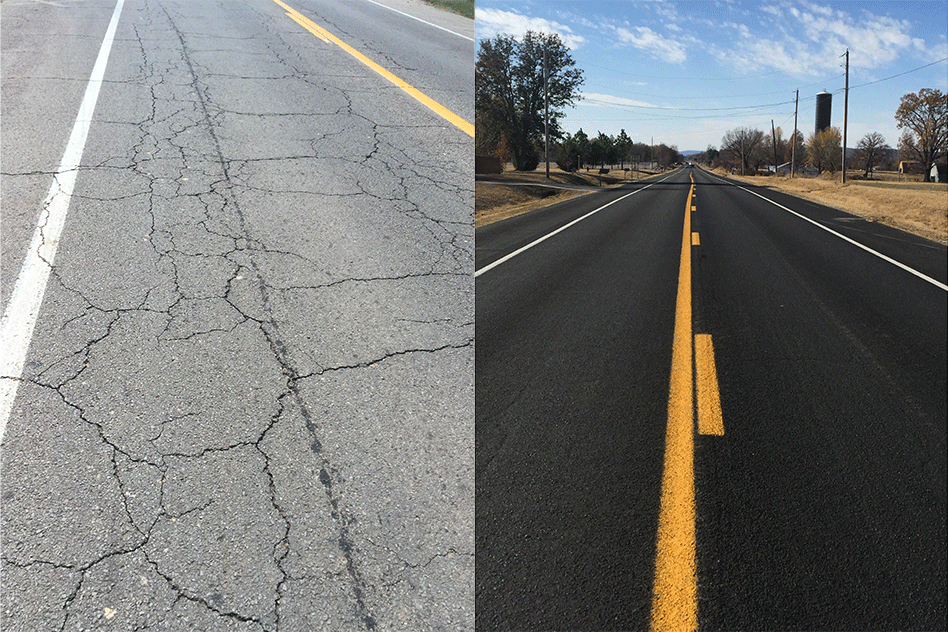
Cracking on SR 82 prior to Scrub Seal with eScrub.

A Time to Mill and a Time to Scrub

While a mill and fill application can produce satisfactory results, it was not the most economical solution for this particular project. By applying a scrub seal on SR 82, leveling the roadway and adding a HMA surface (as opposed to milling out four inches of bad mix and replacing 440 pounds per square yard of plant mix), GDOT would save approximately $200,000.

One Clean Sweep

Ergon A&E’s eScrub is a rejuvenating emulsion that not only seals mass cracks, but also, due to its high levels of polymer modification, restores quality and durability to the road. In the scrub seal process, emulsion is sprayed onto the distressed road surface via distributor truck with a mechanized scrub broom attached to ensure emulsion is forced into the cracks. Aggregate is then spread over the road and compacted using pneumatic tired rollers. GDOT agreed to try scrub sealing the distressed section of SR 82 with eScrub to see if it would in fact be the solution to fix their cracked up situation.

Application Highlights: Taking Care of Business

eScrub was applied at a shot rate of approximately 0.35 gallons per square yard followed by the spreading of #7 aggregate (or stone) at 20 pounds per square yard. GDOT leveled the scrub-sealed course with 9.5 mm HMA applied at 75 pounds per square yard, approximately ½ inch. This was nearly a two-week process. A few months later, as scheduled, the leveling course was topped with an inch of 12.5 mm HMA for the final riding course.

SR 82 after Scrub Seal applications with eScrub
SR 82 after Scrub Seal application with eScrub.

Results

Eleven months after application, with the treated section of SR 82 safely guarded with a polymer modified, rejuvenating scrub seal and topped with up to 1½ inches of HMA, there are no signs of cracking.

Long-Term Strategy

GDOT has plans to duplicate this treatment on over 50 centerline miles of state roadways, continuing to employ a versatile treatment while deferring the costs of more intrusive measures.

before picture

Background

Blair Farm Road, a residential roadway in St. Clair County, Alabama, suffered severe mass cracking, including centerline joint and alligator cracking, as a result of aging and wear over time. In order to address the cracks, achieve a low-noise road, and have a brand new look and feel without incurring the expense of a full reconstruction, the county decided a triple seal would be the best solution. Use of in-house crews made this option even more cost effective.

The Best Option

The plan was to address the most critical distress and extend the durability and life of the roadway by sealing the extensive cracking in the first layer and placing a modified chip seal as the second layer. The third layer, a modified chip seal using a smaller aggregate, would provide the desired look for the finished surface, improve friction and significantly reduce tire noise associated with larger chips.

County Engineer Dan DahIke and Assistant Engineer Clay Phillips worked with Ergon Asphalt & Emulsions, Inc., Area Sales Manager Anthony Quattlebaum to evaluate options. They chose Ergon A&E’s premium rejuvenating chip seal emulsion eScrub (CMS-1PC) for the first lift. The county chose CRS-2P for the second and third lifts.

eScrub employs a simultaneous apply-and-scrub method where a highly polymer modified rejuvenating emulsion is dispersed evenly across the width of the distressed road surface by means of an asphalt distributor. The spray is followed immediately by a broom sled and broom heads force the emulsion into cracks, providing excellent protection against water intrusion into the roadbed. The rejuvenator in the eScrub emulsion adds life back to the old pavement and allows cracks to soften and bond properly to the emulsion.

The Transformation Begins: Move that Broom!

After preparing the surface by filling potholes and sweeping the debris, St. Clair County’s construction crew began the two-day triple seal application on the 1.8-mile Blair Farm Road. Temperatures in the mid 70s with overcast skies offered perfect weather conditions for timely completion of this project. Ergon A&E personnel, including Quattlebaum and Technical Marketing Manager Bill Evans, were on hand to offer technical assistance during the sealing process, providing advice related to the process.

For the first layer, eScrub was applied to the road at a rate of 0.29 gallons per square yard. A chip spreader immediately followed to spread #7 aggregate at 0.22 cubic feet per square yard. The second lift, CRS-2P, was applied at 0.22 gallons per square yard and followed with #89 aggregate applied at 0.20 cubic feet per square yard. The third and final lift of CRS-2P was applied at 0.20 gallons per square yard. A W-10 aggregate was applied to the final lift at approximately 0.10 cubic feet per square yard. Two 16-ton pneumatic tire rollers followed each layer to help orient the aggregate.

Each layer of the triple seal was able to withstand moderate traffic immediately after application, with caution to drive at decelerated speeds due to the potential for damage to the seal while in the initial state of curing. Each layer cured in just one hour. After final sweeping, the roadway was returned to full speed traffic.

Untitled design (3)

Putting eScrub to the Test

The County had exhausted their supply of eScrub toward the last 500 feet of the project. County Engineers decided to apply three layers of CRS-2P on the last section, rather than ordering more eScrub, since it was such a small area. The same aggregate spread rates were used on both sections. This side-by-side comparison offered them the opportunity to evaluate the difference in the outcome of a triple seal using eScrub versus the conventional triple seal using only CRS-2P.

eScrub Provides Stellar Results

Before this repair, similar cracking was observed both in the section where eScrub was used as well as the final 500 foot section where only regular CRS-2P chip seal emulsion was applied. After just one year, where eScrub was not applied, the original cracks had worked their way to the surface. Two years after completion, the section where eScrub was applied has held up well with no signs of cracking for the entire area. eScrub’s mass crack sealing performance cannot be overlooked.

Test Section 2 Years Later - With eScrub (1)

St. Clair County continues to be pleased with the overall outcome of the Blair Farm Road repair and has even placed video of the eScrub project on their website at

escrub production 2

Background: Fallen Through the Cracks

Independence County, Arkansas, a highly agricultural community located approximately 60 miles northeast of Little Rock, was experiencing a rapid decline in the condition of many of its roads. Major swings in temperature and higher than average rainfall created havoc for roadways. Major flooding events left little funding for infrastructure maintenance, while their Pavement Condition Index, or overall rating for road conditions, continued to tumble, leaving more roads in dire need of repair than available funds to maintain them. Roads throughout the county, many carrying heavy live-haul and logging traffic, began showing near irreparable levels of cracking. Something had to be done.

Challenge

After experiencing disappointing results with single chip seals, which tend to bridge over cracking of this degree rather than provide a fill and repair, the County was desperate to find an effective remediation solution for their extensive cracking and pavement oxidation woes. The goal was to effectively repair as many critical roads as possible in a short time frame, meaning funds would have to stretch a long way. Distress of this nature is ordinarily too severe for pavement preservation treatments to handle, warranting more intensive, higher-cost treatments. Conventional methods would prescribe a mill and fill solution where the top one or two inches of asphalt are milled and removed from the road surface and new hot mix is laid in its place. At an average national cost of $9-$10 per square yard, Independence County needed a more economical, yet uncompromising solution. Ergon Asphalt & Emulsions, Inc., (Ergon A&E) Area Sales Manager, Darryl Gardner, set up meetings with County Judge Robert Griffin and County Road Foreman Ron Byars to offer his expertise. After personally inspecting the roadways, several of which were in critical condition, he recommended eScrub as a solution to their major cracking issues.

sam_0635

Solution

eScrub, part of the e-Series family of pavement preservation and maintenance products, is a rejuvenating chip seal and mass crack treatment that restores severely cracked, oxidized travel surfaces, instantly. eScrub employs a simultaneous apply-and-scrub method where a highly-modified polymer emulsion is distributed over the distressed road surface followed immediately by a broom sled. The broom sled forces the emulsion into cracks and disperses it evenly across the surface. eScrub’s highly modified CMS-1PC rejuvenating emulsion goes beyond the capabilities of ordinary chip seals, rejuvenating the underlying asphalt’s quality and durability in the process. An aggregate layer is immediately applied and embedded into the emulsion using a roller, creating the driving surface. eScrub is also economical in that it can compete with higher-cost repair treatments, such as mill and fill, with exceptional results and at a fraction of the cost with national averages around $2.65 per square yard.

First-Hand Evaluation of eScrub

Having no room for financial error, county officials were hesitant to initiate a major project with an unfamiliar product. Understanding this concern, Darryl arranged for Ron and Billy Cummings, a local contractor, to observe a north Mississippi eScrub project so they could witness the process for themselves. In addition, he took them to locations where eScrub had been utilized on past projects to observe its resiliency to weather and heavy loads years after application. Ron was pleased with the results and agreed it was the best course of treatment to try in Independence County.

Application Highlights

The date for construction on the 1.5-mile-long Thompson Drive, was set for May 19, 2015; it was warm and sunny, lending a perfect environment for application. Cummings Chip Seal of Batesville, Arkansas, was in place to administer the treatment. Darryl arranged for a broom sled from Texas to be brought in for the application and he was on-site for the duration of the project to assist with equipment calibration and serve as an on-the-job resource to the contractor and agency.

eScrub

Emulsion was applied at a shot rate of 0.28-0.31 gallons per square yard. Adjustments were made after noticing the emulsion was completely absorbed into leveling patches that had been installed prior to construction. In ideal situations, use of a localized spot chip or fog seal would be used to provide a barrier atop the patches to prevent absorption, as the patches are typically porous in nature. A single layer of 3/8-inch minus cover aggregate, provided by Bradley Contracting, Inc., was applied at a variable rate of 22-28 pounds per square yard, followed by dual pneumatic rollers, preparing the final travelling surface. The mass crack sealing process, which would have taken more than a month and untold man-hours to complete manually, was finished with traffic returning to the surface in just over four hours.

Results

The agency was so impressed with the final outcome, that the remaining emulsion was used on short sections of several other roads with severe cracking, totaling approximately five to six miles of total application.

SAM_0671

Long-Term Strategy

Independence County was the first county in Arkansas to use this pavement technology and proved it could responsibly and effectively remediate roads without overextending county maintenance funds and labor resources. With the successful installation of eScrub, they expect a 6-7 year extension in the life expectancy of Thompson Drive and now have a solid foundation for future pavement preservation treatments, which will continue to save the County in the long run.

With tens-of-thousands of taxpayer dollars saved on this single project, they can stretch their remaining maintenance and repair funds into more diverse road projects across the county. County representatives said they plan to evaluate eScrub’s extended performance through the winter months and rainy season with hopes of broadening use of the treatment beginning in 2016.