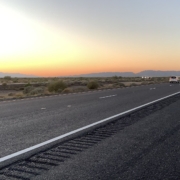
Ergon Asphalt & Emulsions (Ergon A&E) had the opportunity to supply PMRE on an ARACFC surface along I-10 between Cactus Boulevard and Riggs Road that was due for maintenance.
Benefits of ARACFC Surfaces
With ARACFC surfaces, asphalt binder is mixed with ground recycled tire rubber and other additives. These surfaces are considered a type of open-graded friction course (OGFC) because they provide increased friction by allowing water to drain to the sides of the roadway during rain events instead of collecting on the surface. This function helps to prevent hydroplaning, increase traction and positively impact driver safety. ARACFC surfaces provide durable roadways by utilizing a heavy film thickness. Minimal road noise is an additional benefit. They are ideal for high-traffic, high-speed roads like I-10.
Why PMRE Fog Seal?
A fog seal using PMRE can extend the life of ARACFC/OGFC surfaces, as it inhibits raveling and contains a rejuvenating agent that restores essential properties to aging surfaces. Its polymer modification allows for a more flexible binder that helps prevent further raveling throughout the life of the treatment. The goal for the PMRE application on I-10 was to delay a more costly replacement project.
Application Highlights
On November 12-13, 2022, the Contractor, Cactus Asphalt, applied PMRE at an average of 0.13 gallons per square yard to approximately eight miles of I-10 across multiple lanes, including entrance and exit ramps leading to the AZ-202 loop. Ergon A&Es Chandler, Arizona, plant supplied the emulsion for the project, which called for a total of 375 tons of PMRE.
ADOT remains pleased with the outcome of the PMRE application, which has proven to extend the service life of their ARACFC surfaces. Utilizing PMRE allows ADOT to make the most effective use of their limited budget over time, and they plan to continue utilizing PMRE fog seal as part of their maintenance strategy.
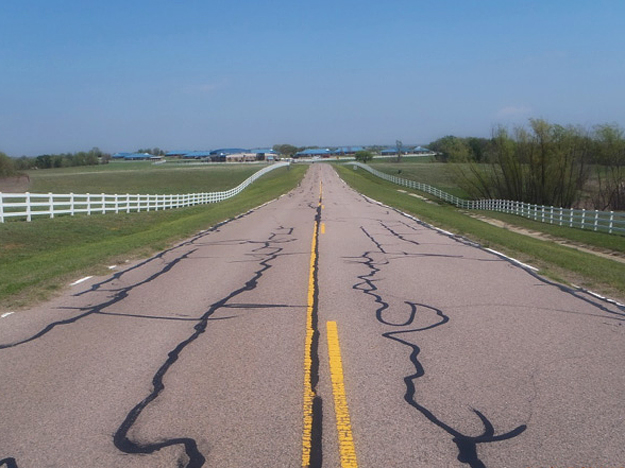
Village Road is a hot mix asphalt pavement that was constructed more than ten years ago. Used exclusively to access the Chickasaw Childrens Village, a residential and educational campus for Native American children from troubled homes, the pavement had deteriorated over time due to untreated cracking and oxidation. Faced with the prospect of resurfacing the road with hot mix asphalt for an estimated $140,000, or restoring it using pavement preservation products and techniques at a dramatically lower cost, the Chickasaw Nation chose to preserve the existing pavement.
Application Highlights
Working closely with Ergon Asphalt & Emulsions, Inc.s Area Sales Manager Johnny Roe and Paving Maintenance Supply, Inc.s Sales Representative Zach Burkey, the Chickasaw Nation Roads Department chose to restore Village Road using pavement preservation best practices starting with crack sealing. Using a Crafco Super Shot 125 Melter/Applicator purchased from PMSI, an internal crew from the Chickasaw Nation Roads Department sealed the pavements cracks using Crafco Road Saver 515 crack sealant. It took approximately 2,600 lbs of crack sealant to cover the entire mile, which would average $3,600 regionally. Without taking this measure, the cracks would have eventually worked their way back to the surface.
Nick Woodward, Special Projects Manager of the Chickasaw Nation Roads Department, chose to chip seal Village Road using the polymer-modified asphalt emulsion, CRS-2+. The emulsion was chosen based on the amount of traffic the road receives, as well as the Chickasaw Nations prior positive experiences with the product. CRS-2+ is produced at an Ergon Asphalt & Emulsions facility in Lawton, Oklahoma, and has become the Chickasaw Nations preferred chip sealing emulsion. A 3/8 limestone aggregate from the Dolese Quarry in Coleman, Oklahoma, was used for the project, and PSI Seal Masters, Inc. of Davis, Oklahoma, was selected as the contractor.
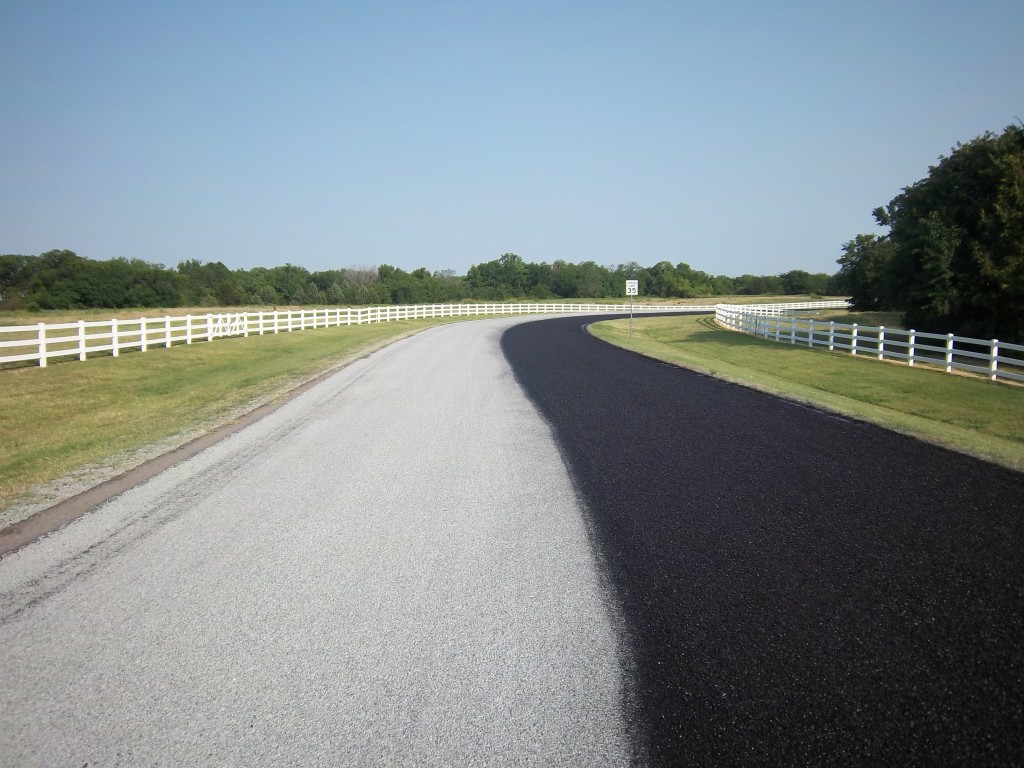
A calibration issue with the distributors onboard computer on the front end of the job caused the binder application rate to be lighter than the expected 0.4 gal/sq yd. The issue was quickly corrected, but a portion of the pavement received only 3/4 of the material needed to securely hold the aggregate to the surface of the roadway. Woodward and Roe planned to apply a heavy fog seal at 0.15 gal/sq yd to compensate for the lost binder and improve the overall aesthetics of the surface. But on the day of application, they devised a superior solution. A double fog seal would provide better coverage, last longer and look better. And by applying the product in two layers, each at 0.10 gal/sy for a total of 0.20 gal/sy, more material could be utilized while greatly reducing the risk of runoff.
The specified fog seal was CQS-1F, an Ergon Asphalt & Emulsions product produced in Catoosa, Oklahoma. CQS-1F provides twice the residual of its regional alternative, SS-1, and gives surfaces a noticeably darker appearance. Perhaps most importantly, CQS-1F cures in under an hour, compared to anywhere from two to four hours with SS-1. These properties made it a desirable choice for the Chickasaw Village road.
PSI Seal Masters, Inc. shot the CQS-1F on one side of the mile-long road at 0.10 gal/sq yd. They then returned to their starting point and applied the fog seal to the other side of the pavement at the same rate. Weather conditions were ideal. Warm temperatures and a strong breeze allowed the fog seal to dry in approximately 20 minutes, far quicker than average. Once the material had cured, crews immediately applied a second coat at 0.10 gal/sq yd. Dry weather and the engineered fast cure times helped the material break quickly, preventing any runoff.
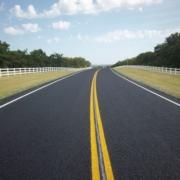
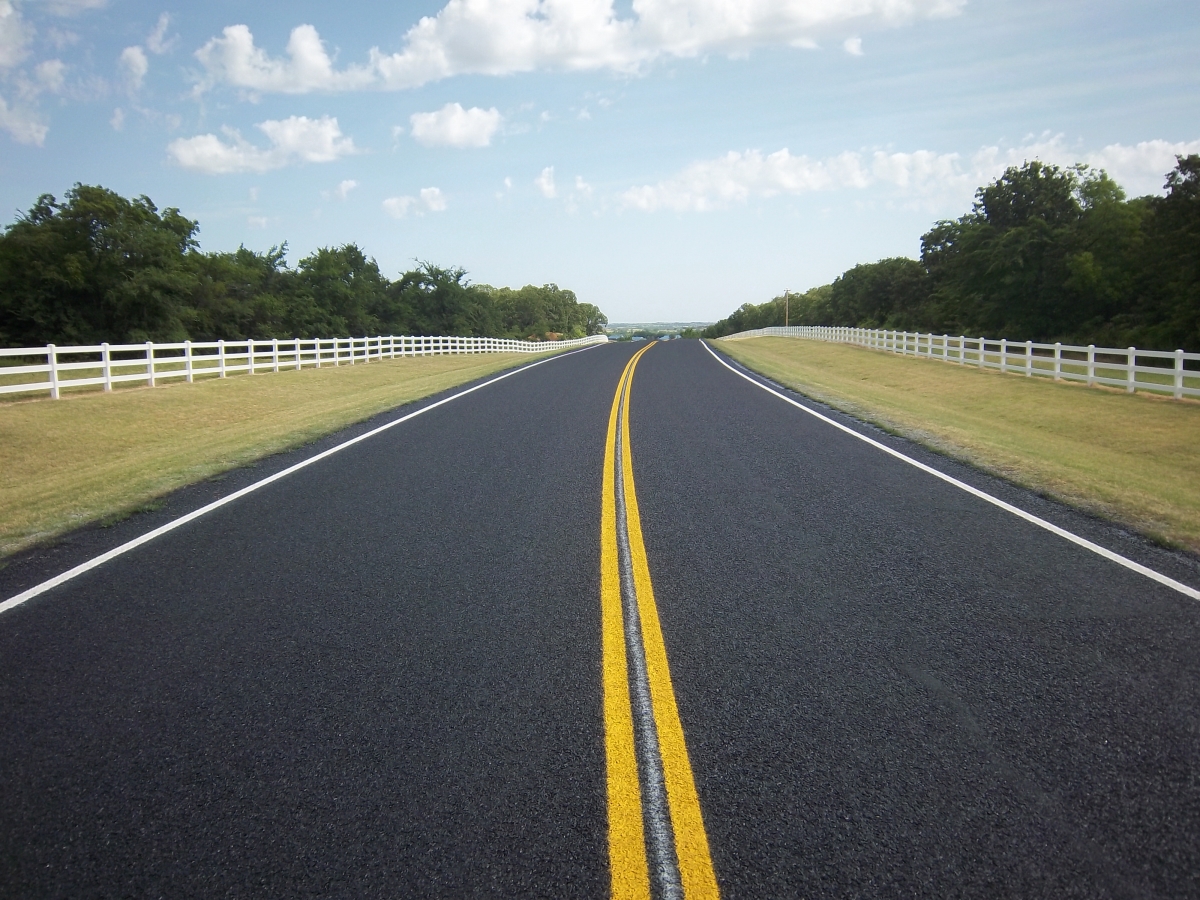
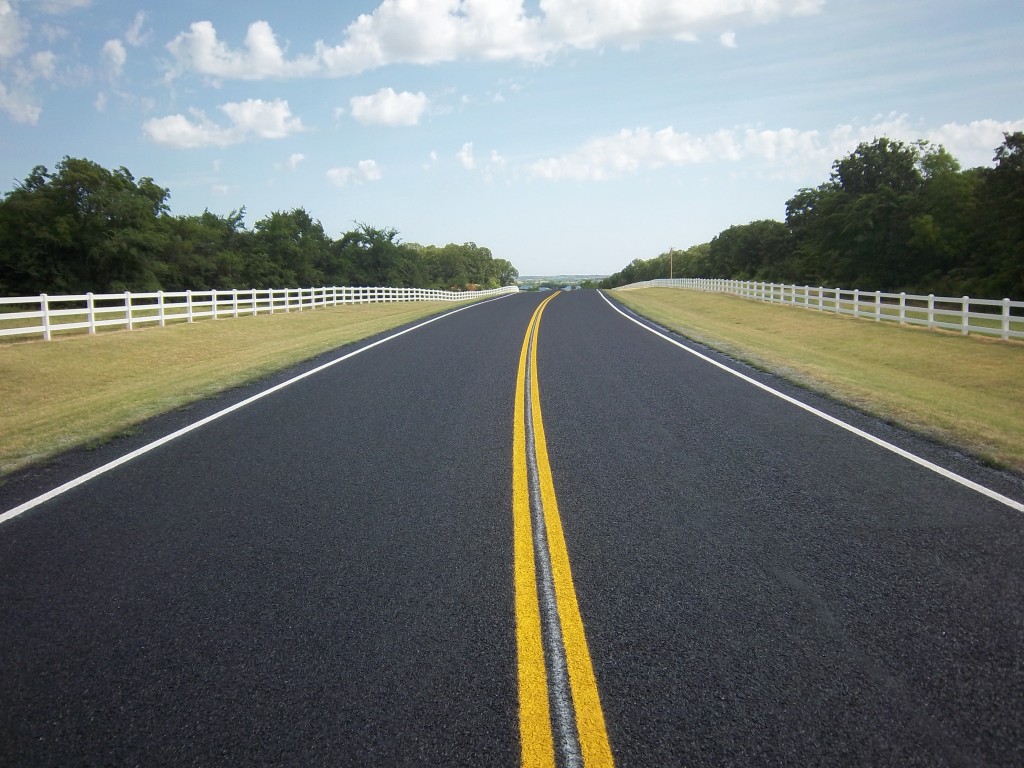
The double fog seal provided a dark, textured look that rivals the appearance of hot mix asphalt. But the benefits of the technique extend beyond aesthetics. The added layer also acts as a laminate for the chip seal underneath, protecting the surface from traffic and environmental elements while locking in the aggregate.
Properly crack sealing, chip sealing and fog sealing can add years of service life to a pavement. Given the extra protection afforded by the double fog seal, its anticipated that the Childrens Village road will last even longer than originally expected. With timely maintenance, the chip seal should have no trouble achieving a 10-13 year lifespan. And the cost to achieve those extra years is impressively low.
In Oklahoma, 2,600 lbs. of crack sealant averages about $3,600. A single CQS-1F fog seal is typically $3,000 per mile on a 24-foot wide road, and a chip seal costs approximately $2.00 per square yard. The total for these preservation treatments amounts to approximately $45,000. In comparison, one mile of hot mix asphalt would cost approximately $140,000, plus an additional $25,000 for milling.
The Chickasaw Nation was so pleased with the results of the double fog seal at the Childrens Village that they recently used the method on another road in nearby Ada, Oklahoma. They achieved similar results on that project in both aesthetics and cure time, which was less than 45 minutes.
https://ergonasphalt.com/wp-content/uploads/2025/12/chickasaw.jpg9001200Rick Potratz/wp-content/uploads/2024/08/asphaltlogo2.pngRick Potratz2014-07-18 13:25:272026-03-06 14:03:22Restoring the Road to the Chickasaw Children’s Village
 Ergon Inc.