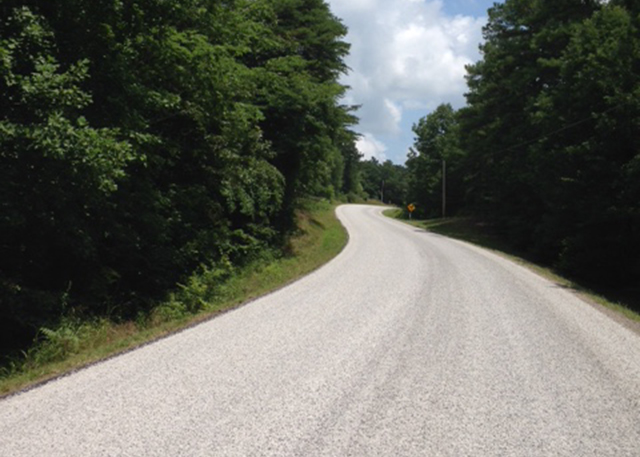
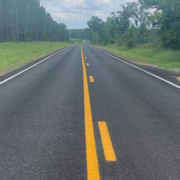
A triple seal + fog seal is a fitting solution for upgrading dirt roadways like Butler Road. This combination surface treatment allows for exceptional performance with minimal maintenance over time.

What is a Triple Seal?

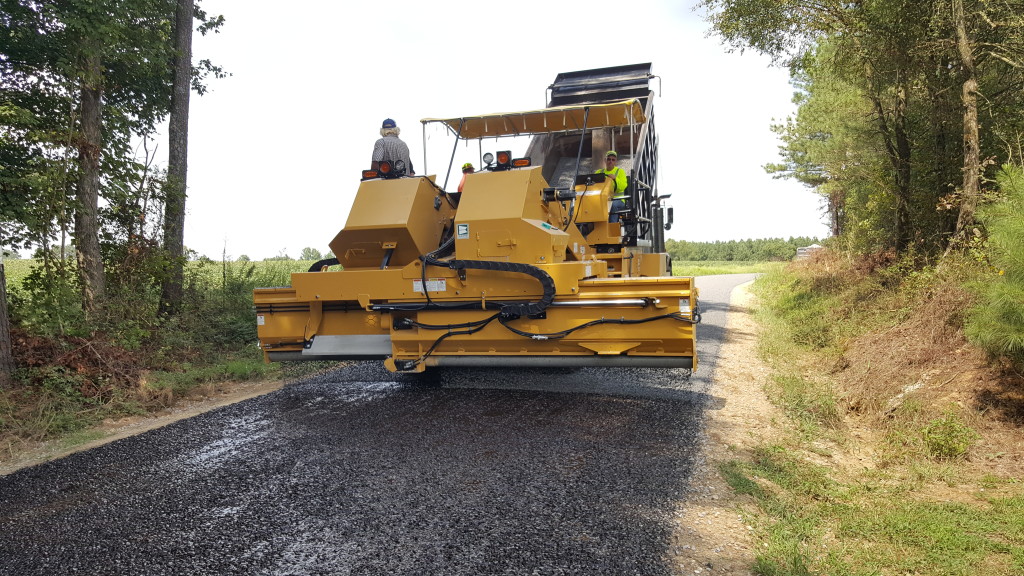
A triple seal consists of chip seal applications applied in three lifts. With each lift, an emulsion is spray-applied onto the surface at a specified rate followed by the spreading of aggregate over the emulsion. Differently sized aggregates are used for subsequent lifts, each layer filling voids from the previous course, facilitating a strong and long-lasting seal.

A triple seal treatment plus a high-quality fog seal, enhances road durability, helps to prevent moisture intrusion, ensures reduced tire noise and results in a smoother ride quality with longer-lasting rock retention as compared to single and double chip seals. When compared to the cost of traditional hot mix asphalt applications, agencies can see savings of up to 65% with a triple seal + fog seal treatment. This is a huge benefit for agencies like Laurens County.

Application Highlights

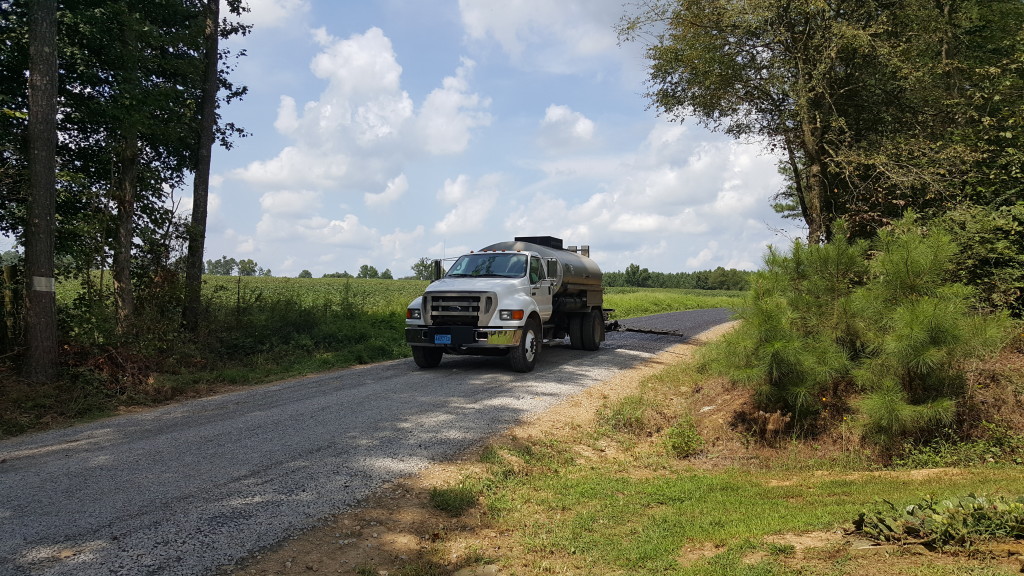
The three-mile Butler Road project began in May 2021, with The Scruggs Company as the contractor. In preparation for the triple seal, MC-70 emulsion, supplied by Ergon Asphalt & Emulsions (Ergon A&E), was applied as the priming base. Priming is an important step when applying a surface treatment over a dirt road. It helps enhance the structural integrity of the roadway by serving as a waterproof barrier, preventing moisture intrusion and reducing the likelihood of potholes. It also provides a layer of asphalt binder for a subsequent asphalt treatment to adhere to effectively. (Note that asphalt bonds better with asphalt than a dirt road without any primer.) Sand was applied over the MC-70 to serve as a protective barrier to traffic that was allowed back on the surface immediately following the application.

Four months after priming (due to scheduling challenges), The Scruggs Company applied the triple seal using CRS-2H chip seal emulsion, supplied by Ergon A&E, and aggregates brought in from the Martin Marietta – Ruby Quarry.

Triple Seal Application

The Scruggs Company applied the CRS-2H emulsion at 0.30 gallons per square yard followed by Size 6 aggregate for the first lift; 0.22 gallons per square yard followed by Size 7 aggregate for the second lift; and 0.18 gallons per square yard followed by Size 89 aggregate for the third and final lift. Each lift was rolled after the aggregate was applied.

This phase of the Butler Road project was completed in three days. Traffic was immediately returned to the treated section after all three lifts had been completed.

Fog Seal Application

Following the triple seal, a fog seal using Ergon A&E’s eFog HP high-performance emulsion was applied at 0.12 gallons per square yard to further lock down aggregate. Scheduling challenges throughout this project caused the fog seal application to be delayed by a few weeks; However, fog seals can typically be applied as early as three days after a chip seal/triple seal application.

The fog seal provided Butler Road with a dark appearance similar to the fresh hot mix asphalt look without the new pavement cost, which agencies and citizens appreciate. Traffic was returned within 90 minutes following the fog seal application.

Results

Butler Road is holding up well, and Laurens County remains pleased with its performance. The triple seal + fog seal once again proved to be an outstanding solution for upgrading and improving road durability at a low cost.

___________

From dirt roads to paved roads, Ergon A&E offers surface treatment options designed to address multiple distresses while enhancing durability and performance. If you’re interested in upgrading your dirt roads long term, contact one of our expert team members today.

A Job for Cape Seal

After careful consideration of treatments to meet ADOT’s desire to extend the service life of 32 lane miles of SR-260, it was decided that a cape seal treatment would be the best solution. Cape seals are combination treatments that help reduce moisture intrusion and provide a durable wearing course.

The SR-260 cape seal project was bid at a cost of approximately $6 per square yard. A hot-applied chip seal would be applied as the first course, followed by either a micro surfacing or slurry seal for the wearing course, depending on access to other routes. Micro surfacing would be designated for use to provide more durability in areas where that access exposes the surface to lateral forces from braking and turning. Conventional slurry seal would be applied in areas that were subjected to less stress. By utilizing both the micro surfacing and slurry seal treatments, ADOT would be able to evaluate the performance of each for future use in similar scenarios.

FHWA Pilot Project

The SR-260 cape seal was selected as the pilot project for the Federal Highway Administration (FHWA) Every Day Counts (EDC4) initiative that “supports preserving highway investments by managing transportation pavements proactively.” The SR-260 cape seal would be observed and evaluated as part of the ongoing mission of the EDC4 program which aims to show agencies across the country how applying the right, cost-effective treatment on the right road at the right time preserves pavements, enhances performance and extends service life for a number of years.

Prep Work Makes the Cape Work

Prior to beginning the cape seal applications, cracks greater than 1/4 inch were sealed, and a few small sections that were badly worn were milled and leveled. “ADOT needed to level the failed sections of SR-260 with the rest of the sections to assure rideability and safety,” said Mo Rahman, P.E., EAE West Region Technical Marketing Manager.

SR-260 Application Highlights

In May 2020, traffic on the four-lane highway was shifted to two lanes as the hot-applied chip seal application began. Following the hot chip seal binder application, 3/8 inch pre-coated aggregate was applied. This process was completed in approximately three weeks, with traffic returned to each newly chip sealed section immediately following application.

Then, in June, micro surfacing applications began. This treatment was applied at 30 pounds per square yard. Although micro surfacing is designed to support straight rolling traffic within one hour, traffic was not returned for three hours, as ADOT wanted to ensure the new surface was cured sufficiently to withstand the variable traffic patterns. Slurry seal applications to designated sections began in July, also at 30 pounds per square yard. Each section cured in approximately two hours and traffic was returned six hours following application. (Note: It is typical for micro surfacing to cure faster than slurry seal systems.)

Exceeding Performance Expectations

ADOT was pleased with the outcome of the project and plans are in the works for additional cape seals in the state. “The cape seal project transformed a deteriorating segment of roadway into a very nice roadway, and the project exceeded all the goals and expectations for ADOT,” said Kevin Robertson, PE, Surface Treatment Engineer & Pavement Condition & Evaluation Manager. The SR-260 cape seal project saved ADOT approximately $3 million over the alternative solution and is expected to extend the service life of this 32 lane mile section of SR-260 for 10 to 12 years.

Environmental Benefit

Along with achieving immediate performance benefits and smoother ride quality, there were environmental benefits to applying this treatment on SR-260. According to Robertson, “The quantity of raw materials and greenhouse gas emissions were also significantly reduced by using a cape seal.” According to roadresource.org, cape seals reduce greenhouse gas emissions by 30% when compared to a hot mix asphalt overlay.

Learn More

If you’re interested in learning how you can strengthen and extend the service life of your road and treat more miles using your existing budget, contact one of our expert team members near you today.
Treatment Plan

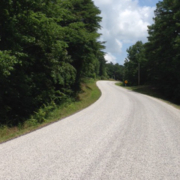
This would be the first time FDR would be used to treat a fly ash road. Ergon’s engineered emulsion — FDR-EE — was the selected binder for this process. This emulsion would help facilitate a stable base able to resist moisture damage while also serving as a strong bonding agent for fly ash particles. The FDR application would be followed by a prime coat to prepare and protect the newly constructed road base, and then a chip seal to facilitate return traffic and further seal out moisture, keeping the ground water from rising to the surface. A 1.5-inch hot mix asphalt overlay would be applied as the final wearing course for increased structural value and durability as well as a smooth, dust-free driving surface.

Application Highlights

The County decided to move forward with a winter start date for the one-mile project in early January 2020. FDR, like other asphalt-based treatments, is not typically applied during winter months, as warmer temperatures and drier conditions are more suitable  for both performance and production. However, Indigo Road needed immediate attention and the County was eager to see how the FDR-EE would perform. The FDR contractor, Ranger Construction, pulverized six inches of Indigo Road. The pulverized material was then mixed in place with Ergon’s FDR-EE, reshaped and compacted.

FDR-EE Mixture Stands Up to Traffic/Weather: Truck traffic was allowed back on the road immediately following application, as there was simply no other option. While it took one week for the mixture to reach optimal water content under consistently heavy rainfall, the FDR-EE mixture held up and withstood the same destructive truck traffic that had so badly deteriorated the previous road structure.

Once the FDR-EE had cured, Hudson Construction applied a prime coat using Ergon’s MC-70 at a shot rate of 0.10 gallons per square yard. Again, trucks traveling to and from the sand pit were back on the road immediately following application. Even under pressure from traffic and subjected again to heavy rainfall, the prime coat held up.

Cold and wet weather forced Hudson to wait a month before applying the chip seal using one of Ergon’s conventional chip seal emulsion products (CRS-2H) along with size 89 aggregate as the cover stone. The final stage of the project was completed the second week of March, when Preferred Materials Inc. applied the 1.5-inch asphalt overlay.

“This has been a huge success for the community and will be a great opportunity going forward for all involved,” said Neal Howard of UHK. “This could not have been accomplished without the efforts of Ergon Asphalt & Emulsions and Paragon Technical Services.”

Results

Effingham County Road Department was impressed with how well Indigo Road held up under constant pressure, cold and extremely wet weather. Even though the treatments were placed outside the recommended seasonal application time and were subjected to heavy traffic immediately following application, the Board Members of Effingham County were very pleased with how well they performed. Note: When applied according to seasonal recommendations and without consistently heavy rainfall, this same treatment can be completed in weeks instead of a span of three months. Additionally, FDR applications using Ergon’s engineered emulsion are suitable for all types of roadways in need of rehabilitation.

Cost Savings

The County was able to save big with the FDR process. At a centerline mile cost of around $560,000, the FDR treatment plan, including the subsequent treatments for additional durability and resistance, was less than half of that required to remove, transport and then reconstruct the road. If this same process could be used to treat all 900 miles of fly ash roads in southeast Georgia, state, county and city agencies would recognize a potential combined savings of over $800 million.

Long-Term Strategy: Realizing the success of the Indigo Road project, Effingham County plans to continue FDR-EE applications on other fly ash roads within their network.

In terms of safety, it became clear that a typical solution such as an asphalt overlay would not be acceptable. Though quick and simple, this solution would result in drop-offs too high to meet federal guidelines and too dangerous for the traveling public. Mitchell County needed a solution that would not alter Glen Elder Road’s surface elevation.

Given this information, and upon evaluating the core provided by Coughlin and the mix design provided by Paragon, it was decided that a 4-inch CIR finished with an appropriate chip seal would be optimal.

In stark contrast to a mill and fill, the total cost for this option, including materials and workmanship, was approximately $102,000 per centerline mile — at $87,000 per centerline mile for the CIR plus $15,000 per centerline mile to install the chip seal. That’s a savings of $68,000 per centerline mile over the mill/hotmix option.

In addition, the CIR option would address cracks down to 4-inches deep, whereas the mill and fill option would only address the top two inches of asphalt. According to industry standards, where cracks return on average one year later per inch of material, the CIR option is expected to manage cracking twice as long as the traditional mill and fill solution.

Application Highlights

During the CIR process, four inches of the existing pavement on Glen Elder Road were milled, mixed with Ergon A&E’s CIR emulsion, and then replaced.

Following the CIR process, Ergon’s CRS-1HP chip seal emulsion was applied at a shot rate of 0.35 gallons per square yard with ½-inch quartzite aggregate chips. Chip seals are typically applied following CIR applications to serve as wearing courses and/or to address any surface irregularities.

Ultimately the safest solution for any road is a solution that lasts. By using CIR finished with a chip seal, Mitchell County was able to reduce the cost of the treatment while increasing its efficacy, reduce construction time, keep motorists safe, and keep the traveling public away from unsafe drop-offs.

emulsion chip seal

The life of a roadway goes through many cycles, waxes and wanes between care and attention and disrepair. The birth of a road begins with the coordinated effort of government stakeholders, engineers and local contractors. After a road has come to fruition, its care and maintenance is less expansive, allowing the local government to take charge of maintenance from within. Measures taken in pavement preservation are less expensive than reconstruction and allow the existing roadway to last longer than it would without remedial maintenance. However, even with proper maintenance, a road will eventually begin to need more extensive treatments or reconstruction measures where a contractor must be utilized. Maintaining the delicate balance between these two groups is what keeps a stable infrastructure with a less than flexible budget.

In the spring of 2015, Blount County, in north central Alabama, made substantial investments in their road maintenance equipment, adding a one-man pothole patcher, conventional chip spreader and pneumatic tire roller to their maintenance fleet to better elevate their road maintenance and chip seal program. This new equipment allows the crew to quickly and proficiently address minor road distresses, too small for contractors to competitively price out. As of late summer, the County is also in the process of building an 8,000-gallon storage tank to house a small supply of CRS-2 emulsion for maximizing use of the new pothole patcher. Although it can be used in pothole patching, CRS-2’s primary use is in conventional chip seals.

Pothole Machine

A conventional chip seal with CRS-2 is a widely used pavement preservation treatment, where emulsion is applied by a distributor onto an existing surface, followed immediately by a layer of continuously grated aggregate. The aggregate is rolled and embedded into the emulsion, creating a smooth driving surface. This type of treatment is most often used to address minor cracking, loss of friction and raveling, as well as pavement oxidation. Modestly priced with a national average of $2.25 per square yard, conventional chip seals using CRS-2 are a cost-effective road treatment that, when used properly, can extend the life of a road by five to seven years. Its quick-curing quality allows traffic to be returned in a matter of hours following treatment, leaving motorists minimally inconvenienced.

Harnessing the full capabilities of conventional chip seals and the multifaceted benefits of CRS-2, the County will realize high returns on investment with an increase in available funds saved through responsible pavement preservation practices. These savings will allow more roads to receive maintenance in a given year. As the roads continue to age, the accumulated cost savings will provide funds to bring in contractors for more intensive treatments as the roads near the end of their life cycle.

Distributer

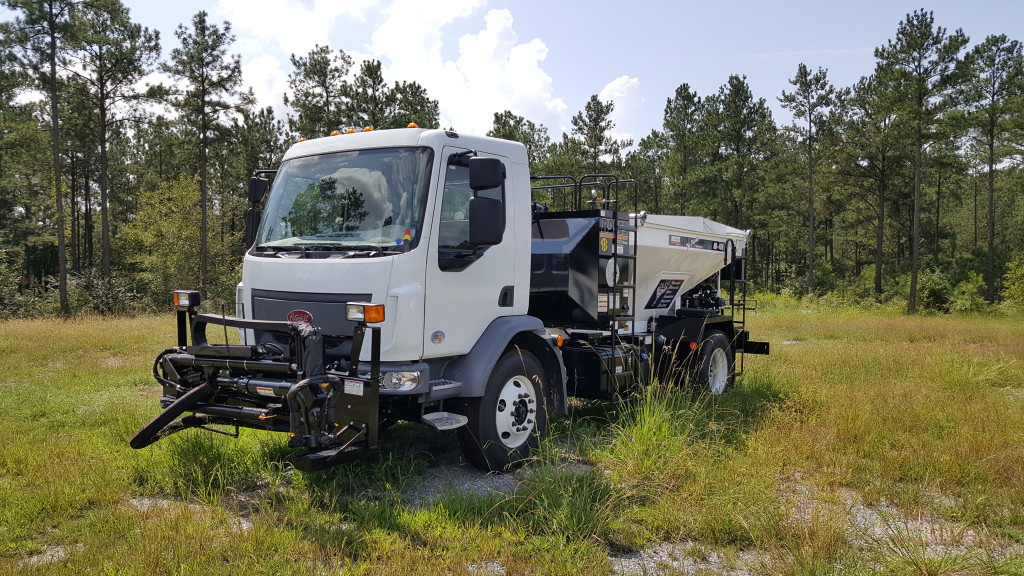
Chip Spreader“Part of our County maintenance program is where we evaluate our roads and decide which ones are in the greatest need of maintenance,” said Winston Sitton, County Engineer for Blount County. “With this upgraded chip seal equipment, we can make our funds stretch farther and get to more roads on our list over a single paving season than before.”

Ergon Asphalt & Emulsions, Inc., (Ergon A&E) seeks to be a contributing resource to contractors and county and state agencies alike, helping make these road maintenance dollars stretch farther. Ergon A&E’s emulsion plant in Birmingport, Alabama, is a major provider for emulsion in central and northern portions of the state, including Blount County, offering several options covering an assortment of distress applications. In addition to being an emulsions supplier, Ergon A&E also contributes its expertise in technical application to help make road projects go smoothly. The Technical Operations team helps troubleshoot problems crews face, offering advice on technique, product solutions, equipment, application rates and overall training. Most common is the resource found in the Ergon A&E Sales team. Ergon A&E offers site selection, where sales team members visually inspect road conditions first-hand alongside an agency. This affords a more in-depth analysis of road conditions, providing better recommendations for treatment options for the most cost-effective and successful project outcome.

Ergon A&E is pleased to provide varying resource tools to its customer base. To learn more about the benefits of pavement preservation treatments, including chip seals, visit www.savemyroad.com.