The first step to improving chip seal performance on the City’s streets was identifying the reasons for the problem. Ergon Asphalt & Emulsions’ Cody Chambliss was instrumental in helping to identify application issues and then educate the City on best practices for better chip seal results. He also introduced the City to a solution to help improve aggregate retention even on perfectly constructed chip seals — eFog HP high-performance fog seal.

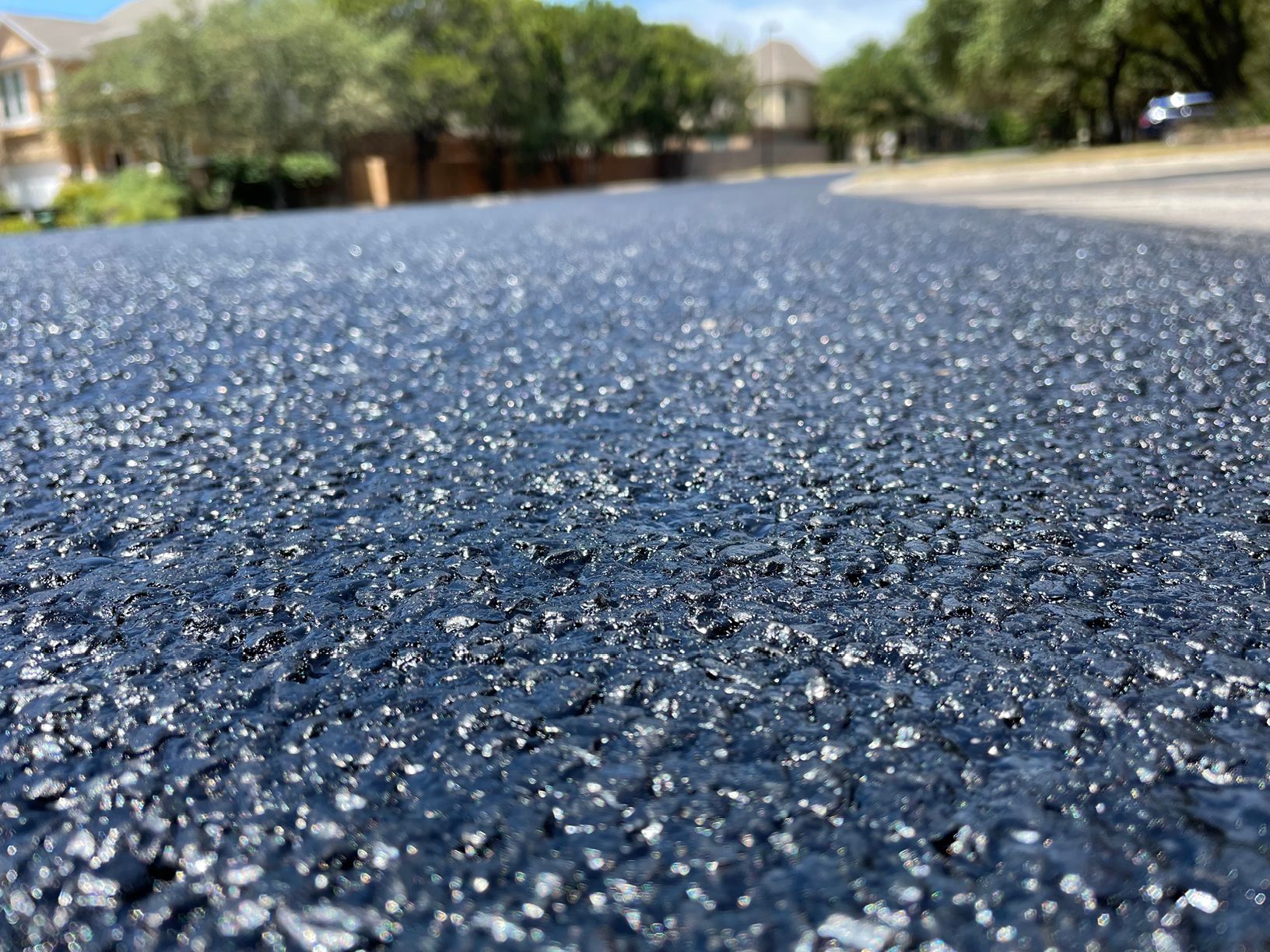
eFog HP locks in aggregate on chip sealed surfaces. Its trackless properties provide an additional benefit on roadways in residential areas, as it helps prevent material from being tracked onto driveways. Along with performance qualities, an eFog HP application results in a dark pavement look similar to new hot mix that makes striping more visible and that stakeholders prefer.

“The City of Austin utilizes eFog HP as a cost-effective preservation treatment that extends the life of our pavements while also adding the benefit of preventing raveling on segments that were previously seal coated,” said Tyler Steinbarger, City of Austin Program Manager III.

_____________

Note that in Texas, the terms chip seal and seal coat are used interchangeably.

_____________

_____________

So, how did this high-performance fog seal earn City approval for improving chip seal performance?

Application Highlights
To test the effectiveness of eFog HP, including its trackless properties, the City agreed to trial applications in the Onion Creek Subdivision in Austin, Texas, in August of 2021. This would be the first time this emulsion was applied within the City’s network.

Although the City has an in-house chip sealing crew, Lone Star Paving was selected as the contractor for this project. In a two-week application, Lone Star applied the eFog HP emulsion at an average rate of 0.13 – 0.15 gallons per square yard throughout the subdivision. The treatment supported a return to traffic in 40 to 45 minutes.

Results
The City was pleased with the aesthetics and performance of eFog HP in the subdivision. Additionally, its trackless feature reduced citizen complaints about product in their driveways.

The City has since applied eFog HP over chip sealed surfaces in more areas throughout their network. They have found improved aggregate retention has reduced construction time for new chip seal projects. Prior to eFog HP, in-house crews would typically have to spend time sweeping excess chip seal aggregate following application. However, training on best chip seal practices, coupled with eFog HP’s ability to keep aggregate in place, has reduced the amount of excess aggregate post chip seal application.

Cost Savings
At $0.25 per square yard, eFog HP has resulted in significant cost savings for the City of Austin. Alternative methods like resealing or applying micro surfacing treatments would cost $4- $6 per square yard.

Long-Term Strategy
The City plans to apply the high-performance fog seal to 100 – 130 lane miles annually on new chip seals, as well as chip sealed surfaces that are four to five years old, to prevent raveling/further raveling, slow deterioration and extend service life up to four years before additional maintenance is needed.

In addition to high-performance fog seal, Ergon offers conventional and rejuvenating fog seal emulsions. Contact one of our expert team members to find out which of these fog seal solutions is the right treatment for your roadway today.

A triple seal + fog seal is a fitting solution for upgrading dirt roadways like Butler Road. This combination surface treatment allows for exceptional performance with minimal maintenance over time.

What is a Triple Seal?

A triple seal consists of chip seal applications applied in three lifts. With each lift, an emulsion is spray-applied onto the surface at a specified rate followed by the spreading of aggregate over the emulsion. Differently sized aggregates are used for subsequent lifts, each layer filling voids from the previous course, facilitating a strong and long-lasting seal.

A triple seal treatment plus a high-quality fog seal, enhances road durability, helps to prevent moisture intrusion, ensures reduced tire noise and results in a smoother ride quality with longer-lasting rock retention as compared to single and double chip seals. When compared to the cost of traditional hot mix asphalt applications, agencies can see savings of up to 65% with a triple seal + fog seal treatment. This is a huge benefit for agencies like Laurens County.

Application Highlights

The three-mile Butler Road project began in May 2021, with The Scruggs Company as the contractor. In preparation for the triple seal, MC-70 emulsion, supplied by Ergon Asphalt & Emulsions (Ergon A&E), was applied as the priming base. Priming is an important step when applying a surface treatment over a dirt road. It helps enhance the structural integrity of the roadway by serving as a waterproof barrier, preventing moisture intrusion and reducing the likelihood of potholes. It also provides a layer of asphalt binder for a subsequent asphalt treatment to adhere to effectively. (Note that asphalt bonds better with asphalt than a dirt road without any primer.) Sand was applied over the MC-70 to serve as a protective barrier to traffic that was allowed back on the surface immediately following the application.

Four months after priming (due to scheduling challenges), The Scruggs Company applied the triple seal using CRS-2H chip seal emulsion, supplied by Ergon A&E, and aggregates brought in from the Martin Marietta – Ruby Quarry.

Triple Seal Application

The Scruggs Company applied the CRS-2H emulsion at 0.30 gallons per square yard followed by Size 6 aggregate for the first lift; 0.22 gallons per square yard followed by Size 7 aggregate for the second lift; and 0.18 gallons per square yard followed by Size 89 aggregate for the third and final lift. Each lift was rolled after the aggregate was applied.

This phase of the Butler Road project was completed in three days. Traffic was immediately returned to the treated section after all three lifts had been completed.

Fog Seal Application

Following the triple seal, a fog seal using Ergon A&E’s eFog HP high-performance emulsion was applied at 0.12 gallons per square yard to further lock down aggregate. Scheduling challenges throughout this project caused the fog seal application to be delayed by a few weeks; However, fog seals can typically be applied as early as three days after a chip seal/triple seal application.

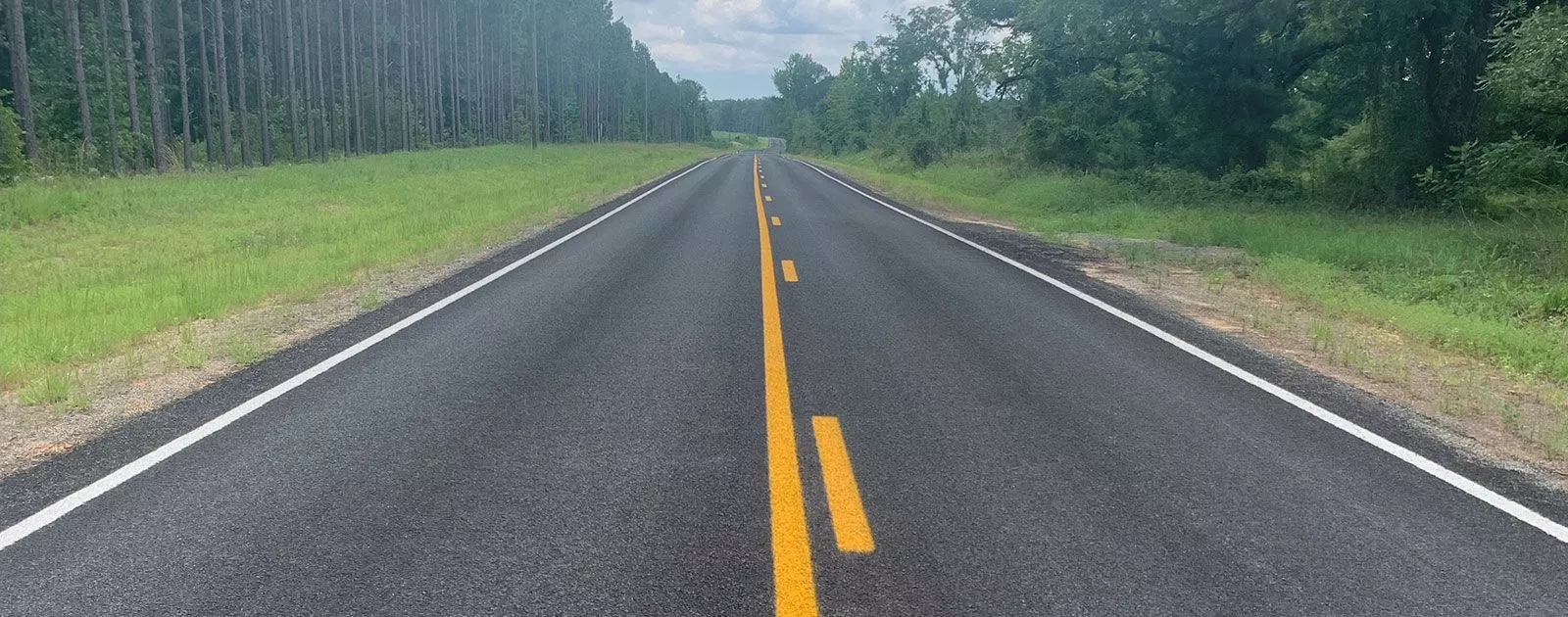
The fog seal provided Butler Road with a dark appearance similar to the fresh hot mix asphalt look without the new pavement cost, which agencies and citizens appreciate. Traffic was returned within 90 minutes following the fog seal application.

Results

Butler Road is holding up well, and Laurens County remains pleased with its performance. The triple seal + fog seal once again proved to be an outstanding solution for upgrading and improving road durability at a low cost.

___________

From dirt roads to paved roads, Ergon A&E offers surface treatment options designed to address multiple distresses while enhancing durability and performance. If you’re interested in upgrading your dirt roads long term, contact one of our expert team members today.

test

Background

With many well-traveled thoroughfares in critical shape and in need of serious maintenance, the Arkansas Department of Transportation (ARDOT) was in need of a solution that would not drain their limited highway budget.

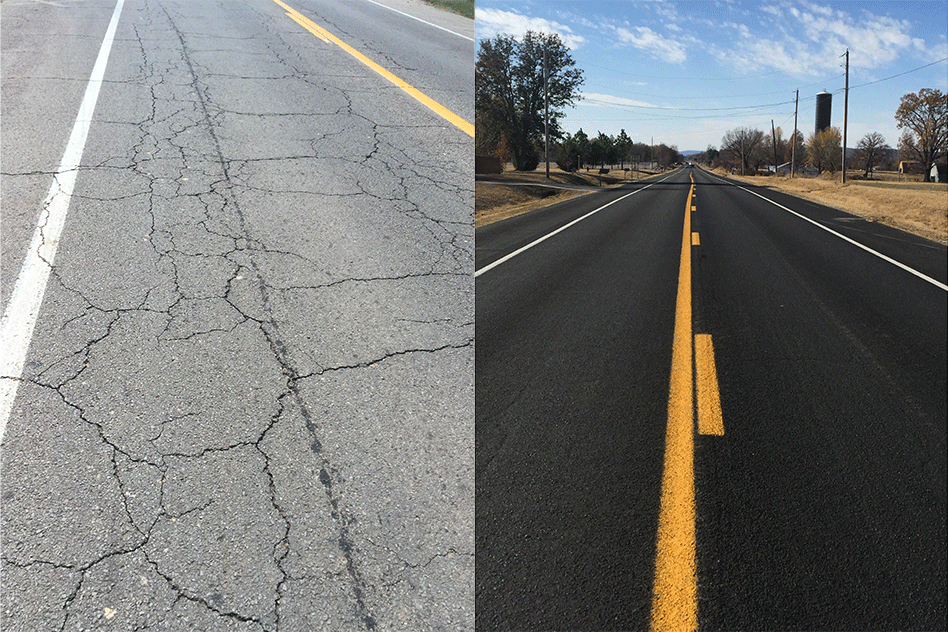
Sometimes, selecting a road maintenance solution based on budget restrictions can mean sacrificing some degree of life extension. But that wasn’t an option for ARDOT District 4 in 2016, when the agency embarked on a much-needed initiative to preserve many of their aging and distressed roadways. While they found success using hot rubber sealants on roads with minimal cracking, roadways with mass cracking were becoming more and more of a maintenance problem. Safety of the traveling public would soon become an issue as crack development was quickly outpacing repair crews. This prompted a diligent look at diversifying their pavement preservation strategy.

Click Here to Download PDF >>

______________________________________

Challenge

Due to the sheer volume of cracking, the department could not afford to mill and fill all of the highly cracked highways in their network. Such comprehensive solutions would simply put too much strain on budgets, schedules, crews, traffic and more. It was clear that something significant had to be done to preserve the existing roads, but mill and fill was simply not viable.

Ergon Asphalt & Emulsions (Ergon A&E) worked with ARDOT Maintenance Engineer Chad Davis to explore more effective solutions, including the pros and cons of each. One effective treatment option was a manual crack seal treatment program. While this would provide on average another three to five years of service to Arkansas’ roads, manual crack seal treatments are just that — manual.

Although manual crack sealing is cost effective for projects with a relatively low percentage of cracks, this method wouldn’t be optimal for successfully treating mass cracking. Both cost and estimated completion times would increase as the percentage of cracks increased, and some projects would not be feasible at all. ARDOT needed a solution that was less costly and timelier.

The answer came in the form of Ergon A&E’s innovative eScrub rejuvenating scrub seal and high-performance fog seal solutions. eScrub employs a simultaneous apply-and-scrub method to quickly address mass cracking in asphalt pavements. At an industry average of 25% of the cost for a mill and fill, eScrub is among the most cost-efficient solutions for repairing pavements exhibiting medium- to high-density fatigue or block cracking, loss of friction, oxidation and raveling.

Ergon’s high-performance fog seal is suitable for application on many surfaces, including chip seal and scrub seal treatments. The quick-breaking, trackless fog seal helps lock down aggregate, improving chip retention; it enhances new stripe visibility for safety; and it extends the expected service life of the chip/scrub treatment by two to four years. Once the fog seal has cured, traffic can usually return to the pavement within 1 1/2 hours.

test

Application Highlights

To test the efficacy of the new strategy, ARDOT District 4 crews scrubbed and fogged a 3.5-mile stretch of Highway 162 in Crawford County. eScrub was originally specified for a shot rate of 0.26 gallons per square yard; however, ARDOT made on-site shot rate adjustments in some sections, as necessary. “It’s not uncommon to make these kinds of adjustments on site,” said Ergon’s Darryl Gardner. “It’s simply best practice and shows that you are really paying attention to changes in the pavement condition during application.” Class 4 mineral aggregate (a mixture of aggregates less than 3/8 inch in diameter) was the specified aggregate type for this project.

Traffic was allowed back on the road immediately following the eScrub application, which is typical. ARDOT applied the fog seal a week later at a specified rate of 0.10 gallons per square yard, with adjustments as needed.

Thanks to the overall ease of application and fast ready times of these treatments, the project was completed in just two weeks — significantly less time than it would have taken to complete manual crack sealing on this same highway.

This fast application saved ARDOT a great deal of man-hours and allowed traffic to return far sooner than anticipated. After this 2016 combination treatment, the pavement condition increased from the point of needing to be replaced to a maintenance level. New cracks in the area treated along Highway 162 have remained minimal over the past four years.

This was the first main line scrub seal project for ARDOT District 4. They have since applied more than 88 lane miles of scrub seal and have fog sealed approximately 50-60 lane miles in the last three years.

Arkansas’ highways can be tough to maintain, but scrub seal and fog seal solutions have given these highways an extra five to seven years of service life. They have helped ARDOT move towards better roadway conditions across their network, while helping to ensure the safety of drivers and road maintenance crews.